
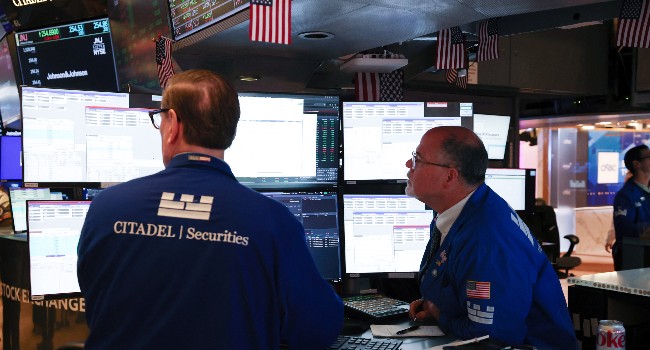
Geopolitical jitters in the Middle East lifted crude higher but weighed on equities as investors recalibrated exposure to shipping risk, inflation signals, and the next wave of earnings.
By A1NEWS International
LONDON / NEW YORK — October 7, 2026 — Oil prices climbed on Wednesday as fresh warnings about Iran’s posture toward the Strait of Hormuz revived concerns over Middle East shipping supplies. Equities, however, fell as traders balanced a revived AI-led rally on Wall Street against accelerating geopolitical risk.
Crude Gains, Markets Split Over Hormuz Threats
Global benchmark prices edged higher despite an earlier easing in supply-risk premiums. Investors appeared to scrutinize reports suggesting Iran was stepping up attacks or operations affecting vessels transiting the Strait of Hormuz—a critical chokepoint for energy flows.
While traders initially brushed aside earlier tensions in the region, pricing later reflected the renewed uncertainty after signals indicated Tehran had increased strikes on tankers in the waterway. That shift pushed crude-related risk higher even as parts of the market also weighed indications that some regional exports—excluding Iran—were stabilizing toward pre-war levels.
The mixed messaging kept crude markets sensitive, with traders watching both physical shipping disruptions and the scale of headline-driven escalation.
Brent Below $100, WTI Under $90—Then Rebound on Tuesday’s Strike Reports
After reports indicated Middle East exports (excluding Iran) were trending back toward pre-war levels, Brent fell below the psychologically important $100 per barrel mark and West Texas Intermediate (WTI) slipped under $90. The move briefly eased concerns around inflationary pressures tied to energy prices, giving central banks more potential room to delay or calibrate interest-rate hikes.
However, momentum reversed when shipping-related data and reports suggested Iran had increased attacks on tankers in the Strait of Hormuz. That rebound underscored how quickly the market can reprice crude risk when operational disruptions appear likely.
Maritime Attack Reports Signal Persistent Pressure on Shipping Lanes
Shipping risk remained central to investor sentiment. UK maritime authorities reported a rise in attacks so far in the month, with figures indicating that violence in the Strait of Hormuz and surrounding Gulf waters had accelerated relative to September totals.
At the same time, Yemen’s Houthis—linked by observers to Iran-aligned networks—continued to advance claims of operations, including allegations involving targets in the region. Their messaging, alongside reports about territorial control shifts near the Red Sea chokepoint of Bab al-Mandeb and the port city of Mocha, added another layer of uncertainty for logistics and energy routing.
Oil Market Warning: Stockpile Resilience May Be Weakening
Beyond day-to-day attacks, energy analysts highlighted a broader risk: global stockpiles may be running low, reducing governments’ ability to absorb disruptions. Officials and market participants have warned that when inventories are thinner, even moderate disruptions can produce disproportionate price spikes and inflation spillovers.
As one market participant noted, price downside may be partially supported by reports of improved export flows—but crude remains highly exposed to geopolitical headline volatility and the operational scale of vessel risk.
Markets: Equities Drop Despite AI Rally Momentum
Asian Stocks Mostly Lower as Tech Leadership Meets Macro and Geopolitical Caution
Equities retreated after an upbeat start to the week that had been fueled by renewed investor appetite for artificial intelligence exposure. Multiple Asian markets opened or traded lower, including major indices in Tokyo, Hong Kong, Singapore, Seoul, and other regional hubs.
The selloff was not uniform—some markets moved higher—suggesting investors were selectively reallocating risk based on currency dynamics, domestic rate decisions, and corporate outlooks.
Banking and Rate Signals: India Tightens After Middle East-Linked Inflation Pressure
In India, the rupee steadied after the central bank raised interest rates for the first time in more than three years. The move reflected ongoing concerns that inflation could remain above official targets, with the Middle East crisis contributing to energy and price pressures.
Wall Street Context: Nvidia Strength and AI Momentum Continue
Tech Buoyancy Lifts Indexes—But Broader Risk Sentiment Cools
In the United States, earlier gains in major indices were tied to the AI trade and especially the strength of Nvidia, whose valuation surged again. Investors also appeared encouraged by reporting that SpaceX was exploring a substantial fundraise—framed in market terms as potential capital flowing into chip supply chains tied to AI demand.
Despite this, Wednesday’s tone across global markets suggested investors were recalculating risk exposure: geopolitical uncertainty in the Middle East was adding a macro overlay that could dominate trading decisions ahead of earnings season.
Earnings in Focus
With the next phase of earnings expected to shape sentiment, traders were watching whether corporate margins and guidance can offset external pressures from energy costs and supply-chain disruptions. Analysts anticipate continued strength in major index earnings, but geopolitical risk could still influence near-term valuations and risk appetite.
Key Market Figures (Around 0810 GMT)
- Tokyo – Nikkei 225: DOWN 0.9% at 70,035.71 (close)
- Hong Kong – Hang Seng Index: DOWN 0.6% at 24,130.50 (close)
- London – FTSE 100: DOWN 0.5% at 10,488.12
- Shanghai – Composite: Closed for a holiday
- Dollar/yen: UP at 158.21 yen (from 158.17 on Tuesday)
- Euro/dollar: DOWN at 1.1193 (from 1.1257)
- Pound/dollar: DOWN at 1.3226 (from 1.3275)
- Euro/pound: DOWN at 84.55 pence (from 84.81)
- West Texas Intermediate: UP 0.5% at $89.88 per barrel
- Brent North Sea Crude: UP 0.7% at $101.23 per barrel
- New York – Dow: UP 0.5% at 51,521.28 (close)
Crude markets appear to be oscillating between easing export-flow optimism and renewed concerns about attack activity affecting major shipping corridors. As the Strait of Hormuz remains a focal point and broader warnings circulate about thinner stockpiles, oil price direction may continue to swing on geopolitical headlines—while equities remain vulnerable to shifting macro risk and the next earnings-driven valuation test.













Leave a Reply