

National Policing Bill consultation ends at 5pm as Presidency seeks Nigerians’ input on political interference, police misconduct, oversight, intelligence-sharing and the proposed creation of state police services
By John Ishaku
ABUJA, NIGERIA — August 13, 2026
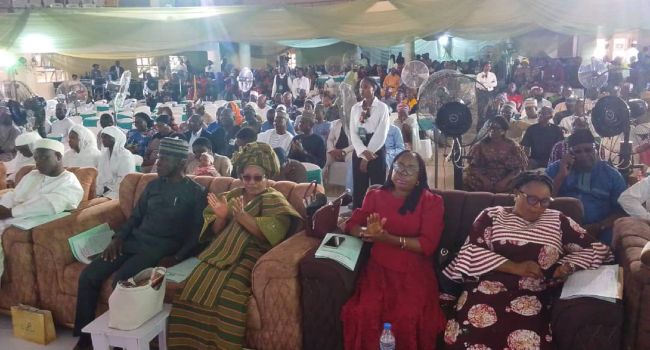
The Presidency will today, Thursday, August 13, close public submissions on the proposed National Policing Bill, with Nigerians given until 5pm to submit recommendations on the planned restructuring of policing and the possible establishment of state police services.
The consultation, led by the Presidential Working Group on the National Policing Bill, represents one of the Federal Government’s most significant attempts in recent years to address Nigeria’s longstanding debate over whether policing should remain exclusively under the federal government or be decentralised to the states.
Chief of Staff to President Bola Ahmed Tinubu and Chairman of the Presidential Working Group, Femi Gbajabiamila, said the exercise was intended to draw on the experiences, expertise and concerns of Nigerians before the proposed legislation is submitted to the National Assembly.
But behind the proposal lies a fundamental constitutional and governance question: Can Nigeria bring policing closer to communities without creating powerful state-controlled security structures vulnerable to political abuse?
PUBLIC CONSULTATION CLOSES AT 5PM
Gbajabiamila urged Nigerians who have not yet submitted their views to take advantage of the remaining opportunity to contribute before the deadline.
He said public input would help the government address critical issues surrounding the proposed policing architecture, including political interference, police misconduct, accountability, oversight and intelligence-sharing between federal and state security structures.
The consultation, he stressed, does not replace the constitutional responsibility of the National Assembly.
Parliament will still have the authority to scrutinise, amend, reject or pass the proposed Bill when formally transmitted.
WHY STATE POLICE IS BACK AT THE CENTRE OF NATIONAL DEBATE
The push for state police has gained renewed attention amid Nigeria’s persistent security challenges, including terrorism, banditry, kidnapping, communal violence and other forms of organised crime.
Proponents argue that a centralised police structure covering a country as geographically and demographically diverse as Nigeria can struggle to respond effectively to highly localised security threats.
A police service operating closer to communities, they contend, could possess better knowledge of local languages, geography, criminal networks and community relationships.
Gbajabiamila similarly argued that officers familiar with their communities could improve intelligence gathering and speed up responses to local security threats.
However, decentralisation also introduces a significant risk: political control.
THE GOVERNOR QUESTION
One of the most contentious aspects of state police is the potential influence of governors over state security institutions.
Gbajabiamila acknowledged that concern directly, saying the proposed system must contain strong safeguards against governors using state police against political opponents, protesters, journalists, minority communities or other citizens.
“Proximity does not guarantee justice,” he said, warning that the possibility of political abuse must be addressed through the design of the law.
This is arguably the central issue that lawmakers and constitutional reformers will have to resolve.
A state police system could improve local security while simultaneously creating a powerful instrument that an authoritarian or politically partisan state government could deploy against dissent.
The credibility of the reform will therefore depend heavily on who controls state police, who supervises them, who investigates misconduct and who can hold officers accountable.
‘UNLAWFUL ORDERS MUST BE EASIER TO RESIST’
The Presidency says the proposed framework must protect citizens regardless of their political affiliation.
Gbajabiamila said the law should protect opposition parties, peaceful protesters, journalists and minority communities while making it more difficult for political interference to remain hidden.
He also argued that unlawful orders should be easier for police officers to resist, while misconduct should be easier to investigate.
This raises an important institutional question: What mechanisms will allow an officer to reject an unlawful order from a powerful state official without fear of retaliation?
The eventual legislation will need to provide clear answers.
OVERSIGHT COULD DETERMINE WHETHER STATE POLICE SUCCEEDS
The proposed policing framework is expected to address complaints, discipline and independent oversight.
This is critical because simply creating state police without creating credible accountability institutions could reproduce—or deepen—the problems already associated with policing.
The proposed framework is expected to cover:
- Recruitment and vetting;
- Training and professional standards;
- Remuneration and pensions;
- Equipment and operational capacity;
- Use of force;
- Complaints and disciplinary procedures;
- Independent oversight;
- Intelligence-sharing;
- Inter-agency cooperation; and
- Relations between federal and state police services.
The effectiveness of these safeguards will ultimately depend on whether oversight bodies have genuine independence and sufficient resources to investigate complaints involving politically powerful individuals.
CONSTITUTIONAL AMENDMENT IS STILL REQUIRED
Another major issue is that state police cannot simply be created through the National Policing Bill.
Gbajabiamila explained that Section 214 of the 1999 Constitution currently provides for the Nigeria Police Force as the country’s police institution.
Consequently, constitutional amendment is required before states can establish their own police services.
According to him, both chambers of the National Assembly have approved proposed constitutional changes providing for a Federal Police Service and State Police Services.
However, the constitutional amendment process is not yet complete.
The proposed amendment must proceed through the remaining constitutional stages before it can become law.
STATE HOUSES OF ASSEMBLY HOLD A CRITICAL KEY
After completing the required stages at the federal level, the constitutional amendment would have to be considered by state Houses of Assembly.
Gbajabiamila said approval by at least 24 of Nigeria’s 36 state legislatures would be required before the amendment can proceed to the President for assent.
This means state lawmakers will ultimately have a decisive role in determining whether Nigeria crosses the constitutional threshold required for decentralised policing.
It also means that public debate over state police will not end when the National Assembly completes its own process.
NATIONAL POLICING BILL WILL SET THE RULES
The Presidential Working Group is simultaneously preparing the National Policing Bill.
According to Gbajabiamila, the legislation is expected to establish national standards governing the operation of policing services.
Among the areas to be covered are recruitment, vetting, training, remuneration, pensions, equipment and professional conduct.
The Bill is also expected to provide rules governing the use of force, complaints, discipline, independent oversight, intelligence-sharing and cooperation between federal and state police.
This national framework could become the mechanism through which the Federal Government attempts to prevent state police services from becoming completely autonomous political instruments.
STATE POLICE WILL NOT BE AUTOMATIC
One of the less-discussed aspects of the proposal is that constitutional approval and passage of the National Policing Bill would not automatically create state police across Nigeria.
Gbajabiamila said individual states would still have to decide whether to establish their own police service.
Each participating state would require:
- Its own enabling legislation;
- Appropriate institutions;
- Sustainable funding;
- Recruitment and training structures; and
- Compliance with national operational requirements.
A state that chooses not to establish its own police service would continue to rely on the Nigeria Police Force.
This creates the possibility of a hybrid policing architecture, in which federal and state police services operate simultaneously while some states retain the existing federal policing arrangement.
THE FUNDING QUESTION
Perhaps the biggest practical question after political control is funding.
State police will require personnel, training academies, vehicles, communications systems, forensic facilities, weapons, protective equipment, intelligence infrastructure, salaries, pensions and operational budgets.
The proposed framework will therefore have to confront the question of whether states can sustainably finance professional police services.
There is also a risk of creating significant differences in policing quality between wealthy and poorer states.
A well-funded state could potentially operate a sophisticated police service, while a financially constrained state could struggle to pay salaries or maintain basic equipment.
That could produce a two-tier policing system across Nigeria.
INTELLIGENCE-SHARING WILL BE CRITICAL
Criminal networks do not respect state boundaries.
Kidnappers, terrorists, human traffickers, cybercriminals and organised criminal groups can operate across several jurisdictions.
For that reason, state police cannot operate as isolated security institutions.
The proposed framework will need clear protocols for intelligence-sharing between federal and state police, particularly where criminal investigations cross state boundaries.
Without effective coordination, criminals could exploit jurisdictional gaps between different police services.
POLICE REFORM OR POLITICAL REFORM?
The state police debate is ultimately about more than policing.
It is also about Nigeria’s broader political structure.
A decentralised police system could strengthen federalism by giving states greater responsibility for internal security.
But it could also expose weaknesses in Nigeria’s institutions if state governments exercise excessive control over police commanders and operations.
The success or failure of state police will therefore depend not only on legislation but also on the strength of Nigeria’s democratic institutions, judiciary, civil society, legislature and oversight mechanisms.
WHAT NIGERIANS SHOULD WATCH
As the public consultation closes, several issues deserve close scrutiny during the legislative process:
1. Who appoints state police leadership?
The appointment mechanism could determine the extent of political influence over state police.
2. Who can remove police commanders?
A system where commanders can be removed at will could undermine operational independence.
3. Who investigates misconduct?
Internal disciplinary mechanisms may not be sufficient where allegations involve senior political actors.
4. How will citizens seek redress?
Complaints must be accessible, independent and capable of producing meaningful remedies.
5. Who pays for state police?
Sustainable financing will be critical to professionalising the service.
6. How will federal and state police cooperate?
Clear jurisdictional and intelligence-sharing rules will be necessary.
7. What happens during elections?
This may be the ultimate test of the system. State police must not become instruments for suppressing opposition parties, journalists, protesters or voters.
The Federal Government’s decision to seek public input on the National Policing Bill marks another major step in Nigeria’s long-running debate over police reform and decentralised security.
The proposal promises the possibility of policing that is closer, faster and more responsive to local conditions.
But proximity alone does not guarantee accountability.
If state police are created without strong constitutional safeguards, independent oversight, professional recruitment, transparent funding and effective judicial remedies, the reform could simply transfer police abuse from the federal level to state governments.
Conversely, if properly designed and independently supervised, decentralised policing could strengthen community intelligence, improve response times and give states greater responsibility for protecting their residents.
The critical issue is therefore not simply whether Nigeria should have state police, but what kind of state police Nigeria is prepared to build.
As the public submission window closes at 5pm today, the real battle will move to the constitutional amendment process, the National Assembly and eventually the state Houses of Assembly.
For Nigerians, the most important task is to ensure that the final architecture protects both security and liberty.
Nigeria may be closer than ever to state police—but the biggest question is not how fast police can respond to crime. It is whether Nigerians can trust those who control the police not to turn them into political weapons.
A1NEWS International will continue to follow the National Policing Bill, constitutional amendment process and emerging safeguards around the proposed state police system.








Leave a Reply