
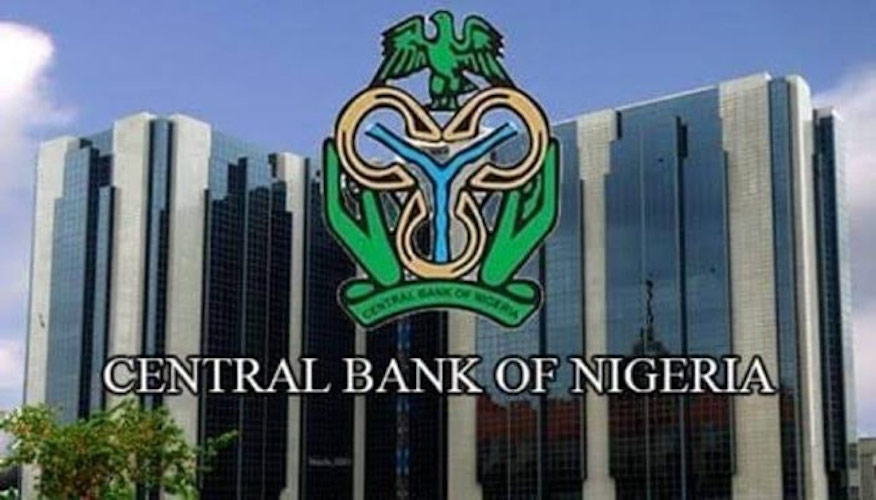
A closer look at why Nigeria’s aggressive liquidity management strategy has become the subject of growing debate over access to credit, bank recapitalisation and the future of the real economy.
By Odiaka Olika
Abuja, Nigeria — July 9, 2026
Introduction
Nigeria is not suffering from a shortage of entrepreneurs. It is suffering from an environment that makes entrepreneurship increasingly difficult.
From Kano to Aba, Lagos to Maiduguri, millions of Micro, Small and Medium Enterprises (MSMEs) continue to operate under extraordinary pressure. High inflation, rising energy costs, exchange-rate volatility, poor infrastructure and limited access to affordable credit have combined to create one of the most challenging business climates in decades.
At the centre of an increasingly vigorous economic debate is the Central Bank of Nigeria’s (CBN) Cash Reserve Ratio (CRR)—currently set at 45 per cent. While the apex bank views tight monetary policy as a necessary instrument for containing inflation and preserving macroeconomic stability, critics argue that the policy has significantly reduced the banking sector’s capacity to finance productive investment.
This article reflects the latter viewpoint, questioning whether Nigeria’s monetary policy is unintentionally constraining the very economic growth it seeks to protect.
When Fighting Inflation Becomes a Constraint on Growth
Every central bank faces the delicate responsibility of balancing inflation control with economic expansion.
The CBN has consistently maintained that restrictive monetary policies are intended to curb inflationary pressures, stabilise the naira and preserve confidence in Nigeria’s financial system.
However, critics argue that monetary tightening alone cannot resolve inflation driven primarily by structural deficiencies.
Nigeria’s inflation challenges are rooted in multiple factors beyond money supply, including insecurity affecting agricultural production, deteriorating transport infrastructure, unreliable electricity supply, exchange-rate pass-through, supply-chain disruptions and rising logistics costs.
Viewed through this lens, restricting liquidity may reduce available credit without directly addressing the underlying causes of persistent price increases.
The Real Cost of Credit Starvation
The most immediate impact of aggressive liquidity sterilisation is felt by Nigeria’s MSMEs.
These businesses account for the overwhelming majority of enterprises nationwide and remain among the country’s largest sources of employment, innovation and domestic production.
Yet they are often the first casualties when banks become more selective in lending.
Limited collateral, shorter operating histories and perceived lending risks frequently place MSMEs behind large corporations when credit becomes scarce.
Critics contend that maintaining a high CRR, alongside other liquidity management tools, substantially reduces the volume of funds banks can deploy into the economy.
The result, they argue, is an expanding financing gap precisely where investment is needed most.
Instead of financing new factories, agricultural expansion, technology startups, transportation businesses and manufacturing, scarce capital increasingly flows toward lower-risk borrowers or remains trapped within the financial system.
A Paradox in Bank Recapitalisation
The debate has become even more significant following Nigeria’s ongoing banking recapitalisation programme.
The objective of recapitalisation is widely understood—to strengthen banks, improve resilience and increase their ability to support economic development.
Yet critics question whether stronger balance sheets alone can deliver meaningful growth if lending capacity remains constrained by restrictive liquidity policies.
The concern is straightforward:
What practical value does additional bank capital create if institutions remain unable to extend sufficient credit to productive sectors?
Supporters of this argument believe recapitalisation risks becoming a largely regulatory achievement rather than an economic one if liquidity conditions do not evolve alongside stronger capital requirements.
Healthy banks, they argue, should ultimately translate into healthier businesses—not merely stronger financial ratios.
MSMEs: Nigeria’s Forgotten Economic Engine
Few sectors illustrate the consequences of limited credit more clearly than MSMEs.
These enterprises employ millions of Nigerians, stimulate local manufacturing, support agricultural value chains and generate significant domestic economic activity.
Yet entrepreneurs continue to report borrowing costs that make expansion commercially unviable.
For many small businesses, access to affordable financing remains a greater challenge than competition itself.
Without sufficient investment capital, businesses postpone expansion, reduce employment, delay innovation or abandon growth plans altogether.
The cumulative effect extends beyond individual firms.
Lower investment means slower productivity growth, weaker industrial output and fewer employment opportunities across the economy.
Beyond Monetary Policy
Critics argue that inflation cannot be sustainably reduced through monetary tightening alone.
They contend that complementary structural reforms deserve equal attention.
Improving road infrastructure, strengthening national security, expanding electricity generation, modernising logistics networks, increasing agricultural productivity and stabilising exchange-rate management would address several of the supply-side pressures contributing to inflation.
In this view, monetary policy should work alongside—not substitute for—broader economic reforms.
Alternative Policy Options
Among the proposals advanced by economists and policy commentators are:
- Gradual reduction of the Cash Reserve Ratio.
- Targeted incentives for banks that expand lending to MSMEs, agriculture, manufacturing and technology.
- Improved coordination between fiscal and monetary authorities.
- Greater reliance on productivity-enhancing reforms rather than liquidity restrictions alone.
- Expanded development finance programmes with stronger transparency and accountability.
Proponents argue that these measures would better balance price stability with sustainable economic growth.
The Other Side of the Debate
Supporters of the Central Bank’s approach caution that reducing monetary restraint too quickly could undermine efforts to control inflation, weaken investor confidence and place renewed pressure on the exchange rate.
From this perspective, maintaining financial stability remains essential before broad credit expansion can occur.
The challenge for policymakers, therefore, is finding an equilibrium that simultaneously protects macroeconomic stability while ensuring productive sectors have sufficient access to finance.
A Question of National Priorities
The broader debate extends beyond banking policy.
It raises fundamental questions about Nigeria’s development model.
Can sustainable growth occur without affordable financing?
Can industrialisation accelerate when productive enterprises struggle to obtain capital?
Can employment expand while businesses remain credit-constrained?
These questions deserve serious public discussion because the answers will shape Nigeria’s economic trajectory for years to come.
Conclusion
Whether one agrees entirely with the criticism or supports the Central Bank’s cautious approach, one reality remains undeniable: access to finance is indispensable to economic development.
Nigeria’s entrepreneurs are not seeking preferential treatment. They seek predictable policies, affordable capital and a financial system capable of supporting productive investment.
As policymakers continue to pursue macroeconomic stability, the challenge will be ensuring that the fight against inflation does not unintentionally suppress enterprise, discourage investment and slow long-term growth.
A resilient banking sector should ultimately strengthen the productive economy—not merely improve regulatory indicators. The success of Nigeria’s economic reforms will therefore be measured not only by stronger banks or lower inflation, but by whether businesses can grow, jobs can be created and prosperity can be broadly shared.
Editor’s Note: This article is an opinion piece by Odiaka Olika. The views expressed are those of the author and do not necessarily reflect the editorial position of A1NEWS International.










Leave a Reply