
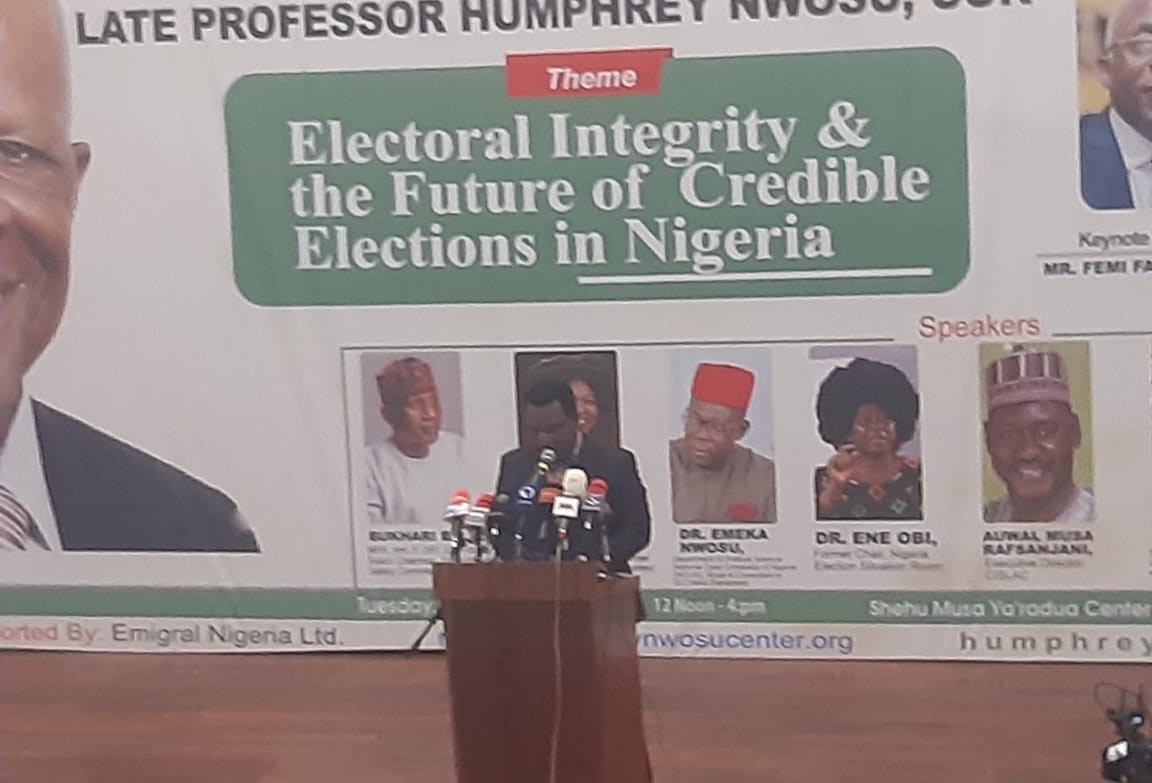
New centre seeks to strengthen electoral integrity, human rights advocacy, democratic governance, civic education, and leadership accountability across Nigeria and Africa.
By A1NEWS International / June 9, 2026
ABUJA, NIGERIA — More than three decades after the historic June 12, 1993 presidential election—widely regarded as Nigeria’s freest and fairest poll—the family of former Chairman of the National Electoral Commission (NEC), Professor Humphrey Nwosu, has unveiled the Humphrey N. Nwosu Centre for Democracy and Human Rights, a landmark institution aimed at preserving democratic values and advancing human rights across Nigeria and the African continent.
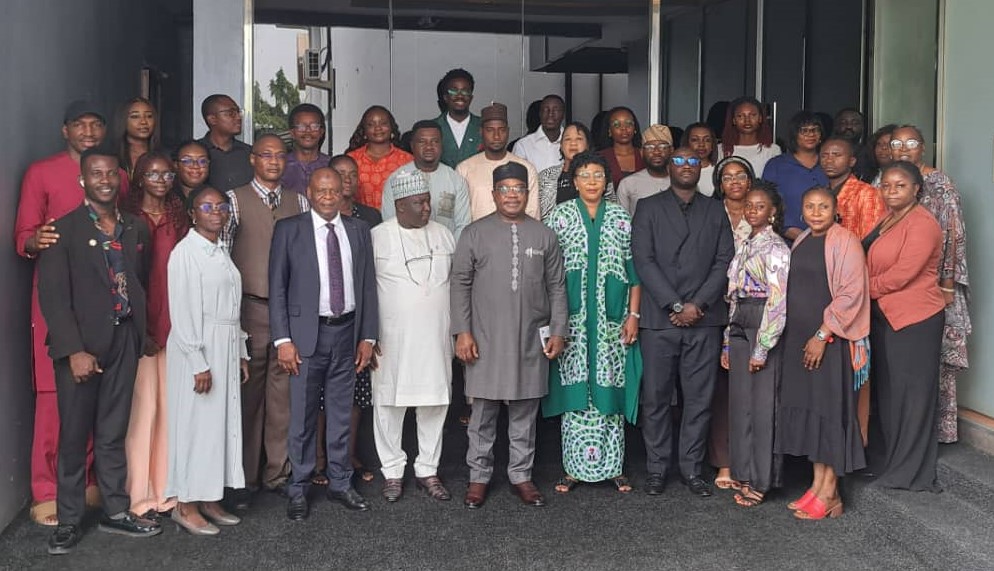
The announcement was made during a gathering attended by members of the diplomatic corps, civil society leaders, academics, democracy advocates, and representatives of various civic organizations, where the late electoral umpire’s son reflected on the sacrifices, challenges, and enduring significance of his father’s role in Nigeria’s democratic journey.
THE MAN BEHIND NIGERIA’S MOST CELEBRATED ELECTION
Addressing the audience, Nwosu’s son described the establishment of the centre as more than a family initiative, calling it a national responsibility tied to one of the most defining moments in Nigeria’s political history.
According to him, Professor Humphrey Nwosu was entrusted with the enormous responsibility of conducting the June 12, 1993 presidential election at a time when Nigeria was deeply divided politically and socially.
Despite widespread skepticism about the possibility of organizing a transparent election under military rule, Nwosu successfully delivered a process that has continued to earn both local and international recognition for its credibility.
“Thirty-three years ago, my father was given an extraordinary responsibility to conduct an election in a nation deeply divided under circumstances many believed could never produce a credible outcome,” he said.
“But he believed it could be done, and against all odds, he did it.”
JUNE 12: A DEFINING MOMENT IN NIGERIA’S DEMOCRATIC EVOLUTION
The June 12 election remains a watershed moment in Nigeria’s political development.
The election, believed to have been won by the late business mogul and politician, Chief Moshood Kashimawo Olawale (MKO) Abiola, transcended ethnic, religious, and regional divides, giving Nigerians renewed confidence in democratic governance.
Political historians continue to describe the election as a rare moment when citizens united around shared national aspirations rather than sectional interests.
However, the subsequent annulment of the election by the military government triggered nationwide protests, political instability, and a prolonged struggle for democratic restoration.
Speakers at the event noted that while the annulment represented a major setback, it also ignited a democratic consciousness that ultimately contributed to Nigeria’s return to civilian rule in 1999.
“The annulment was a painful turning point,” Nwosu’s son said. “Yet from that disappointment emerged a stronger national conviction that democracy is worth defending and that the voices of citizens matter.”
THE PERSONAL COST OF DEFENDING DEMOCRACY
Beyond the public narrative of electoral administration, the event shed light on the personal sacrifices endured by Professor Nwosu and his family during and after the June 12 crisis.
His son recounted years of uncertainty, fear, and threats that followed the election, emphasizing that the consequences extended far beyond political debates and public commentary.
According to him, the family lived through periods of intense pressure as the country grappled with the fallout of the annulled election.
“He lived under constant threat. There was uncertainty. There was fear. But he never wavered,” he said.
The revelation highlights the often-overlooked human dimension of Nigeria’s democratic struggle and the sacrifices made by individuals who stood for electoral transparency and national interest.
WHY THE HUMPHREY N. NWOSU CENTRE IS BEING ESTABLISHED NOW
Organizers said the decision to establish the Centre comes at a critical period when democracies across Africa are confronting challenges ranging from electoral disputes and voter apathy to misinformation, weak institutions, and human rights concerns.
The Centre aims to serve as a platform for research, policy development, advocacy, leadership training, and public engagement on democratic governance and human rights.
According to its founders, the institution is not merely intended to immortalize Professor Nwosu’s legacy but to actively promote the values he represented.
“This Centre is more than a tribute to one individual,” the family stated.
“It is a promise that the values of integrity, transparency, courage, accountability, and service will continue to guide future generations.”
FIVE PILLARS TO DRIVE THE CENTRE’S MISSION
The Humphrey N. Nwosu Centre for Democracy and Human Rights will reportedly be anchored on five strategic pillars designed to address contemporary governance and human rights challenges.
Electoral Integrity and Democratic Governance
The Centre will support initiatives that promote transparent elections, credible electoral systems, and stronger democratic institutions.
Human Rights Protection
Advocacy for the protection of fundamental freedoms and the promotion of justice will remain a central focus of its activities.
Civic Education and Citizen Participation
The institution plans to empower citizens through civic education programmes aimed at increasing democratic participation and political awareness.
Research and Policy Development
Through partnerships with universities, think tanks, and policy institutions, the Centre intends to generate evidence-based recommendations for democratic reforms.
Ethical Leadership and Public Service
The Centre will also focus on nurturing a new generation of leaders committed to accountability, integrity, and service to the public.
EXPERTS HAIL INITIATIVE AS TIMELY
Democracy advocates attending the launch described the initiative as timely, noting that many African countries continue to face governance deficits and electoral challenges.
Observers argued that preserving the lessons of June 12 is essential for strengthening democratic institutions and preventing a recurrence of past mistakes.
Political analysts further noted that documenting the experiences of individuals who played pivotal roles in Nigeria’s democratic evolution remains crucial to understanding the country’s political history.
As Nigeria continues to navigate complex governance and democratic challenges, the launch of the Humphrey N. Nwosu Centre for Democracy and Human Rights serves as both a tribute to a pivotal figure in the nation’s history and a call to safeguard democratic values.
Thirty-three years after the June 12 election transformed Nigeria’s political landscape, the Centre seeks to ensure that the principles of electoral credibility, human rights, accountability, and citizen participation remain at the heart of the nation’s democratic future.
For many Nigerians, the initiative represents not only a remembrance of the past but also an investment in the democratic aspirations of generations yet to come.









Leave a Reply