
Majority of returnees are women and children as UN migration agency warns of dangers of irregular migration, revealing that more than 65,500 stranded Nigerians have been assisted to return home over the past nine years.
By A1NEWS International / June 3, 2026
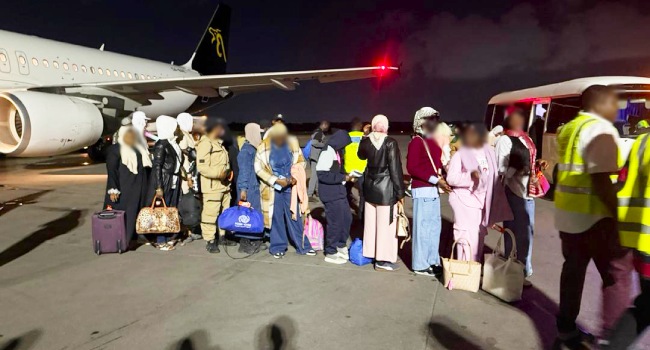
Lagos, Nigeria — 180 NIGERIAN MIGRANTS RETURN HOME FROM LIBYA. The International Organisation for Migration (IOM) has received another batch of 180 Nigerian migrants evacuated from Libya, highlighting the continuing challenges of irregular migration and the dangers faced by thousands of Nigerians seeking opportunities abroad through unsafe routes.
The returnees, comprising predominantly women and children, arrived at the Murtala Muhammed International Airport in Lagos aboard a chartered humanitarian flight facilitated through the agency’s Assisted Voluntary Return and Reintegration Programme.
According to the IOM, many of the migrants endured severe hardships during their journeys, including detention, exploitation, abuse, and prolonged uncertainty while stranded in Libya.
The latest evacuation forms part of ongoing efforts by the United Nations migration agency, the Federal Government of Nigeria, and international partners to support stranded migrants and promote safer migration pathways.
HARSH REALITIES OF IRREGULAR MIGRATION
Migration experts have repeatedly warned that many Nigerians attempting to reach Europe and other destinations through irregular routes often face life-threatening conditions.
Thousands of migrants crossing the Sahara Desert and transiting through Libya are exposed to human trafficking networks, forced labour, extortion, sexual exploitation, arbitrary detention, and dangerous sea crossings.
The returnees arriving from Libya reportedly shared experiences reflecting the harsh realities confronting vulnerable migrants trapped along these migration corridors.
According to humanitarian organisations, Libya remains one of the principal transit countries for migrants attempting to cross the Mediterranean Sea into Europe.
However, years of political instability and weak migration governance structures have left many migrants vulnerable to exploitation by criminal syndicates operating within the region.
IMMEDIATE HUMANITARIAN ASSISTANCE PROVIDED
Upon arrival in Lagos, the returnees were provided with immediate humanitarian support, including medical screening, psychosocial counselling, food assistance, and temporary support services.
The IOM said additional reintegration assistance would be made available to eligible beneficiaries to help them rebuild their lives and reduce the likelihood of repeat migration attempts under unsafe conditions.
Officials explained that reintegration programmes typically include vocational training, small business support, educational assistance, and livelihood opportunities designed to facilitate sustainable reintegration into local communities.
The agency emphasized that successful reintegration remains critical to addressing the root causes of irregular migration.
OVER 65,500 NIGERIANS ASSISTED IN NINE YEARS
The latest operation comes amid revelations that the IOM has assisted more than 65,500 stranded Nigerian migrants to return home over the last nine years.
The agency disclosed this during a migration reporting workshop held in Lagos, where officials highlighted the scale of the migration challenge facing Nigeria and other African countries.
According to the organisation, over 30,000 returnees have also benefited from various forms of psychological, social, and economic reintegration support since the programme commenced.
The figures underscore the magnitude of migration pressures affecting thousands of Nigerians, many of whom embark on dangerous journeys driven by economic hardship, unemployment, insecurity, family pressures, and the search for better opportunities abroad.
GROWING CONCERNS OVER MIGRATION RISKS
Migration experts warn that irregular migration continues to claim lives across major migration routes.
Recent international reports have documented increasing numbers of deaths along desert crossings, at detention facilities, and in maritime accidents involving overcrowded vessels attempting to cross the Mediterranean Sea.
The dangers have prompted governments, humanitarian agencies, and civil society organisations to intensify awareness campaigns aimed at educating prospective migrants about the risks associated with irregular migration.
Analysts note that while migration itself remains a legitimate human aspiration, the use of illegal routes often exposes migrants to severe human rights violations and criminal exploitation.
FEDERAL GOVERNMENT ISSUES FRESH WARNING
Concerned by the rising trend, the Federal Government recently renewed its warning against irregular migration and unlawful border crossings.
The Nigeria Immigration Service (NIS) cautioned citizens against travelling without valid travel documents, emphasizing that international travel must comply with established immigration laws and procedures.
In a public advisory, the Service warned that attempting to leave Nigeria through unauthorized routes or using improper documentation constitutes a violation of immigration regulations and may expose travellers to significant risks.
Authorities stressed the importance of obtaining valid passports, visas where applicable, and other approved travel documents before embarking on international journeys.
PUSH FOR SAFE AND LEGAL MIGRATION PATHWAYS
The IOM says it is intensifying efforts to promote safe, orderly, and regular migration while encouraging greater public awareness of migration realities.
The agency also called for more responsible media reporting on migration issues to counter misinformation often spread by traffickers and smugglers who lure vulnerable individuals with false promises of employment and prosperity abroad.
Experts argue that addressing irregular migration requires a comprehensive approach that combines public education, job creation, skills development, economic opportunities, and stronger international cooperation.
They maintain that sustainable solutions must address both the immediate humanitarian needs of migrants and the socio-economic factors driving migration pressures.
THE HUMAN STORY BEHIND THE NUMBERS
Behind every migration statistic lies a personal story of hope, sacrifice, disappointment, and survival.
Many returnees leave Nigeria with aspirations of improving their lives and supporting their families, only to encounter dangerous journeys that expose them to violence, exploitation, and uncertainty.
Humanitarian workers say reintegration support is often crucial in helping returnees recover from traumatic experiences and rebuild their futures.
For many, returning home represents not the end of a journey but the beginning of a difficult process of recovery and reinvention.
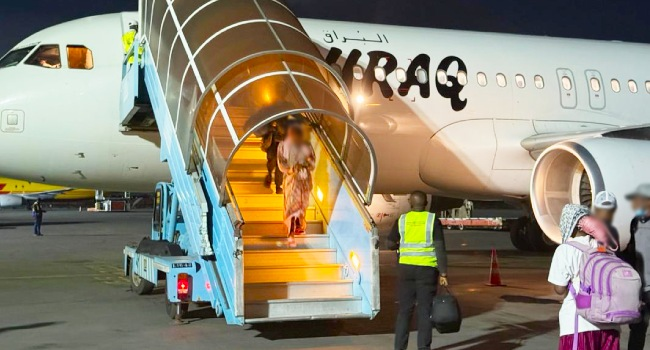
The arrival of 180 Nigerian migrants evacuated from Libya serves as another reminder of the ongoing challenges associated with irregular migration and the urgent need for safer alternatives.
While the IOM, Nigerian authorities, and international partners continue to facilitate voluntary returns and reintegration programmes, experts stress that long-term solutions will depend on expanding economic opportunities, strengthening migration awareness campaigns, and creating safer pathways for legal migration.
As thousands of Nigerians continue to seek better prospects beyond the country’s borders, the challenge remains ensuring that the pursuit of opportunity does not come at the cost of safety, dignity, and human life.











Leave a Reply