
Constitution amendment introduces constitutional framework for state police with independent oversight, guaranteed funding and strict safeguards against political abuse, but controversy trails legislative process.
By Umar Baba
ABUJA, Nigeria — July 24, 2026
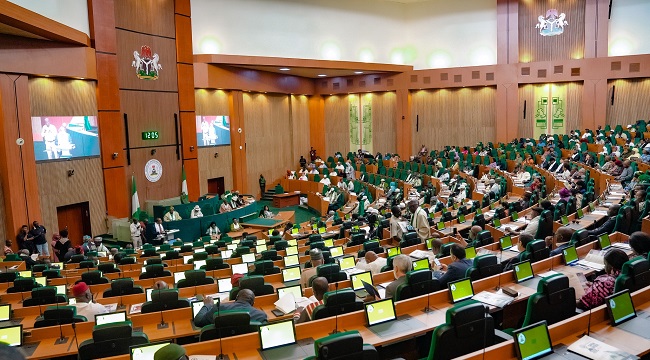
In what could become one of the most significant constitutional reforms since Nigeria’s return to democratic rule in 1999, the House of Representatives has approved a constitutional amendment bill seeking to establish State Police Services across the federation, marking a decisive shift from the country’s long-standing centralized policing structure.
The landmark legislation, however, was immediately engulfed in controversy after members of the Minority Caucus staged a dramatic walkout from the chamber, accusing the House leadership of violating constitutional procedures during the bill’s consideration.
Despite the protest, supporters of the amendment insist the proposed law provides extensive constitutional safeguards to prevent abuse by governors while strengthening community policing and improving Nigeria’s deteriorating internal security.
The development represents a major milestone in President Bola Ahmed Tinubu’s security reform agenda, although the proposal must still secure Senate approval and endorsement by at least two-thirds of the State Houses of Assembly before becoming part of the Constitution.
Historic Shift in Nigeria’s Security Framework
The bill, titled:
“A Bill for an Act to Alter the Constitution of the Federal Republic of Nigeria, 1999 to Provide for the Establishment of State Police Services and for Related Matters (HB.2797),”
creates, for the first time, the constitutional foundation for a dual policing system comprising:
- Federal Police Service
- State Police Services
Presenting the report, Deputy Speaker and Chairman of the House Committee on Constitution Review, Benjamin Kalu, described the proposal as a transformational response to Nigeria’s worsening insecurity.
According to him, centralized policing has increasingly struggled to respond effectively to local security threats ranging from terrorism and banditry to kidnapping, communal violence and organized crime.
“This bill is not merely about creating another policing institution. It is about bringing policing closer to the people, strengthening intelligence gathering, enhancing community policing and empowering governments to respond more effectively to evolving security challenges.”
Kalu stressed that the constitutional amendment merely establishes the legal foundation, while detailed operational matters—including recruitment, training, discipline, funding mechanisms and operational standards—will be addressed in subsequent legislation.
President Tinubu Pushes Constitutional Reform
The legislation originated from the Presidency after President Bola Tinubu transmitted the Executive Bill to the National Assembly.
According to the President, the amendment seeks to modernize Nigeria’s policing architecture and improve security by allowing states to establish their own police services under constitutional regulation.
Security experts have long argued that Nigeria’s over-centralized policing structure has become inadequate for addressing increasingly localized security threats.
House Secures Required Constitutional Majority
Speaker Tajudeen Abbas announced that the bill received the constitutionally required support of more than two-thirds of House members.
According to the Speaker:
- 211 APC lawmakers supported the bill.
- 65 lawmakers from opposition parties voted in favour.
- 35 members participated electronically.
In total, 311 members supported the amendment, exceeding the constitutional threshold of 240 votes required for constitutional alteration.
Bill Guarantees Financial Independence for State Police
One of the most significant provisions of the amendment is the constitutional guarantee of direct funding.
The proposal amends Section 121 of the Constitution to ensure funds allocated to State Police Services are paid directly to them rather than passing through state executives.
The objective is to reduce the possibility of governors weakening police operations through financial manipulation.
Observers say funding independence addresses one of the biggest concerns previously raised against state policing.
Governors Lose Control Over Police Oversight Bodies
Contrary to fears that governors would gain unchecked powers, the amendment significantly limits executive influence.
The bill provides that:
- State Police Service Commissions
- Federal Police Service Commission
- National Police Council
shall not be subject to the direction or control of:
- the President, at the federal level; or
- Governors, at the state level.
Each oversight body will regulate its own affairs independently while State Police Service Commissions will submit annual reports to State Houses of Assembly.
Federal Police and State Police to Share Responsibilities
The proposed policing structure clearly separates operational responsibilities.
Federal Police will retain responsibility for:
- Terrorism
- Organized crime
- Cybercrime
- Border security
- Interstate offences
- International crimes
- Federal Capital Territory policing
State Police will handle:
- Enforcement of state laws
- Community policing
- Public order
- Local intelligence gathering
- Protection of lives and property within state boundaries
State Police will generally operate only within their respective states except under limited constitutional exceptions.
Strict Conditions for Federal Intervention
The amendment places significant restrictions on when the Federal Government may intervene in state policing.
Federal intervention may occur only where:
- public order has collapsed;
- the Governor requests assistance;
- state policing institutions become incapable of functioning;
- widespread human rights abuses occur;
- national security faces imminent danger.
Any intervention must:
- be temporary;
- be proportionate;
- have clearly defined territorial limits;
- receive presidential authorization in writing.
The President must notify the Governor, State House of Assembly, National Police Council and National Assembly within 48 hours.
Longer interventions require parliamentary approval.
Courts are also empowered to review the legality of federal intervention.
National Police Council Restructured
The amendment significantly restructures the National Police Council.
The President and State Governors are removed as members.
Instead, membership will include:
- Chairman confirmed by National Assembly
- Attorney-General of the Federation
- Attorneys-General of States
- Senior serving police officer
- Six retired police officers representing geopolitical zones
- Representatives of:
- Nigerian Bar Association
- Nigeria Labour Congress
- National Human Rights Commission
- Public Complaints Commission
The Council will coordinate national policing policies while recommending appointments of the Inspector-General of Police and State Chiefs of Police.
Community Policing Becomes Constitutional
The bill also institutionalizes community policing.
Each state police service must establish Community Policing Committees across Nigeria’s 774 Local Government Areas.
Membership will include:
- traditional rulers;
- women representatives;
- youth organisations;
- civil society;
- persons with disabilities;
- local government representatives.
The committees will serve advisory rather than operational functions.
Vigilante Groups Not Automatically Converted
To prevent uncontrolled militarization, the amendment expressly prohibits existing vigilante groups from automatically becoming State Police formations.
Instead, separate legislation will regulate future recruitment and integration.
Minority Lawmakers Stage Walkout
Minutes after passage, opposition lawmakers walked out of the chamber.
Minority Caucus spokesman Afam Ogene accused the House leadership of violating constitutional procedures.
According to him, lawmakers were denied opportunities to debate clauses individually.
Minority Leader Fred Agbedi insisted the caucus supports state police but rejected what he described as procedural irregularities.
He argued that constitutional amendments require clause-by-clause voting by two-thirds majority rather than a voice vote.
The Minority later submitted a formal protest asking that the bill be recommitted for technical review.
Minority Raises Funding Concerns
Opposition lawmakers also warned that transferring policing responsibilities without increasing state revenues could create serious implementation problems.
They proposed transferring 15 percent of the Federation Account currently allocated to the Federal Government to states for policing purposes.
According to them, state police without sustainable financing could become ineffective.
Experts Welcome Reform but Urge Careful Implementation
Security experts broadly welcomed the House’s decision.
Chairman of the Nigeria Police Committee on State Police, Prof. Olu Ogunsakin, described the amendment as a major breakthrough capable of transforming Nigeria’s security landscape.
He noted that the bill introduces:
- operational accountability;
- independent complaints mechanisms;
- statutory safeguards against unlawful political directives;
- fixed tenure for State Police Chiefs;
- dedicated funding arrangements.
However, retired NSCDC Assistant Commandant-General Dr Billy David Adaji urged lawmakers to resolve outstanding issues regarding:
- funding;
- operational coordination;
- harmonisation with recommendations of the Inspector-General’s State Police Committee.
He warned that constitutional reform alone would not guarantee operational success.
Why the Reform Matters
For decades, security experts have argued that Nigeria’s centralized police structure has struggled to address:
- banditry;
- terrorism;
- kidnapping;
- communal conflicts;
- farmer-herder violence;
- urban crime.
Supporters believe locally controlled police services will improve intelligence gathering and quicker emergency response.
Critics, however, continue to express concern that some governors may attempt to use state police for political purposes despite the constitutional safeguards embedded in the amendment.
The House of Representatives’ approval of the State Police Constitution Amendment Bill marks a historic turning point in Nigeria’s search for a more effective and decentralized security system.
While the proposal introduces robust safeguards—including independent oversight bodies, guaranteed funding mechanisms, judicial review of federal interventions and community policing structures—it also faces constitutional hurdles before becoming law.
As the bill proceeds to the Senate and subsequently to State Houses of Assembly, national debate is expected to intensify over whether state policing can finally deliver the security reforms Nigerians have demanded for decades or whether implementation challenges will determine its ultimate success.















Leave a Reply