

Attorney-General’s decision to discontinue proceedings at the Federal High Court over jurisdictional concerns sparks renewed calls for transparency and accountability in the alleged fake investment promotion agency scandal.
By A1 News International
ABUJA, Nigeria — The withdrawal of eight charges against Prince Adeniyi Adeyemi at the Federal High Court in Abuja has renewed questions about the prosecution’s handling of the case involving the alleged operation of a non-existent Presidential Foreign Investment Promotion Council (PFIPC).
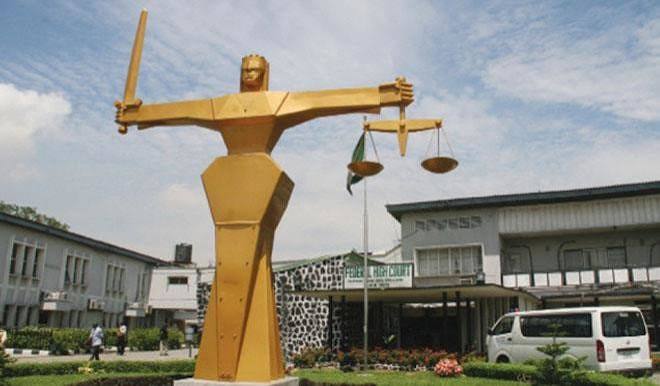
The charges were struck out on Monday, October 12, 2026, by Justice Mohammed Umar following an application by the Director of Public Prosecutions of the Federation, Rotimi Oyedepo, SAN, after the Attorney-General of the Federation reviewed the case file and identified jurisdictional concerns.
According to an opinion article by social activist and political commentator Hajia Hadiza Mohammed, the prosecution’s decision to discontinue the proceedings has raised concerns about the government’s preparedness, the investigation’s thoroughness and the need to establish accountability among public officials and government institutions allegedly connected to the disputed organisation.
The development does not, in itself, amount to a determination of the underlying allegations against Adeyemi or other individuals mentioned in the controversy.
Court Cites Jurisdictional Concerns
The eight-count case against Adeyemi was discontinued after the prosecution reportedly concluded that allegations relating to forged documents fell within the jurisdiction of the High Court of the Federal Capital Territory rather than the Federal High Court.
The development means that Adeyemi is expected to face fresh arraignment before an FCT High Court, according to the account provided by Mohammed.
The decision has prompted questions about why the jurisdictional issue was not resolved before the case proceeded at the Federal High Court.
Mohammed argued that the development suggested shortcomings in the prosecution’s preparation and raised concerns about whether the case had been handled with sufficient diligence.
However, the striking out of the charges on jurisdictional grounds should not be interpreted as an acquittal on the substantive allegations. The outcome of any subsequent proceedings will depend on the applicable law, the evidence presented and the decisions of the competent court.
Arrest and Earlier Investigation
Adeyemi was arrested on July 14, 2026, in Osun State by operatives of the Nigeria Police Force Intelligence Response Team following a bench warrant issued by Justice Umar.
His arrest generated questions about the circumstances surrounding the alleged operation of the PFIPC and the basis for prosecuting an individual accused of representing an organisation described as non-existent.
Mohammed also questioned why the matter, which she said had been before the court since late 2025, resulted in a further arrest in July 2026.
On August 6, 2026, the Independent Corrupt Practices and Other Related Offences Commission (ICPC) reportedly submitted an interim report on the matter.
According to Mohammed, the report failed to implicate senior officials of government institutions that allegedly interacted with the disputed organisation.
She questioned how an organisation alleged to be fictitious could have operated for an extended period and interacted with government agencies without attracting effective scrutiny.
The specific findings of the ICPC report, however, would need to be examined directly to establish its conclusions, the scope of its investigation and whether any individuals or institutions were formally cleared or implicated.
Questions Surrounding Government Officials
The controversy has also drawn attention to the role of senior government officials, including Femi Gbajabiamila, Chief of Staff to President Bola Tinubu, whom Mohammed identified as a central figure in the allegations.
In her commentary, Mohammed argued that any official whose conduct might be relevant to the investigation should be subject to an impartial examination of the evidence.
She also questioned whether Gbajabiamila should have stepped aside temporarily to allow an independent investigation into the allegations.
These claims and recommendations represent Mohammed’s position on the controversy. They should not be treated as proof of wrongdoing by Gbajabiamila or any other public official.
A credible investigation would require the relevant authorities to establish the facts, identify the roles of all parties and provide an opportunity for those implicated to respond to specific allegations.
Alleged N400 Million Bribe and Death of Witness
Mohammed further raised questions about an alleged N400 million bribe reportedly connected to the case and said the money was allegedly conveyed through Dolapo Babatunde Tanimola, whom she described as a proxy linked to Gbajabiamila.
She also questioned the circumstances surrounding Tanimola’s reported death and the subsequent demolition of Kachi Hotel, where the individual was allegedly killed.
Among the questions raised in her commentary were who authorised the demolition and whether the relevant authorities had adequately examined the circumstances surrounding the reported incident.
These are serious allegations that require independent verification through police records, court documents, investigative findings and statements from the relevant parties.
The available account does not independently establish the alleged bribe, the circumstances of Tanimola’s death, the reasons for the hotel’s demolition or any connection between these events and an attempt to conceal evidence.
The questions therefore remain matters requiring documentary evidence and clarification from the relevant authorities.
Calls for Accountability Across Government Institutions
A central argument in Mohammed’s commentary is that the controversy should not be confined to the prosecution of Adeyemi if investigations establish that other public institutions interacted with the alleged organisation.
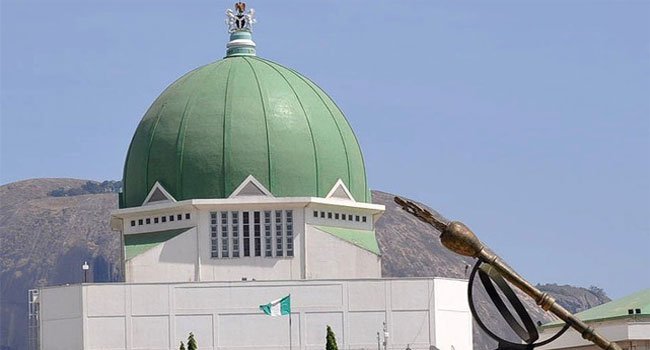
She specifically referenced offices and institutions including the Secretary to the Government of the Federation, the Office of the Head of the Civil Service of the Federation, the Central Bank of Nigeria, the Office of the Accountant-General of the Federation, the Budget Office and the National Assembly.
Mohammed argued that, if an individual successfully operated an unauthorised organisation while interacting with public institutions over an extended period, the circumstances would raise questions about institutional oversight, internal controls and due diligence.
She called for accountability where evidence establishes negligence or misconduct.
However, the mere allegation that an institution interacted with an organisation does not establish that its officials acted improperly. Any disciplinary or criminal consequences would have to be based on evidence demonstrating the conduct and responsibility of the individuals concerned.
Due Process and the Need for Transparency
The withdrawal of the charges at the Federal High Court has brought the prosecution’s handling of the case under renewed scrutiny.
While jurisdictional issues can arise in criminal proceedings, the circumstances surrounding the decision highlight the importance of ensuring that charges are properly framed, filed before a competent court and supported by a thorough investigation.
The next stage of the proceedings, including any fresh arraignment before an FCT High Court, will be important in determining how the allegations are addressed within the judicial system.
The authorities also face questions about the broader investigation, particularly the alleged operation of the PFIPC, its reported interactions with government institutions and the claims concerning financial transactions and other individuals mentioned in the controversy.
Addressing these issues transparently would help distinguish substantiated allegations from speculation and establish whether any public officials or private individuals bear responsibility.
The Case Remains Unresolved
The discontinuation of the eight charges against Prince Adeniyi Adeyemi at the Federal High Court has not resolved the wider questions surrounding the alleged investment promotion agency.
Rather, the development has renewed calls for clarity about the prosecution’s decisions, the scope of the investigation and the possible involvement of other individuals or institutions.
As the case potentially moves to a court with the appropriate jurisdiction, the priority should be a fair judicial process, a credible investigation and accountability based on verifiable evidence.
For the public, the critical questions remain whether the allegations will be fully investigated, whether any fresh proceedings will be instituted and whether the relevant authorities will provide satisfactory explanations about the matters raised.
Until those questions are answered through credible evidence and due process, the controversy surrounding the alleged PFIPC will remain an unresolved test of transparency, institutional accountability and public confidence in the administration of justice.






Leave a Reply