

Chief Justice of Nigeria, Justice Kudirat Kekere-Ekun, cautions political parties, legal practitioners and social media users against actions capable of undermining judicial independence, warning that election disputes must be determined strictly on evidence and the law.
By A1NEWS International
ABUJA, Nigeria | November 9, 2026
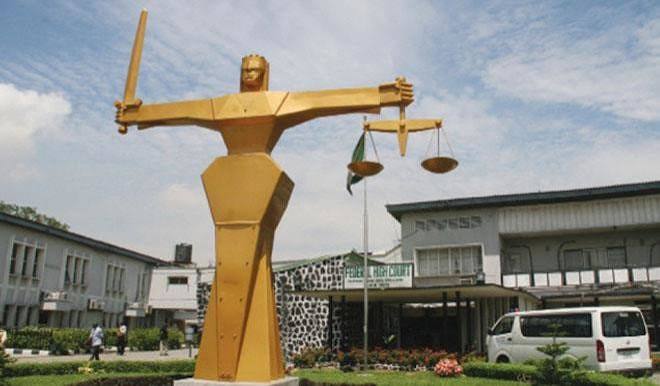
The Chief Justice of Nigeria (CJN), Justice Kudirat Motonmori Olatokunbo Kekere-Ekun, has warned politicians, legal practitioners, public officials and their supporters against intimidating judicial officers or attempting to influence the outcome of election petition proceedings ahead of Nigeria’s 2027 General Elections.
The CJN stressed that the credibility of Nigeria’s electoral process would depend significantly on the ability of the Judiciary to resolve election-related disputes independently, impartially and within the timelines prescribed by law.
She gave the warning on Monday, November 9, 2026, while delivering the keynote address at the swearing-in ceremony of judges nominated to serve on the 2027 Election Petition Tribunals, held at the Main Auditorium of the Body of Benchers in Abuja.
The ceremony also featured the commencement of a capacity-building workshop for judges and justices who will adjudicate election disputes and the unveiling of the second edition of the Judicial Electoral Manual.
Justice Kekere-Ekun described election adjudication as one of the most demanding responsibilities entrusted to judicial officers, noting that tribunal proceedings often attract intense public scrutiny and carry far-reaching consequences for individuals, political institutions and the country.
She urged the newly sworn-in judges to remain faithful to their judicial oaths, resist external pressures and administer justice without fear, favour, affection or ill will.
2027 Elections: Judiciary Faces Critical Constitutional Responsibility
The Chief Justice described the forthcoming general elections as a defining moment in Nigeria’s democratic journey.
According to her address, the Presidential and National Assembly elections are scheduled for January 16, 2027, while the Governorship and State Houses of Assembly elections are scheduled for February 6, 2027.
She noted that the Judiciary must adequately prepare to discharge its constitutional responsibilities within the strict timelines established by law.
Justice Kekere-Ekun congratulated the judges nominated to serve on the election petition tribunals, describing their appointments as a demonstration of confidence in their professional competence, integrity and ability to uphold constitutional principles.
She, however, reminded them that their appointments would test their judicial temperament, professional discipline and capacity to withstand external pressure.
“The oath you have taken is not a mere formality; it is a solemn commitment to administer justice without fear or favour, affection or ill will,” she emphasised.
Courtrooms Must Not Become Extensions of Political Battlegrounds
The CJN cautioned that election petition proceedings must not become extensions of political campaigns or public opinion contests.
She maintained that disputes arising from elections must be determined strictly on the basis of pleadings, admissible evidence and applicable laws.
According to her, the popularity of candidates, the intensity of public opinion and the influence of political interests cannot replace the legal requirements for proving allegations before election tribunals.
She urged judicial officers to maintain neutrality and exercise patience, courage and restraint throughout the adjudication process.
The Chief Justice also emphasised the need for efficient case management, proper preparation, focused hearings and timely delivery of well-reasoned judgments.
However, she warned that the urgency associated with election petitions must never be used as justification for compromising the constitutional right of parties to fair hearing.
She said both expedition and fairness must be maintained to preserve the quality and integrity of justice.
CJN Warns Lawyers Against Forum Shopping, Conflicting Court Orders
Justice Kekere-Ekun also issued a strong warning to legal practitioners against practices capable of bringing the administration of justice into disrepute.
She specifically identified the filing of multiple actions or appeals on substantially similar subject matters, pursuing conflicting orders from courts of coordinate jurisdiction and using ex parte applications to obtain tactical advantages as practices that undermine judicial integrity.
She urged lawyers to approach election litigation with professionalism, candour and respect for the administration of justice.
According to her, the responsibility of legal practitioners extends beyond advancing the interests of their clients to ensuring that such representation remains within the boundaries of professional ethics.
The CJN stressed that lawyers must not turn judicial proceedings into another instrument of political competition.
Political Parties, Candidates Warned Against Judicial Intimidation
The Chief Justice further called on political parties, candidates and their supporters to respect judicial processes and refrain from conduct capable of intimidating judicial officers.
She said political actors must understand that the judicial process is not a continuation of electoral campaigns by other means.
She urged them to comply with lawful court orders and avoid actions capable of undermining public confidence in the adjudication of election disputes.
Justice Kekere-Ekun also cautioned public officials and influential individuals against making comments that could prejudge matters pending before the courts.
She observed that public pronouncements on the merits of pending cases and attempts to influence judicial outcomes could create unnecessary tension and weaken confidence in the administration of justice.
Social Media Users, Media Organisations Urged to Exercise Restraint
In a related warning, the CJN drew attention to the growing influence of social media in shaping public perceptions of election-related judicial proceedings.
While acknowledging citizens’ constitutional freedom to express opinions and participate in public discourse, she urged social media users and media organisations to exercise responsibility when commenting on matters before the courts.
She warned against circulating unverified allegations, publishing selective accounts of court proceedings and organising online campaigns targeting judicial officers.
According to her, such activities could distort public understanding and create the impression that judicial decisions are determined by public sentiment rather than evidence and applicable laws.
The Chief Justice maintained that informed criticism of judicial decisions remains a legitimate component of democratic discourse, but misinformation, intimidation and attempts to prejudice pending proceedings have no place in a society governed by the rule of law.
Electoral Tribunal Workshop to Strengthen Judicial Capacity
Justice Kekere-Ekun described the capacity-building workshop organised for judges and justices as timely and essential to effective election dispute resolution.
She explained that the programme would deepen participants’ understanding of the Constitution, the Electoral Act 2026, applicable practice directions and evolving judicial decisions relating to electoral disputes.
She urged participants to take advantage of the workshop to improve their practical knowledge of case management, evidence evaluation, courtroom procedures and the delivery of clear, well-reasoned judgments within constitutionally prescribed timelines.
The CJN observed that the quality of preparation undertaken by judicial officers would significantly influence the quality of justice delivered during the election petition process.
Judicial Electoral Manual: CJN Commends Court of Appeal
The Chief Justice also commended the Court of Appeal for sustaining the initiative that produced the second edition of the Judicial Electoral Manual.
She particularly acknowledged the leadership of the President of the Court of Appeal, Hon. Justice Monica Bolna’an Dongban-Mensem, CFR, for coordinating the programme and supporting the development of the reference material.
According to her, the manual brings together relevant constitutional provisions, the Electoral Act 2026, applicable practice directions and judicial decisions to provide a useful resource for judicial officers and other stakeholders involved in electoral adjudication.
She, however, clarified that the manual should serve as a reference guide rather than a substitute for independent judicial reasoning.
She emphasised that every case must be determined on its individual facts, the arguments presented by counsel and the applicable law.
CJN Says Credible Elections Require Collective Institutional Responsibility
Justice Kekere-Ekun further maintained that responsibility for credible elections does not rest with the Judiciary alone.
She identified the Independent National Electoral Commission (INEC), political parties, candidates, security agencies, legal practitioners and the Judiciary as critical institutions whose cooperation and commitment to their respective responsibilities would strengthen Nigeria’s democratic process.
She said INEC must conduct elections in accordance with the law, political parties and candidates must respect electoral regulations, while security agencies must provide a safe environment without compromising their neutrality.
The Bar, she added, must uphold professional standards, while the Judiciary must independently adjudicate disputes brought before it within the time prescribed by law.
She stressed that the Judiciary neither conducts elections nor determines the political choices of voters.
Rather, its responsibility is to resolve disputes in accordance with the Constitution and applicable laws without assuming the functions of other institutions or becoming entangled in political contests.
Judges Urged to Uphold Judicial Oaths Amid Political Pressure
Addressing the newly sworn-in judges and justices, the CJN urged them to approach their assignments with humility, courage and a profound sense of responsibility.
She acknowledged that election petition proceedings would attract considerable national attention and pressure but insisted that judicial officers must not allow public expectations to distract them from their constitutional duties.
She urged them to remain firm where necessary, exercise patience and maintain impartiality under all circumstances.
Justice Kekere-Ekun subsequently declared open the capacity-building workshop for judges and justices who will serve on the 2027 Election Petition Tribunals and Appeals.
CONCLUSION
The Chief Justice’s warning comes as Nigeria prepares for another crucial electoral cycle in 2027, with the Judiciary expected to play a decisive role in resolving disputes arising from the electoral process.
Her message underscores the importance of judicial independence, professional integrity, institutional cooperation and respect for the rule of law in sustaining democratic governance.
As political activities intensify ahead of the elections, the credibility of the electoral process will depend not only on the conduct of the polls but also on the ability of institutions to discharge their constitutional responsibilities without interference.
For the judges entrusted with election petition adjudication, the challenge, as the CJN emphasised, is to ensure that justice is determined by evidence and the law, rather than political influence, public pressure or personal considerations.









Leave a Reply