
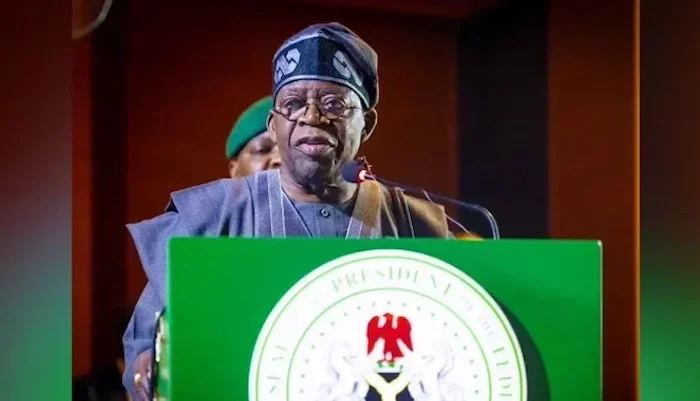
Opposition, civil society question massive allocation for post-election litigation as INEC secures over N1tn in statutory funding
By Baron Stanley Eloagu | Abuja, Nigeria
The Federal Government has proposed a controversial N135.22 billion allocation in the 2026 budget for election-related lawsuits and post-election obligations, a move that has triggered widespread debate over transparency and the credibility of Nigeria’s electoral process ahead of the 2027 general elections.
The provision, listed under “Electoral Adjudication and Post-Election Provision,” is captured within the Service-Wide Votes — a centrally managed pool of funds used to finance government obligations not tied to any specific ministry, department, or agency.
A New Budget Line Raises Eyebrows
Analysis of the appropriation document shows that the N135.22 billion allocation represents a new budget line, not previously included in earlier proposals, signaling what observers describe as a growing fiscal burden tied to election disputes.
The amount accounts for approximately 3.65 percent of the N3.70 trillion Consolidated Revenue Fund (CRF) charges, highlighting its significance within the broader fiscal framework.
The allocation comes alongside a much larger N1.01 trillion statutory transfer to the Independent National Electoral Commission (INEC), which alone accounts for 21 percent of total statutory transfers.
INEC had earlier projected that it would require N873.78 billion to conduct the 2027 general elections, in addition to N171 billion for its 2026 operations.
Opposition Parties Raise Red Flags
Opposition parties, including the Peoples Democratic Party (PDP) and the African Democratic Congress (ADC), have questioned both the size and intent of the allocation.
They argue that budgeting such a large sum for post-election litigation suggests an expectation of disputes, potentially reflecting a lack of confidence in the conduct of free, fair, and credible elections.
PDP spokesperson Ini Ememobong warned that increased transparency during elections would significantly reduce the need for litigation.
“It means that INEC itself is anticipating that it will not do well and that people will not accept the outcome,” he said, questioning the rationale behind the allocation.
The ADC, while acknowledging that some level of litigation is expected, described the amount as excessive and called for greater accountability.
Experts Question Fiscal Logic
Renowned political economist, Prof. Pat Utomi, criticised the provision, arguing that elections are contested by candidates and political parties, not the Federal Government.
“It is not the Federal Government that goes to elections… so why should the Federal Government have a budget for it?” he queried, suggesting that such costs should be contained within INEC’s own budget.
Similarly, human rights lawyer Femi Falana (SAN) described the N135 billion provision as “on the very high side,” noting that INEC already has an internal legal department and historically spends far less on litigation.
According to Falana, INEC may not require up to N20 billion for election-related legal expenses under normal circumstances.
Civil Society Warns of Deeper Electoral Flaws
Civil society organisations have also expressed concern, warning that the allocation reflects deeper structural issues within Nigeria’s electoral system.
Executive Director of #FixPolitics Africa, Anthony Ubani, described the budget as a troubling signal.
“When a country begins to budget this heavily for post-election litigation, it suggests that elections are no longer expected to be trusted; they are expected to be contested,” he said.
He argued that the trend shifts the focus of elections from the ballot box to the courtroom, undermining public confidence and encouraging manipulation.
Other civic leaders echoed similar concerns, warning that such provisions could create incentives for electoral malpractice while placing additional strain on public finances.
Debate Over Accountability and Duplication
Anti-corruption advocate Debo Adeniran questioned whether the allocation amounts to duplication, given INEC’s substantial funding and institutional independence.
“If INEC has already received nearly a trillion naira, it ought to have included legal battles in its appropriation,” he said.
He also warned against the misuse of public funds to support political actors in election-related disputes.
Calls for Electoral Reform
Stakeholders have called for urgent reforms to strengthen electoral integrity and reduce reliance on litigation.
Proposals include improved transparency, stronger enforcement of electoral laws, and the adoption of real-time electronic transmission of results to curb fraud and disputes.
Analysts argue that investing in credible election processes would significantly reduce post-election conflicts and associated costs.
A System Under Scrutiny
As Nigeria prepares for the 2027 elections, the debate over the N135 billion allocation underscores broader concerns about governance, accountability, and the future of democratic processes in the country.
For many observers, the issue goes beyond budgeting — raising fundamental questions about whether Nigeria is investing more in resolving electoral disputes than in preventing them.








Leave a Reply