
Fresh data fuels urgent calls for legal reform, economic inclusion, and political representation ahead of 2027
By A1 News International
Abuja, Nigeria — March 10, 2026
A new report has revealed that nearly one in three Nigerian women has experienced physical violence, intensifying concerns over systemic gender inequality and weak institutional protection across the country. The findings, released to mark the 2026 International Women’s Day, underscore growing pressure on government to implement urgent legal, economic, and political reforms.
Violence Behind Closed Doors
Data cited by Corporate Accountability and Public Participation Africa shows that 31 percent of Nigerian women aged 15 to 49 have suffered physical violence, while nine percent have experienced sexual violence. The figures, drawn from the Nigeria Demographic and Health Survey, point to what advocacy groups describe as a widespread but underreported crisis.
Between January and September 2025 alone, more than 10,326 gender-based violence cases were recorded nationwide. However, experts warn that the actual scale is significantly higher due to underreporting driven by stigma, fear of retaliation, and limited trust in law enforcement.
Campaigners argue that weak enforcement of existing laws and slow judicial processes continue to embolden perpetrators while discouraging victims from seeking justice.
Systemic Failures Beyond Violence
Analysts stress that gender-based violence is only one dimension of a broader structural imbalance. Many Nigerian women lack access to essential services, including healthcare, clean water, sanitation, and education—factors that deepen vulnerability and limit economic mobility.
According to Corporate Accountability and Public Participation Africa, women remain central to household survival, particularly as inflation and unemployment strain family incomes. Yet, their economic contributions are often unsupported by policy frameworks.
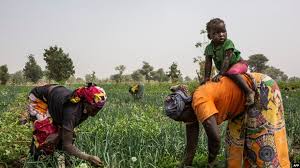
Women dominate informal sectors such as small-scale trading and agriculture, where access to credit, land ownership, and social protection remains severely restricted. Rising living costs have further intensified pressure on women, who typically manage household welfare.
Political Exclusion Persists
Gender disparity is most visible in Nigeria’s political landscape. Women occupy just 3.9 percent of legislative seats, placing Nigeria among the lowest globally in female parliamentary representation.
Out of 469 members of the National Assembly of Nigeria, only 19 are women—15 in the House of Representatives and four in the Senate.
Governance experts warn that such imbalance undermines inclusive policymaking. Vivian Efem-Bassey of ActionAid Nigeria described the figures as “extremely low,” noting that the global average is approaching 26 percent.
Push for Reserved Seats Gains Momentum
Advocacy groups are intensifying calls for the passage of the Reserved Seat Bill, currently before the National Assembly of Nigeria. The proposed constitutional amendment seeks to create dedicated legislative seats for women at federal and state levels.
The bill has gained backing from the Nigeria Governors’ Forum, while civil society organisations continue to mount pressure on lawmakers to act before the 2027 elections.
Activist Ene Obi warned against further delays, describing the bill as a critical opportunity to correct long-standing political exclusion and strengthen representation in key policy areas.
Signs of Progress in Corporate Leadership
While political inclusion remains limited, incremental progress is emerging in the corporate sector. Audrey Joe-Ezigbo of Falcon Corporation Limited highlighted increasing appointments of women to leadership roles in Nigeria’s energy industry.
Notable figures include Olu Verheijen, Oritsemeyiwa Eyesan, Folake Soetan, and Jennifer Adighije—appointments seen as signals of gradual institutional shift toward merit-based leadership.
Why It Matters
The data exposes a structural contradiction: Nigerian women sustain households and contribute significantly to the economy, yet remain under-protected, under-represented, and economically constrained. Without coordinated reforms—spanning law enforcement, economic policy, and political inclusion—the cycle of inequality is likely to persist.
The development raises fresh concerns about accountability and oversight in Nigeria’s public institutions.





Leave a Reply