
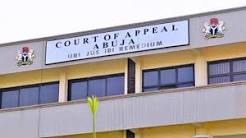
The Abuja Division of the Court of Appeal has reserved judgment in two related appeals filed against a N100 million defamation award against the Socio-Economic Rights and Accountability Project (SERAP), with the organisation challenging the evidential basis of the ruling and defending its publications as legitimate public-interest commentary.
By Obiageli Ndubuishi
ABUJA, November 16, 2026 — The Court of Appeal, Abuja Division, has reserved judgment in two related appeals challenging a N100 million defamation judgment entered against the Socio-Economic Rights and Accountability Project (SERAP) over publications concerning two operatives of the Department of State Services (DSS).
A three-member panel presided over by Justice Danlami Senchi heard arguments from counsel representing the parties on Monday before reserving judgment to dates that will be communicated to them.
The appeals, marked CA/ABJ/CV/1114/2026 and CA/ABJ/CV/1105/2026, arose from a judgment delivered by the High Court of the Federal Capital Territory on May 26, 2025.
The appellate proceedings centre on whether SERAP’s publications were defamatory, whether the two DSS officers were sufficiently identified in the publications and whether the trial court was justified in awarding N100 million in damages and ordering the organisation to publish an apology.
Parties Adopt Briefs, Urge Court to Uphold Their Positions
At the hearing of Appeal No. CA/ABJ/CV/1114/2026, counsel to the appellant, Paul Mgbeoma, adopted the appellant’s brief of argument and reply brief, urging the appellate court to allow the appeal and set aside the judgment of the lower court.
However, A.T. Kehinde, counsel to the first and second respondents, adopted his brief of argument and urged the court to dismiss the appeal.
In the sister appeal, CA/ABJ/CV/1105/2026, the appellate court granted an application seeking an extension of time to regularise the appellant’s processes after the respondents indicated that they had no objection.
Following the court’s decision, the parties adopted their respective briefs of argument.
The appellant urged the court to allow the appeal, while the first and second respondents maintained that the appeal lacked sufficient grounds to warrant overturning the lower court’s decision.
SERAP Questions Evidence Linking DSS Officers to Publications
In its arguments before the appellate court, SERAP challenged the evidential foundation of the N100 million damages award, contending that the two DSS officers who instituted the defamation proceedings failed to establish credible evidence linking them personally to the publications.
The organisation argued that neither of the officers was identified by name, rank, designation, official position or photograph in the publications complained of.
According to SERAP, the physical descriptions relied upon by the claimants were too general to establish that the publications referred specifically to them.
It further faulted the trial court for relying on its own observation of the physical appearances of the two officers to establish identification.
SERAP maintained that the court ought to have required credible evidence demonstrating that the officers matched the descriptions in the publications at the time the alleged defamatory statements were made.
The organisation’s argument essentially challenges whether the claimants satisfied the legal requirement of establishing that the allegedly defamatory publications referred to them.
Organisation Disputes Claims of Psychological and Professional Damage
SERAP also questioned the evidence presented to support claims that the publications caused psychological distress and professional damage to the two DSS officers.
It argued that assertions concerning the alleged viral circulation of the publications and the reputational consequences suffered by the claimants were not supported by sufficient independent evidence.
The organisation maintained that the trial court should not have relied on unsubstantiated claims of reputational injury in determining the quantum of damages awarded against it.
The appeal therefore raises questions about the evidential requirements for establishing personal injury to reputation and the appropriate basis for assessing damages in defamation proceedings.
SERAP Invokes Public Interest and Constitutional Freedom of Expression
Beyond challenging the identification of the claimants and the evidence of damages, SERAP defended the publications as legitimate commentary on the conduct of security officials who visited its Abuja office.
The organisation argued that the publications concerned the activities of public officers and a public institution, making the issues matters of legitimate public interest.
It faulted the trial court for allegedly failing to give proper consideration to its defences of justification and qualified privilege.
SERAP also invoked Section 39(1) of the 1999 Constitution of the Federal Republic of Nigeria, as amended, which guarantees the right to freedom of expression, including the freedom to hold opinions and receive and impart ideas and information without interference.
The organisation maintained that its publications fell within the scope of legitimate public-interest expression and that the trial court failed to adequately balance the competing interests of individual reputation and constitutional freedom of expression.
N100m Damages and Apology Order Under Challenge
SERAP is asking the Court of Appeal to overturn the N100 million damages award and the consequential order directing it to publish an apology.
The organisation insists that the decision of the FCT High Court was not supported by the evidence presented during the trial and that the court failed to properly evaluate the legal and constitutional issues raised in its defence.
The respondents, however, are urging the appellate court to dismiss the appeals and allow the lower court’s decision to stand.
The outcome could have implications for the application of defamation law in disputes involving civil society organisations, public institutions, security officials and publications concerning matters of public interest.
However, the appellate court’s eventual determination will depend on its evaluation of the evidence, the arguments presented by counsel and the applicable legal principles.
Judgment Reserved
After hearing and considering the submissions of counsel in both appeals, the Court of Appeal reserved judgment.
The panel stated that the dates for delivering its decisions would be communicated to the parties.
Until the appellate court delivers its judgment, the N100 million defamation award and the associated apology order remain subject to the outcome of the appeals.
The central question before the appellate court is whether the trial court properly established the elements of defamation, evaluated the evidence and balanced the competing rights to personal reputation and freedom of expression.EGORIES: Judiciary | Human Rights | Civil Liberties | Security | Legal Affairs










Leave a Reply