

As the EFCC closes its case against former CBN Governor Godwin Emefiele, the courtroom battle has evolved beyond one alleged $6.2 million fraud into a wider examination of accountability, institutional failures and the legacy of one of Nigeria’s most influential—and controversial—financial policymakers.
By A1NEWS International Investigations Desk
ABUJA, Nigeria — July 4, 2026
After nearly a year of courtroom proceedings, dozens of exhibits and testimony from fifteen prosecution witnesses, the Federal Government’s criminal case against former Central Bank of Nigeria (CBN) Governor Godwin Ifeanyi Emefiele has entered a decisive phase.
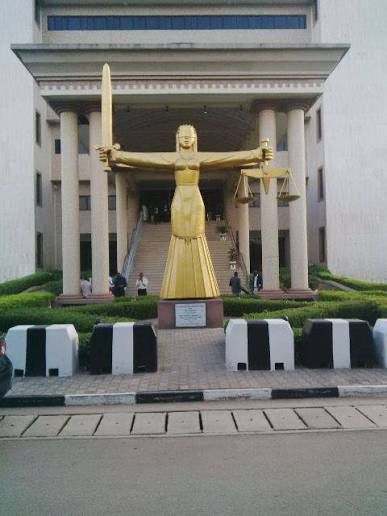
With the prosecution closing its case and the defence opting for a no-case submission, Justice Hamza Muazu of the Federal Capital Territory High Court, Maitama, is now expected to determine whether the evidence presented by the Economic and Financial Crimes Commission (EFCC) is sufficient to compel Emefiele to enter his defence.
Yet beyond the legal arguments lies a broader national question: Has the prosecution established that Emefiele masterminded the alleged $6.2 million fraud, or has the trial exposed wider institutional failures involving multiple public officials?
The proceedings have transformed what initially appeared to be a straightforward corruption prosecution into a complex examination of Nigeria’s financial governance, internal controls at the Central Bank, executive oversight and public accountability.
From Banking Executive to Nigeria’s Most Powerful Financial Regulator
Before becoming CBN Governor in June 2014, Godwin Emefiele spent decades in commercial banking, rising through the ranks to become Group Managing Director of Zenith Bank.
His appointment by former President Goodluck Jonathan came at a period when Nigeria was battling declining oil prices, foreign exchange volatility and slowing economic growth.
Few anticipated that Emefiele would eventually become the longest-serving and arguably most controversial Central Bank Governor in Nigeria’s democratic history.
The Emefiele Years: Development Finance on an Unprecedented Scale
Supporters argue that Emefiele fundamentally changed the role of the Central Bank.
Instead of limiting the institution to monetary policy, he expanded its intervention in virtually every productive sector of the economy.
Among the flagship initiatives introduced during his tenure were:
- Anchor Borrowers’ Programme
- Commercial Agricultural Credit Scheme
- Real Sector Support Facility
- Healthcare Sector Intervention Fund
- Creative Industry Financing Initiative
- Youth Investment Fund
- Targeted Credit Facility during the COVID-19 pandemic
- Manufacturing and SME intervention programmes
Collectively, these interventions channelled trillions of naira into agriculture, manufacturing, aviation, healthcare and small businesses.
The programmes were credited by supporters with increasing local rice production, expanding domestic manufacturing and cushioning the economic impact of COVID-19.
Critics Saw a Different Picture
Despite those interventions, critics argued that the CBN gradually abandoned its traditional role as an independent monetary authority.
Economists questioned:
- Multiple exchange-rate windows;
- Persistent foreign exchange shortages;
- Rising inflation;
- Increasing public debt;
- Heavy quasi-fiscal spending by the Central Bank.
Business groups repeatedly complained that foreign investors struggled to access foreign exchange, while manufacturers accused the apex bank’s policies of creating uncertainty.
The controversial naira redesign policy implemented before the 2023 general election further polarized public opinion.
Supporters described it as a bold anti-corruption initiative.
Critics blamed it for cash shortages that disrupted businesses nationwide.
From Governor to Defendant
On June 9, 2023, President Bola Tinubu suspended Emefiele from office.
He was subsequently arrested and later arraigned on multiple criminal charges before different courts.
Among the various allegations brought against him is the present case involving the alleged fraudulent release of $6.2 million purportedly intended for foreign election observers during the 2023 general elections.
Emefiele has consistently pleaded not guilty to all charges.
The Alleged $6.2 Million Transaction
According to the EFCC, the money originated from a Federal Government foreign exchange account domiciled with the Central Bank.
Prosecutors allege that the funds were released based on documents purportedly authorising payment for election observer logistics.
The prosecution contends that the approval process was fraudulent and that public funds were unlawfully diverted.
Central to the prosecution’s case are several documents admitted as exhibits, including letters allegedly originating from the Presidency and the Office of the Secretary to the Government of the Federation (SGF).
Obazee’s Testimony Broadens the Narrative
The prosecution’s final witness, Special Investigator Jim Obazee, significantly widened the scope of the public debate.
Rather than portraying the alleged fraud as the action of a single individual, Obazee told the court that multiple officials ought to face prosecution.
Among those he mentioned were:
- the late former President Muhammadu Buhari (whom he said should be prosecuted posthumously);
- former SGF Boss Mustapha;
- former members of the CBN Board;
- a former Abuja Branch Manager of the CBN;
- Jibril Abubakar, who allegedly collected the money;
- Bashirudeen Maishanu, a serving CBN official who allegedly refunded part of the funds during the investigation.
Obazee argued that prosecuting only Emefiele failed to reflect the full scope of the alleged conspiracy.
Those assertions remain allegations made in court and have not been determined by the court.
Questions Raised by the Investigation
During his testimony, Obazee pointed to several issues he said suggested systemic failures within the Central Bank.
These included:
- alleged breakdown of internal controls;
- CCTV systems that allegedly were not effectively utilised;
- periods during which BVN verification reportedly failed;
- inadequate customer identification procedures;
- questions surrounding reconciliation of CBN accounts;
- alleged failure to detect irregular withdrawals during preparation of annual financial statements.
The prosecution tendered CBN account statements which were admitted as exhibits.
Obazee argued that, under established banking procedures, such transactions should ordinarily have triggered internal scrutiny.
Cross-Examination Produces Important Admissions
Under cross-examination by defence counsel Matthew Burkaa, SAN, several important clarifications emerged.
Obazee acknowledged that:
- he did not recover any money directly from Emefiele;
- investigators found no evidence that the alleged funds were transferred into Emefiele’s personal account;
- his conclusion that Emefiele ought to have known about the transaction was based substantially on his position as Governor and presumed oversight responsibilities rather than direct evidence of receiving the funds.
He maintained that stronger internal controls could have prevented or detected the alleged transaction.
These admissions are likely to feature prominently in the defence’s no-case submission.
Dispute Over Documentary Evidence
Proceedings also witnessed legal arguments over whether Obazee was qualified to identify signatures appearing on disputed documents.
Defence counsel objected on the grounds that the witness was neither a handwriting expert nor a forensic examiner.
Justice Hamza Muazu upheld parts of the objection, limiting aspects of the witness’s testimony regarding signature identification.
The ruling underscored the court’s insistence that opinion evidence must come from appropriately qualified witnesses.
Recovered Funds and Continuing Investigations
Obazee informed the court that investigators recovered $856,500 from one of the persons allegedly connected with the transaction.
He insisted that recovering part of the funds should not exempt any suspect from prosecution.
The prosecution indicated that investigations involving other individuals mentioned during the proceedings remain ongoing.
The Defence Takes a Different Position
After the prosecution closed its case with fifteen witnesses, the defence announced that it would file a no-case submission.
In Nigerian criminal procedure, a no-case submission argues that the prosecution has failed to establish sufficient evidence requiring an accused person to enter a defence.
If upheld, the defendant may be discharged without presenting evidence.
If dismissed, Emefiele will be required to open his defence.
The court has fixed October 20, 2026, for the adoption of final addresses on the no-case submission.
Has the Prosecution Established Criminal Liability?
The answer remains one for the court.
The prosecution maintains that documentary evidence, witness testimony and surrounding circumstances demonstrate Emefiele’s criminal responsibility.
The defence, on the other hand, argues that the prosecution has failed to establish direct evidence linking him to the alleged diversion of funds and that key prosecution witnesses themselves acknowledged the absence of proof that he personally received the money.
Ultimately, only the court can determine whether the legal threshold has been met.
A Legacy Still Being Written
Long before his legal troubles, Emefiele’s tenure had already divided economists, politicians and the financial community.
To supporters, he was a development banker who aggressively used the Central Bank to stimulate agriculture, manufacturing and domestic production.
To critics, he blurred the line between monetary policy and fiscal policy, weakened institutional independence and presided over policies that contributed to foreign exchange distortions and inflationary pressures.
His criminal trial now places that legacy under even greater scrutiny.
Whether history ultimately remembers him as an economic reformer, an overreaching central banker or a public official who breached the law will depend not on public opinion but on the evidence tested in court and the judgments ultimately delivered.
The EFCC’s case against Godwin Emefiele has evolved into far more than the prosecution of a former Central Bank Governor. It has become a test of Nigeria’s commitment to accountability at the highest levels of government, exposing questions about institutional oversight, documentary integrity, banking controls and executive decision-making. While Jim Obazee’s testimony has broadened public debate by implicating additional former officials, those allegations remain unproven unless and until established by a competent court. As the case moves to the no-case submission stage, Nigerians—and the international financial community—will be watching closely to see whether the prosecution has presented sufficient evidence to warrant a full defence or whether the court concludes that the legal threshold has not b








Leave a Reply