
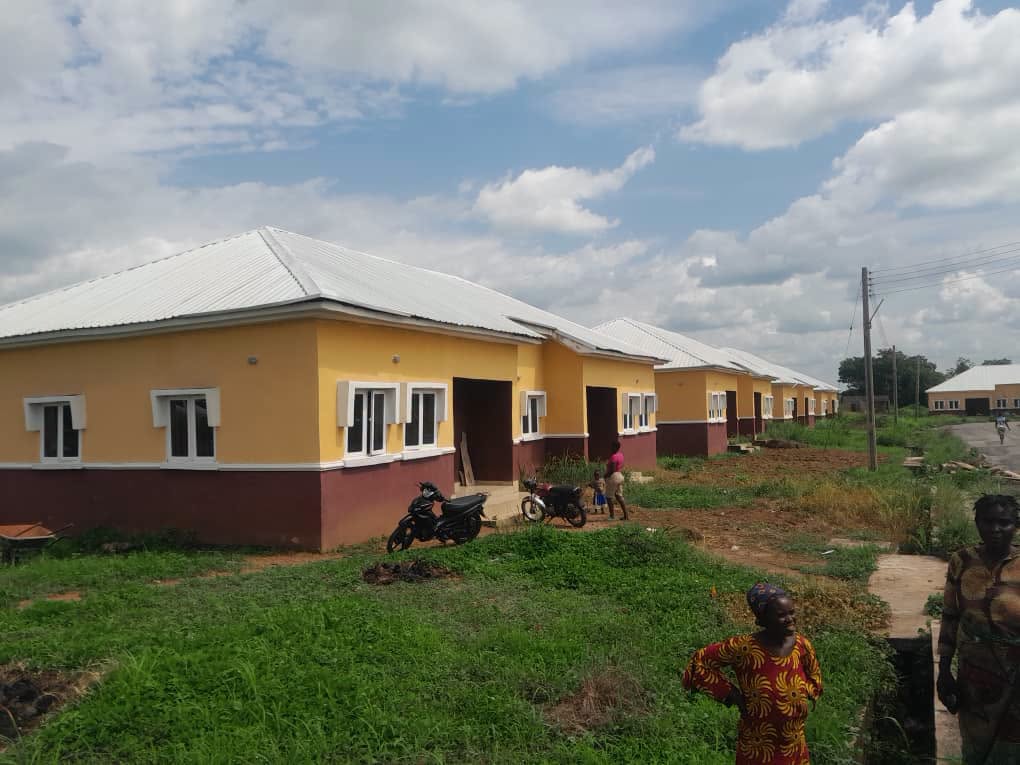
Benue acquires Federal Government housing estate to tackle housing deficit, ease rising rents and introduce rent-to-own programme for low-income workers.
By Emmanuel Angulu – July 2, 2026
MAKURDI, Benue State — The Federal Government has formally handed over 116 housing units under the National Housing Programme to the Benue State Government, marking a significant step toward expanding affordable housing opportunities for civil servants and low-income earners in the state.
The housing estate, acquired by the Benue State Government through the Benue Investment and Property Company (BIPC), is expected to reduce the state’s housing deficit, cushion the impact of rising rental costs in Makurdi and provide workers with a structured pathway to homeownership through a rent-to-own scheme.
The handover ceremony underscores growing collaboration between the Federal and State Governments to address Nigeria’s housing challenges, which experts estimate run into millions of housing units nationwide.
Federal Government Commends Benue’s Housing Initiative
Speaking during the official handover, the Minister of Housing and Urban Development, Ahmed Musa Dangiwa, represented by the Director of Public Building and Housing Development, Femi Temitope, praised the Benue State Government for prioritising infrastructure development and citizens’ welfare.
According to the ministry, the transfer of the estate demonstrates how partnerships between federal and state authorities can accelerate access to decent and affordable housing.
Temitope said the formal handover reflected Governor Hyacinth Alia’s commitment to improving living standards through strategic investments in housing and social infrastructure.
He noted that expanding affordable housing remains central to efforts aimed at promoting inclusive urban development and improving the quality of life of Nigerians.
Benue Acquires Estate for Civil Servants
Receiving the estate on behalf of Governor Hyacinth Alia, the Acting Head of Civil Service, Eunice Ogbenyi-Ihu, explained that although the estate was originally developed under the Federal Government’s National Housing Programme, the Benue State Government acquired it specifically to benefit civil servants and other low-income residents.
She described the acquisition as another demonstration of Governor Alia’s commitment to workers’ welfare and sustainable housing development.
Ogbenyi-Ihu stated that beyond easing accommodation challenges, the initiative would enable many public servants who previously relied on rented accommodation to become homeowners through flexible payment arrangements.
She also announced that the housing estate has been named after the late former Head of Service, Dr. Moses Agbogbo Odeh, who died while serving the state, describing the decision as recognition of his dedication to public service.
Rent-to-Own Scheme Targets Low-Income Workers
One of the key features of the initiative is the introduction of a rent-to-own model designed to make homeownership more accessible for workers with modest incomes.
Under the arrangement, eligible civil servants will be able to occupy the houses while making structured payments over time, with the option of outright purchase where applicable.
State officials said the allocation process would be transparent and based on clearly defined eligibility criteria to ensure fairness and accountability.
The government believes the programme will significantly reduce financial barriers that have traditionally prevented many workers from owning homes.
BIPC to Manage Allocation and Housing Programme
The Benue Investment and Property Company (BIPC) will oversee the administration and allocation of the estate.
Speaking during the physical handover at the estate located along the Welfare–Mobile Barracks Road in Makurdi, the Group Managing Director of BIPC, Raymond Asemakaha, said the project complements the state’s ongoing housing expansion initiatives.
According to him, the newly acquired estate will primarily serve low-income earners, while the government’s ongoing Eco City Estate, comprising four-bedroom duplexes, is designed for higher-income residents.
He explained that the dual approach would provide housing options across different income categories, helping to narrow the housing gap in the state.
Addressing Nigeria’s Housing Deficit
Housing experts have consistently identified inadequate housing supply, rapid urbanisation, rising construction costs and limited access to mortgage financing as major drivers of Nigeria’s housing deficit.
Benue’s latest intervention reflects a broader trend among state governments seeking innovative financing models to improve housing affordability.
The rent-to-own initiative is also expected to reduce pressure on the rental market in Makurdi, where increasing demand has contributed to higher accommodation costs in recent years.
Analysts note that if effectively implemented, similar models could provide a practical solution for many public servants across Nigeria who struggle to access conventional mortgage facilities.
Economic and Social Impact
Beyond improving access to shelter, the initiative is expected to deliver wider economic benefits by enhancing workers’ welfare, promoting asset ownership and stimulating local economic activities around the housing estate.
Affordable housing schemes are also considered important tools for reducing urban poverty, improving social stability and encouraging long-term community development.
Stakeholders have, however, emphasised the importance of transparency in the allocation process to ensure that the programme reaches its intended beneficiaries.
The formal transfer of 116 housing units from the Federal Government to the Benue State Government marks an important milestone in efforts to expand affordable housing for public servants and low-income families. With the introduction of a rent-to-own scheme and transparent allocation process, the initiative seeks not only to reduce the state’s housing deficit but also to provide a sustainable pathway to homeownership for workers. As housing affordability continues to pose a national challenge, the success of the Benue model may offer valuable lessons for similar interventions across Nigeria.












Leave a Reply