
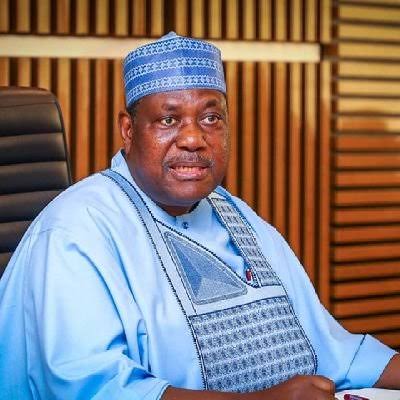
SGF Akume says fair wages, workplace security, social protection and skills development are critical to making domestic employment attractive to Nigerian youths, while government calls for data-driven planning to turn job policies into measurable outcomes
By A1NEWS International
ABUJA, NIGERIA — August 13, 2026:
The Federal Government has identified the creation of decent and productive jobs as a critical component of Nigeria’s strategy to retain its young population, strengthen human dignity and build a more inclusive economy.
The position was contained in a keynote address by the Secretary to the Government of the Federation (SGF), Senator George Akume, presented on his behalf by the Director of Planning, Research and Statistics in the Office of the Secretary to the Government of the Federation (OSGF).
The address formed part of discussions around Nigeria’s employment crisis, youth development and the need to create economic opportunities capable of reducing the pressures that drive Nigerians towards irregular migration.
The SGF argued that the focus must move beyond simply creating employment numbers to ensuring that jobs provide fair income, workplace security, opportunities for personal development and social protection.
According to the address, decent employment can provide young Nigerians with a viable and dignified future within the country.
DECENT JOBS AS AN ALTERNATIVE TO IRREGULAR MIGRATION
The Federal Government’s position places employment policy at the centre of the debate over irregular migration.
The argument is that young Nigerians are more likely to consider building their futures at home when domestic employment provides adequate income, security and opportunities for advancement.
The government therefore sees decent work not simply as an economic objective, but also as a social and development intervention.
“Decent jobs”—as defined in the address—must offer more than employment status. They should provide:
- Fair and adequate income;
- Workplace security;
- Opportunities for personal development;
- Social protection;
- Respect for workers’ rights; and
- Human dignity.
This distinction is important because an economy can generate employment while still leaving large numbers of workers in insecure, poorly paid or exploitative conditions.
ECONOMIC GROWTH MUST PROTECT HUMAN DIGNITY
The SGF’s address also linked employment policy to human-rights protection.
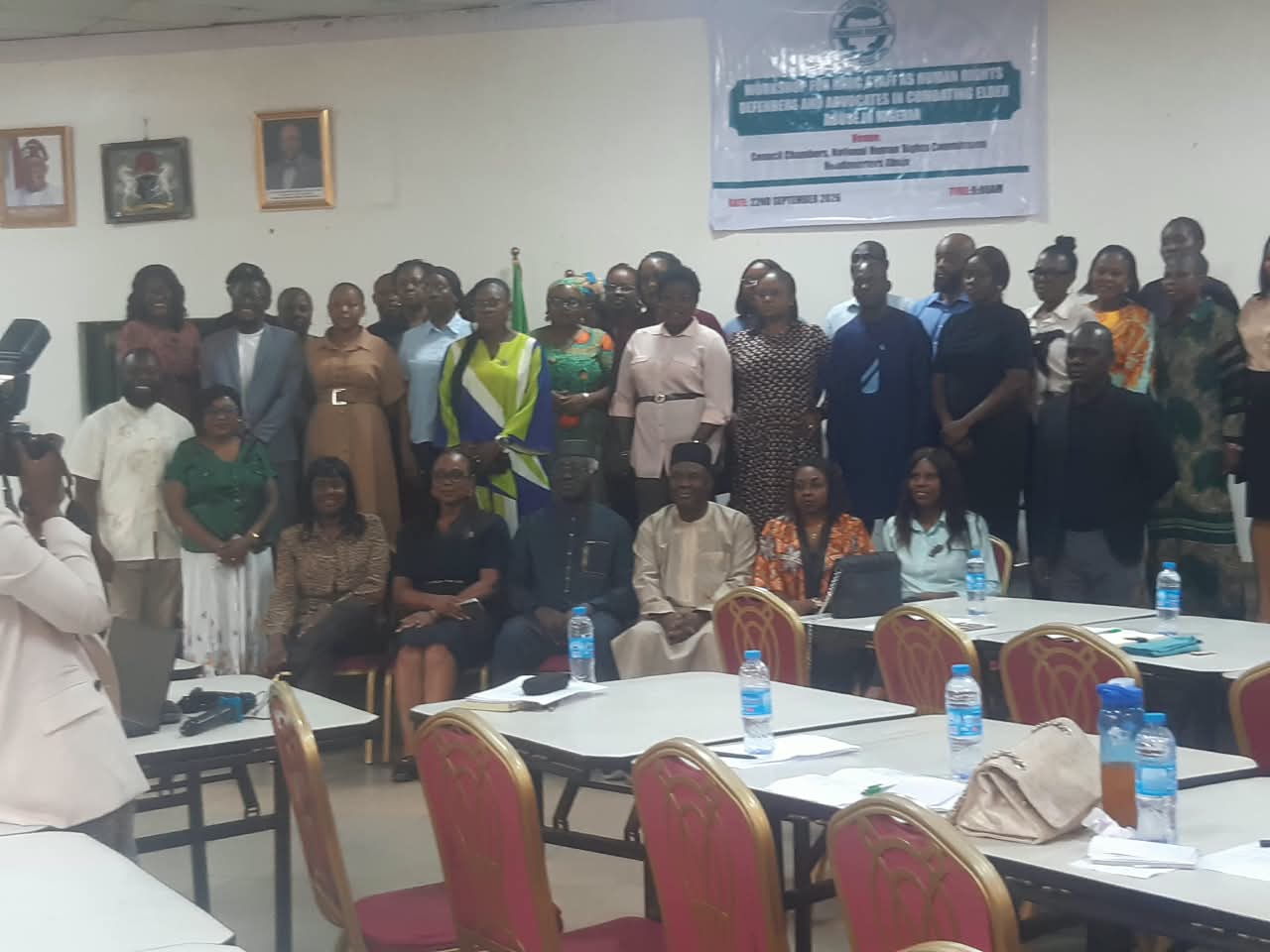
It stated that collaboration between the Federal Ministry of Labour and Employment and the National Human Rights Commission (NHRC) is intended to ensure that economic growth remains consistent with labour rights and human dignity.
The broader policy objective is to create an employment environment in which Nigerians can work without sacrificing fundamental rights and protections.
This approach recognises that economic development cannot be measured solely through GDP growth or investment figures.
The quality of employment, income distribution, workplace conditions and access to social protection are equally important indicators of whether growth is translating into improved living standards.
SDG 8 AT THE CENTRE OF THE EMPLOYMENT AGENDA
The Federal Government also situated its employment strategy within the framework of the United Nations Sustainable Development Goal 8 (SDG 8).
SDG 8 calls for sustained, inclusive and sustainable economic growth, full and productive employment and decent work for all.
For Nigeria, achieving that objective presents a significant policy challenge because the country must simultaneously expand economic output, absorb new entrants into the labour market and improve the quality of existing employment.
The SGF’s address therefore called for coordinated action across government, the private sector, development partners and civil society.
WHY JOB NUMBERS ALONE ARE NOT ENOUGH
One of the central implications of the government’s position is that employment policy should move beyond headline job-creation figures.
A government programme can claim thousands of beneficiaries while leaving questions unanswered:
How many jobs are permanent?
How many provide adequate income?
How many include social protection?
How many generate opportunities for career progression?
How many survive after government funding ends?
These questions are crucial if Nigeria is to distinguish genuine decent employment from temporary engagements or vulnerable informal work.
The Federal Government’s emphasis on planning and statistical evidence suggests a need for employment policies to be evaluated according to measurable outcomes rather than announcements alone.
DATA MUST DRIVE JOB-CREATION POLICY
The Department of Planning, Research and Statistics within the OSGF was specifically highlighted in the address as an important component of the government’s development-planning architecture.
According to the SGF, robust data and structured policy frameworks are essential to sustainable development.
Effective job creation, the government argued, requires:
- Sound planning;
- Reliable labour-market statistics;
- Evidence-based policymaking;
- Continuous monitoring;
- Rigorous evaluation; and
- Coordinated institutional implementation.
The emphasis on data is significant because Nigeria’s labour market is complex, with large informal and self-employed populations operating alongside the formal employment sector.
Without reliable information on where jobs are being created, which skills employers need, how many workers are underemployed and which sectors have the greatest employment potential, policymakers risk designing interventions without sufficient evidence.
FROM POLICY ASPIRATIONS TO MEASURABLE OUTCOMES
The government acknowledged that policies alone do not create jobs.
They must be translated into programmes, funded adequately, implemented effectively and evaluated against clear targets.
This makes planning and research particularly important.
The OSGF’s planning architecture is expected to help bridge the gap between government declarations and measurable development outcomes.
In practical terms, employment policy should answer questions such as:
Which sectors can create the largest number of sustainable jobs?
Which states and regions have the greatest employment deficits?
What skills are employers unable to find?
What barriers prevent small businesses from expanding?
How much public investment is required to create sustainable employment?
What happens to beneficiaries after government intervention ends?
Answering these questions requires consistent labour-market data and systematic monitoring.
PRIVATE SECTOR REMAINS CRITICAL
Although the Federal Government has a central role in establishing policy and infrastructure, the private sector remains indispensable to large-scale employment creation.
Businesses ultimately create much of the productive employment that absorbs workers into the economy.
That means job creation policy must also consider the conditions under which businesses operate.
Issues such as electricity costs, access to finance, taxation, transportation, infrastructure, regulation, security and market access can determine whether a business expands its workforce or reduces operations.
A policy framework focused on decent jobs must therefore simultaneously address the cost of doing business.
HUMAN RIGHTS AND LABOUR POLICY MUST WORK TOGETHER
The involvement of the NHRC in the broader dialogue adds a human-rights dimension to the employment debate.
Workers’ rights are often most vulnerable where unemployment is high and bargaining power is weak.
When people desperately need employment, they may accept poor wages, unsafe conditions or exploitative arrangements because alternatives are limited.
A decent-work strategy therefore requires institutions capable of enforcing labour standards and protecting workers from abuse.
The government’s stated collaboration with the Labour Ministry and NHRC is intended to strengthen this connection between economic growth and human dignity.
THE YOUTH EMPLOYMENT TEST
Nigeria’s youthful population represents both a major economic opportunity and a significant policy challenge.
If young Nigerians acquire relevant skills and gain access to productive employment, they can become a powerful engine of economic growth.
If they remain excluded from meaningful economic opportunities, however, unemployment and underemployment can contribute to social vulnerability and pressure to seek opportunities elsewhere.
This is why the government’s emphasis on decent jobs intersects with the wider debate over migration, entrepreneurship, skills development and national security.
CAN DATA FIX NIGERIA’S JOB PROBLEM?
The government’s emphasis on evidence-based policymaking is necessary, but data alone will not solve Nigeria’s employment crisis.
Reliable statistics can identify problems.
Planning can design interventions.
Monitoring can detect failures.
Evaluation can establish what works.
But political commitment, financing, institutional coordination and private-sector participation are required to implement solutions.
The real test will therefore be whether Nigeria can build a policy cycle in which data informs decisions, decisions produce programmes, programmes create jobs and independent evaluation determines whether those jobs are sustainable and decent.
The Federal Government’s position represents a broader shift in the way Nigeria’s employment challenge is being framed.
The objective is no longer simply to create jobs, but to create decent jobs that provide income, security, social protection, personal development and dignity.
That approach could also form part of a wider strategy for reducing the economic pressures associated with irregular migration.
However, the success of the policy will ultimately depend on implementation.
Nigeria needs credible labour-market data, coordinated institutions, private-sector investment, practical skills development, worker protection and an enabling environment for businesses to expand.
The critical measure should therefore be outcomes—not the number of policies announced.
If government can convert planning into implementation, statistics into evidence-based decisions and policy commitments into sustainable employment, decent work could become a powerful pillar of Nigeria’s economic and social development.
The challenge now is clear:
Can Nigeria build an economy in which young people do not merely find jobs, but find decent work capable of giving them a reason to build their futures at home?











Leave a Reply