
Insists all federal expenditures are backed by law as opposition demands accountability over IMF fiscal transparency observations
By John Ishaku – July 6, 2026
ABUJA, Nigeria — The Federal Government has strongly rejected allegations that it spent more than ₦8.8 trillion outside the national budget, describing the claim as a misrepresentation of the International Monetary Fund’s (IMF) recent fiscal assessment of Nigeria.
The government maintained that it does not operate a “shadow budget” or spend public funds outside constitutional and statutory provisions governing public finance, insisting that every expenditure is authorised by law and subject to legislative oversight.
The clarification follows widespread public debate triggered by comments attributed to the IMF’s Resident Representative in Nigeria, Christian Ebeke, during the release of the IMF’s 2026 Article IV Consultation Report, which noted that public expenditures equivalent to about two per cent of Nigeria’s Gross Domestic Product (GDP) were not fully reflected in recent budget documentation.
The IMF observation prompted opposition politicians, including former Vice President Atiku Abubakar and Labour Party leader Peter Obi, to demand investigations into what they described as possible off-budget spending amounting to approximately ₦8.8 trillion.
However, the Federal Government says those interpretations distort the IMF’s findings.
Government Rejects ‘Shadow Budget’ Allegation
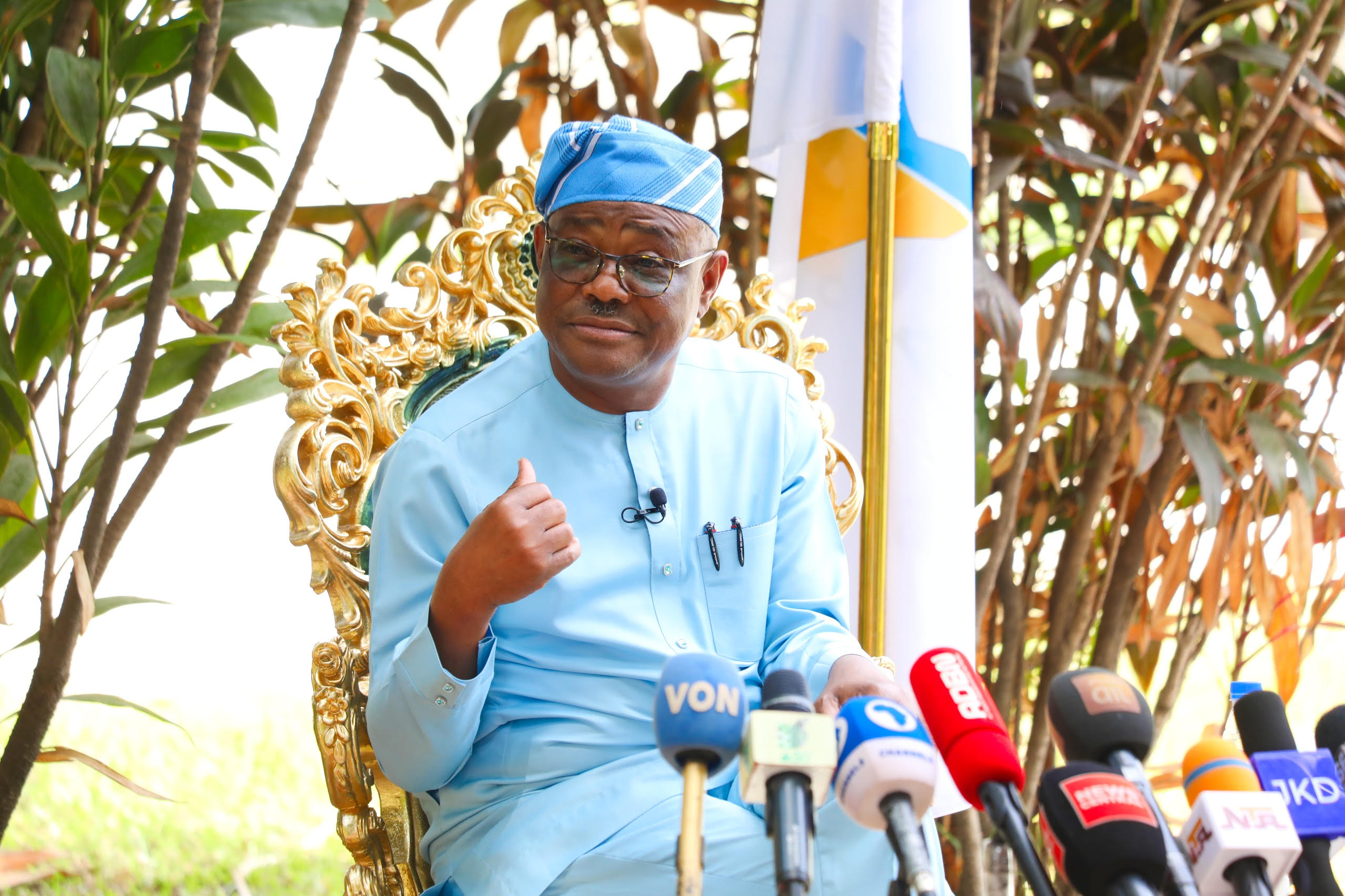
In a statement issued on Sunday, the Minister of Finance and Coordinating Minister of the Economy, Mr. Taiwo Oyedele, said suggestions that the Federal Government secretly spent trillions of naira without legislative approval were inaccurate and misleading.
According to him, Nigeria’s Constitution clearly regulates public expenditure through Sections 80 to 83 and Section 162 of the 1999 Constitution (as amended), making it impossible for federal funds to be legally withdrawn without statutory authority.
He stressed that every Federal Government expenditure is supported by Appropriation Acts, Supplementary Appropriation Acts or other legally established authorisations approved by the National Assembly.
“The Federal Government does not maintain or operate any parallel or hidden budget outside the constitutional framework,” the minister said.
Capital Projects Extend Beyond Annual Budgets
Oyedele explained that several major infrastructure projects naturally span multiple fiscal years and are implemented under capital rollover provisions recognised by Nigerian financial regulations.
He argued that such multi-year projects should not be interpreted as off-budget spending merely because their implementation stretches across different budget cycles.
According to the minister, this practice is common in public financial management globally and complies with existing laws governing government expenditure.
Understanding the IMF Observation
The Finance Minister said the IMF’s comments focused primarily on improving the comprehensiveness and presentation of Nigeria’s fiscal reporting rather than questioning the legality of government spending.
He explained that Nigeria’s fiscal framework contains several statutory expenditures that are authorised outside the annual Appropriation Act but remain fully legal under Acts of the National Assembly.
These include statutory transfers to development commissions, debt servicing obligations, first-line charges, security interventions, disaster response funding, Federal Capital Territory budgets, and expenditures by certain agencies operating under separate statutory provisions.
According to Oyedele, these expenditures are publicly disclosed, audited and monitored under existing accountability mechanisms.
“Their classification under international reporting standards should not be interpreted as evidence of unlawful expenditure,” he stated.
Minister Challenges Allegations
The minister further challenged those alleging unlawful spending to provide concrete evidence identifying projects allegedly executed without legislative approval.
He argued that claims involving trillions of naira should be supported with verifiable facts rather than assumptions or political interpretations.
He also rejected suggestions that the reported amount automatically represented an increase in Nigeria’s fiscal deficit.
According to him, fiscal deficits are determined by the relationship between total government revenues and expenditures, regardless of the financing mechanism used for approved capital projects.
Tinubu Administration Pursuing Budget Reforms
The Finance Minister noted that the Federal Government has already begun implementing reforms aimed at improving fiscal transparency and harmonising Nigeria’s budget reporting with international standards.
He recalled that while presenting the 2026 Appropriation Bill to the National Assembly in December 2025, President Bola Tinubu called for an end to overlapping budget systems and advocated a single harmonised national budgeting framework.
Oyedele said recent reforms have strengthened revenue administration, treasury management, digital financial systems and overall fiscal governance.
He added that these reforms have received positive recognition from the IMF, international credit rating agencies, development partners and global investors.
Opposition Demands Investigation
Despite the government’s clarification, opposition leaders continue to demand independent investigations into the IMF observations.
Former Vice President Atiku Abubakar has called on the Economic and Financial Crimes Commission (EFCC), the Independent Corrupt Practices and Other Related Offences Commission (ICPC), the Auditor-General of the Federation and the National Assembly to investigate what he described as possible off-budget spending amounting to approximately ₦8.8 trillion.
Similarly, Labour Party presidential candidate Peter Obi argued that the IMF findings raise significant concerns about fiscal transparency and public accountability, urging government institutions to provide Nigerians with full disclosure of public expenditure.
IMF Calls for Stronger Fiscal Reporting
While highlighting gaps in Nigeria’s fiscal reporting, the IMF also acknowledged that the Federal Government has begun taking steps to improve budget transparency through ongoing public financial management reforms.
The IMF encouraged Nigeria to strengthen budget reporting and ensure greater alignment between annual appropriations and internationally accepted fiscal reporting standards to improve transparency and public accountability.
Growing Debate Over Fiscal Governance
The controversy has intensified public debate over government spending, fiscal transparency and constitutional oversight as Nigeria prepares for future budget cycles and the 2027 general elections.
Analysts say the dispute underscores the need for clearer public communication regarding the distinction between constitutionally authorised statutory expenditures and budget presentation under international reporting standards.
The outcome of the ongoing political and institutional debate is expected to shape future reforms aimed at improving public confidence in Nigeria’s fiscal governance.
With the Federal Government firmly rejecting allegations of secret spending while opposition figures continue to demand independent investigations, attention is now shifting to the National Assembly, oversight agencies and future fiscal reforms.
Whether the controversy ultimately reflects weaknesses in budget reporting or deeper concerns about fiscal accountability, the debate has placed Nigeria’s public financial management system under renewed national scrutiny.









Leave a Reply