
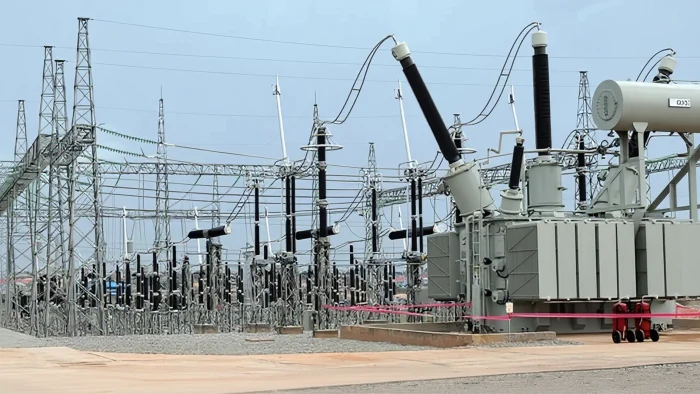
Power Minister Joseph Tegbe says collaboration among federal and state regulators is critical to preventing market instability, regulatory overlap and investor uncertainty as Nigeria implements the Electricity Act.
By John Ishaku
ABUJA, Nigeria – July 18, 2026
The Federal Government has cautioned stakeholders in Nigeria’s electricity sector against actions capable of destabilising the country’s emerging decentralised electricity market, warning that regulatory conflicts and institutional rivalry could undermine years of power sector reforms and discourage much-needed private investment.
The Minister of Power, Chief Joseph Tegbe, issued the warning during a high-level workshop on Legal, Policy and Regulatory Harmonisation between Federal and State Institutions on the Decentralisation of the Nigerian Electricity Supply Industry (NESI) held in Abuja.
The workshop brought together regulators, electricity operators, policymakers, state governments and development partners to deliberate on implementing the Electricity Act, which has significantly altered Nigeria’s electricity governance by granting states wider authority to establish and regulate their own electricity markets.
Electricity Reform Enters a New Phase
Nigeria’s power sector is undergoing one of its most significant structural transformations since the 2013 privatisation of electricity assets.
With the enactment of the Electricity Act, states now have constitutional and statutory powers to generate, transmit, distribute and regulate electricity within their jurisdictions, provided they establish the required legal and regulatory frameworks.
The decentralisation policy is expected to improve electricity access, attract sub-national investments, encourage competition and reduce the overdependence on the national grid.
However, experts have also warned that the transition could create regulatory overlaps if federal and state institutions fail to coordinate their activities effectively.
Minister Warns Against Institutional Rivalry
Addressing participants, Tegbe stressed that every stakeholder within the Nigerian Electricity Supply Industry has a critical role to play and must work collaboratively rather than competitively.
According to him, decentralisation should not result in fragmented markets or conflicting regulatory regimes capable of creating uncertainty for investors and consumers.
“Our success is interconnected,” the minister said.
“This is why collaboration must become the defining principle of our decentralised electricity market.”
He urged institutions to prioritise partnership instead of jurisdictional competition.
“We must ensure collaboration rather than competition between institutions. We must build alignment instead of regulatory conflict. We must practice mutual respect instead of jurisdictional rivalry.”
Federal Government Retains Strategic Leadership Role
While acknowledging the expanded responsibilities now assigned to state governments under the Electricity Act, the minister explained that the Federal Government would continue providing strategic leadership for the sector.
He outlined the evolving responsibilities of key stakeholders, noting that:
- The Federal Government retains overall policy leadership.
- State governments now regulate electricity markets within their jurisdictions.
- The Nigerian Electricity Regulatory Commission (NERC) continues to regulate areas under federal jurisdiction.
- Newly established state electricity regulatory commissions will supervise state electricity markets.
- Generation companies remain responsible for supplying electricity into the national grid.
- Distribution companies continue delivering electricity to millions of consumers.
- The Transmission Company of Nigeria (TCN) remains custodian of the national transmission network.
- Private investors provide essential capital for infrastructure expansion.
- Development partners continue offering technical assistance and financial support.
According to him, none of these institutions can achieve success independently.
Electricity Act Creates Complementary Markets, Not Competing Systems
The minister dismissed suggestions that decentralisation would create competing electricity industries across Nigeria.
Instead, he explained that the Electricity Act envisions multiple complementary electricity markets operating within a unified national framework.
According to Tegbe, regulatory harmony remains essential to achieving the objectives of the reforms.
He said the government’s priority is ensuring that investors encounter a transparent, predictable and coordinated regulatory environment regardless of where they choose to invest.
“The Electricity Act did not establish parallel electricity industries but complementary electricity markets operating within one national framework.”
Investor Confidence Depends on Regulatory Certainty
Industry analysts say one of the biggest concerns arising from electricity decentralisation is the possibility of inconsistent regulations between federal and state authorities.
Such inconsistencies, they warn, could increase project costs, delay approvals and discourage domestic and foreign investors.
Tegbe echoed these concerns, warning that investors should never be subjected to contradictory regulations or multiple approval processes.
He maintained that regulatory certainty remains fundamental to attracting long-term investment into electricity infrastructure.
“Investors should not encounter conflicting rules. Developers should not navigate contradictory approval processes.”
He added that consumers should not become victims of institutional uncertainty created by overlapping jurisdictions.
Consumers Must Remain the Centre of Electricity Reforms
Beyond regulatory institutions and investors, the minister emphasised that electricity consumers remain the ultimate beneficiaries of the ongoing reforms.
He said every policy, investment and regulatory decision should ultimately improve electricity reliability, affordability and accessibility for households and businesses.
Observers note that despite decades of reforms, millions of Nigerians continue to experience unreliable electricity supply, forcing households and businesses to rely heavily on generators and alternative energy sources.
Experts argue that successful decentralisation could encourage states to develop independent power projects tailored to local economic needs, reducing pressure on the national grid.
Experts Call for Stronger Coordination
Energy policy experts believe Nigeria’s electricity reforms offer significant opportunities for expanding electricity access but caution that success depends on effective coordination among institutions.
According to analysts, clear legal frameworks, harmonised regulations, transparent licensing processes and regular engagement between federal and state regulators will be critical to preventing regulatory disputes that could delay investment.
They also recommend continuous stakeholder consultations to ensure that electricity reforms remain responsive to the needs of consumers and investors alike.
As Nigeria transitions toward a decentralised electricity market under the Electricity Act, the Federal Government says institutional cooperation—not competition—will determine the success of the reforms.
While states now enjoy greater authority to regulate electricity within their jurisdictions, officials insist that regulatory harmony, investor confidence and consumer protection must remain central objectives.
The coming years will test the ability of federal and state institutions to build a coordinated electricity market capable of attracting investment, expanding access to power and delivering the long-awaited improvements millions of Nigerians expect from the country’s power sector reforms.














Leave a Reply