
Police identify 14 security flashpoints for coordinated operations as stakeholders call for stronger intelligence, community partnership and lasting reforms to end Benue’s worsening insecurity.
By Nuela Agene
MAKURDI, Benue State | July 24, 2026
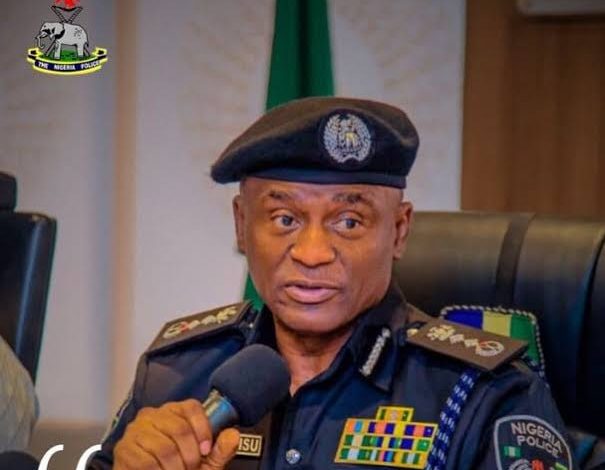
The Inspector-General of Police (IGP), Kayode Olatunji Disu, has announced a special 14-day coordinated security operation across Benue State aimed at dismantling criminal networks operating in identified flashpoints, as the Federal Government intensifies efforts to curb the wave of killings, kidnappings and armed attacks that have continued to destabilise Nigeria’s food-producing state.
The operation, unveiled during a high-level Town Hall Meeting on Security in Makurdi, comes amid growing public concern over persistent attacks on rural communities, displacement of thousands of residents and increasing fears over food security in the country.
The meeting brought together Governor Hyacinth Alia, the Tor Tiv, Prof. James Ayatse, senior police officers, traditional rulers, religious leaders, security agencies and community stakeholders to chart a new strategy for restoring peace.
IGP: Benue’s Security Crisis Keeps Us Awake
Addressing participants, the Inspector-General admitted that the deteriorating security situation in Benue has become a major concern for both residents and security agencies.
He described the violence as one that has robbed the state of its long-standing reputation as one of Nigeria’s most peaceful and hospitable regions.
According to Disu, the conflict has evolved far beyond the traditional farmer-herder clashes that once dominated public discourse.
He explained that the security landscape now involves multiple criminal actors, including:
- Armed herders;
- Kidnappers;
- Organised criminal gangs;
- Cult groups; and
- Individuals allegedly exploiting political interests to fuel violence.
The police chief stressed that the complexity of the crisis requires coordinated action by all stakeholders rather than relying solely on security agencies.
Tinubu Directs Security Agencies to End Violence
Disu disclosed that President Bola Ahmed Tinubu has directed security agencies to ensure that insecurity in Benue is decisively addressed.
According to the IGP, the Federal Government will no longer tolerate the persistent killings and attacks that have devastated many farming communities.
He warned that only legally authorised security personnel are permitted to bear firearms and vowed that illegal weapons circulating among criminal groups would be recovered.
The Inspector-General further directed police officers participating in the operation to act decisively within the provisions of Force Order 237 whenever confronted by armed criminals threatening lives.
Police Identify 14 Security Flashpoints
The Deputy Inspector-General of Police in charge of the Mobile Police Force, Francis Iduh, disclosed that intelligence assessments had identified 14 major security flashpoints requiring immediate intervention.
Among the affected locations are:
- Gbajimba;
- Agasha;
- Kwande;
- Agatu;
- Naka;
- Otukpo;
- Makurdi;
- Apa; and
- Other vulnerable communities across the state.
According to Iduh, the operation will focus on:
- Stability patrols;
- Clearance operations;
- Forest surveillance;
- Recovery of occupied farmlands;
- Destruction of criminal hideouts; and
- Intelligence-driven raids against armed groups.
He assured residents that the exercise would specifically target criminal elements while protecting law-abiding citizens.
Community Intelligence Key to Success
The police hierarchy emphasised that the success of the operation would depend heavily on cooperation from local communities.
Disu directed the Benue State Commissioner of Police to publicly display his official contact details to encourage residents to report criminal activities and allegations of police misconduct.
“The Nigerian Police belong to the people,” the IGP declared.
“We are here to serve you, not to be your masters.”
He also acknowledged concerns about police misconduct, admitting that the Force is not perfect.
However, he assured residents that complaints against officers would be investigated and disciplinary measures taken where necessary.
Warning to Youths Against Political Violence
The Inspector-General used the occasion to caution young people against allowing themselves to be recruited by politicians or influential individuals to perpetrate violence, especially as preparations gradually begin ahead of future elections.
“The youth are usually not the ones who start wars, but they are the ones who fight them,” he said.
He urged parents and community leaders to educate young people against becoming instruments of violence or criminality.
Governor Alia Backs Operation, Renews State Police Call
Governor Hyacinth Alia welcomed the deployment, describing the IGP’s visit as a clear demonstration of the Federal Government’s commitment to addressing Benue’s security crisis.
He lamented that repeated attacks on farming communities have:
- Claimed hundreds of lives;
- Forced thousands from their homes;
- Reduced agricultural production; and
- Threatened national food security.
The governor disclosed that his administration has continued supporting security agencies through the provision of:
- Operational vehicles;
- Motorcycles;
- Communication equipment; and
- Other logistics.
Alia also renewed his advocacy for the establishment of state police, arguing that locally recruited officers familiar with community dynamics would be more effective in tackling insecurity.
“It is no longer a question of whether we need state police,” he stated.
“The issue now is how it should operate because we urgently need it.”
Traditional Rulers Highlight Changing Nature of Violence
The Tor Tiv, Professor James Ayatse, observed that Benue’s security challenges have become increasingly complex over the years.
He identified several categories of threats confronting the state, including:
- Armed criminal herders allegedly operating from neighbouring Nasarawa State;
- Indigenous kidnapping gangs;
- Armed robbery syndicates;
- Communal conflicts; and
- Urban cult groups.
According to the traditional ruler, many affected residents remain displaced outside officially recognised Internally Displaced Persons (IDP) camps, making humanitarian intervention even more challenging.
Religious Leaders Call for Early Security Response
Religious leaders from both the Muslim and Christian communities pledged support for ongoing peace initiatives.
Chairman of Jama’atu Nasril Islam (JNI) in Benue, Alhaji Garba Baba, affirmed that Muslims in the state remain committed to peaceful coexistence and pledged support for government efforts to restore stability.
Similarly, the Benue State Chairman of the Christian Association of Nigeria (CAN), Rev. Jonathan Terwase Ugbede, commended President Tinubu, First Lady Oluremi Tinubu and the Inspector-General for responding to the security concerns of the state.
He urged security agencies to act promptly on intelligence, particularly threats circulated on social media before attacks occur.
The cleric also advocated sustained engagement with:
- Traditional rulers;
- Youth groups;
- Religious leaders; and
- Community associations.
He said such collaboration would strengthen intelligence gathering and improve early warning mechanisms.
Broader Security Implications
Security experts believe the 14-day operation represents one of the most coordinated federal interventions in Benue in recent months.
However, analysts caution that military and police operations alone may not deliver lasting peace without complementary efforts addressing:
- Illegal arms proliferation;
- Rural policing;
- Youth unemployment;
- Land-use disputes;
- Community reconciliation; and
- Criminal justice reforms.
Observers also note that Benue’s strategic role as one of Nigeria’s largest agricultural producers makes restoring security essential not only for residents but also for national food production and economic stability.
The launch of the 14-day security operation signals a renewed determination by the Nigeria Police Force and the Federal Government to confront the growing insecurity in Benue State.
While residents have welcomed the intervention, many believe lasting peace will ultimately depend on sustained security operations, improved intelligence sharing, community cooperation and long-term policy reforms capable of addressing the root causes of violence.
As the operation begins across identified flashpoints, attention will be focused on whether the coordinated deployment can significantly reduce attacks, reclaim occupied communities and restore confidence among displaced residents eager to return to their homes and farmlands.








Leave a Reply