
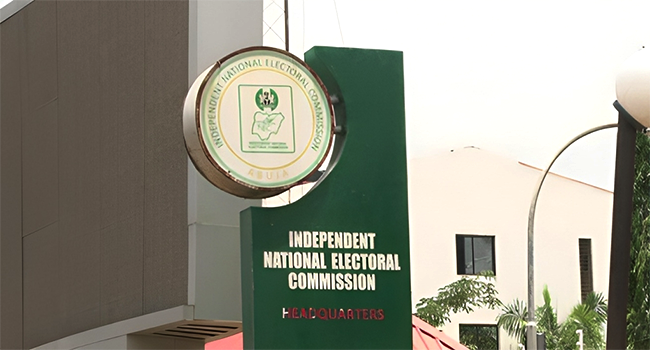
Electoral Commission insists Armed Forces should only be deployed under exceptional circumstances as military commanders pledge neutrality, professionalism and respect for human rights during the 2027 general elections.
By John Ishaku
ABUJA, Nigeria — August 1, 2026
With political activities gathering momentum ahead of Nigeria’s 2027 general elections, the Independent National Electoral Commission (INEC) has drawn a firm constitutional line on the role of the military in electoral security, declaring that the deployment of the Armed Forces during elections must remain an exceptional measure rather than standard practice.
The Commission maintained that the Nigeria Police Force (NPF) remains the constitutionally recognised lead agency responsible for election security under the framework of the Inter-Agency Consultative Committee on Election Security (ICCES).
The clarification comes amid renewed national conversations over the role of security agencies in elections, following years of public concern about allegations of voter intimidation, excessive use of force, and militarisation of the electoral process in some parts of the country.
INEC Reaffirms Constitutional Position
Speaking at a seminar organised by the Army War College Nigeria in Abuja, the Chairman of INEC, Prof. Mahmood Yakubu—represented by the Commission’s Director of Legal Services, Al-Hassan Umar—said Nigeria’s Constitution clearly defines the responsibilities of institutions involved in election management.
He stressed that while INEC is constitutionally empowered to organise, undertake and supervise elections, responsibility for election security rests primarily with the Nigeria Police Force.
According to the Commission, the constitutional arrangement was deliberately designed to ensure that elections remain civilian-led democratic exercises rather than military operations.
“The Constitution of the Federal Republic of Nigeria clearly delineates the responsibilities of institutions involved in the electoral process.
“INEC is constitutionally mandated to organise, undertake and supervise elections, while the Nigeria Police Force remains the lead agency for election security under the framework of the Inter-Agency Consultative Committee on Election Security.”
Military Deployment Should Remain Exceptional
INEC emphasised that military involvement in election security should occur only when prevailing security threats overwhelm civilian authorities.
According to the Commission, any deployment of the Armed Forces must comply strictly with constitutional provisions governing military assistance to civil authorities.
“The role of the Armed Forces is exceptional rather than routine.
“Their deployment arises only where prevailing security conditions require military support in aid of the civil authorities and strictly in accordance with the Constitution and other applicable laws.”
The Commission further stressed that the Armed Forces should perform a supportive and protective role rather than exercising supervisory authority over electoral processes.
Election observers have repeatedly argued that visible military presence at polling units may discourage voter participation if not carefully managed.
Growing Debate Over Election Militarisation
The Commission’s position reflects long-standing judicial pronouncements and recommendations by election observers concerning military involvement during elections.
In previous electoral cycles, civil society organisations, domestic observer groups and international election monitoring missions have raised concerns over allegations of:
- Intimidation of voters.
- Excessive deployment of armed personnel.
- Interference with electoral processes.
- Restrictions on movement beyond legal requirements.
- Human rights violations during election operations.
Although security agencies have consistently defended their actions as necessary for maintaining law and order, calls have continued for greater reliance on civilian policing during elections.
Legal analysts note that Nigerian courts have, in several cases, cautioned against the routine deployment of soldiers for election duties except where exceptional security circumstances exist.
INEC Promises Inclusive and Credible Elections
Beyond security issues, the Commission reaffirmed its commitment to conducting elections that are transparent, inclusive and technologically driven.
According to INEC, preparations for the 2027 elections will continue to prioritise:
- Transparency.
- Electoral integrity.
- Technological innovation.
- Professional administration.
- Constitutional compliance.
- Equal access for vulnerable groups.
The Commission also pledged to strengthen provisions for:
- Persons with disabilities.
- Elderly voters.
- Pregnant women.
- Nursing mothers.
- Other vulnerable citizens requiring special assistance during voting.
INEC said collaboration with security agencies remains essential to ensuring every eligible Nigerian can vote freely without fear or intimidation.
Security Personnel Must Protect, Not Intimidate
INEC urged all security personnel participating in election operations to uphold professionalism and respect for fundamental rights.
According to the Commission, election security should focus on protecting voters, electoral officials, election materials and polling environments rather than influencing political outcomes.
“Security personnel must inspire confidence, protect voters, safeguard election officials and preserve the integrity of the electoral process.
“Our shared objective is not merely the conduct of peaceful elections, but elections in which every Nigerian can freely exercise the constitutional right to vote without fear, intimidation or unlawful interference.”
Human rights organisations have consistently advocated similar standards, arguing that public confidence in elections depends significantly on the conduct of security agencies.
Military Pledges Neutrality Ahead of 2027
Also speaking at the seminar, the Chief of Defence Staff (CDS), General Olufemi Oluyede, represented by Rear Admiral Abolade Ogunleye, assured Nigerians that the Armed Forces remain committed to political neutrality.
He directed military personnel participating in election-related operations to strictly observe constitutional limits, international human rights standards and professional ethics.
According to the CDS, the Armed Forces recognise that their constitutional role is limited to providing support to civil authorities when legally required.
“The Armed Forces of Nigeria, as provided in the 1999 Constitution, has a clear mandate to suppress insurrection and provide aid to civil authorities when called upon.”
Operation SAFE CONDUCT 2027 Under Focus
The seminar also reviewed preparations for Operation SAFE CONDUCT 2027, the military’s operational framework for supporting election security where necessary.
According to Oluyede, success should not be measured solely by the absence of violence.
Instead, he argued, adherence to democratic principles, the rule of law and respect for human rights should remain equally important indicators.
“The success of Operation SAFE CONDUCT 2027 will not only be measured by the absence of violence or disruption of the electoral process but also by adherence to basic democratic principles and respect for human rights.”
The military said the seminar was organised to prepare commanders for the increasingly complex security environment expected during the election period.
Lessons from Previous Elections
The CDS commended officers and soldiers for what he described as their professional conduct during recent off-cycle governorship elections and by-elections in:
- Ekiti.
- Kano.
- Kebbi.
- Rivers.
- Nasarawa.
- Enugu.
- Ondo.
According to him, the experiences gained during those elections would strengthen inter-agency coordination and improve operational readiness ahead of the nationwide polls.
He urged commanders to apply lessons learned in improving rapid response capabilities while maintaining political neutrality throughout the electoral process.
Experts Stress Need for Stronger Civilian Election Security
Election governance experts say INEC’s position reinforces international democratic norms that place election management primarily under civilian institutions.
Analysts argue that while military assistance may be necessary in areas facing terrorism, insurgency or widespread violence, routine military deployment could undermine public confidence in democratic processes.
They recommend strengthening:
- Police training on election security.
- Intelligence gathering.
- Community policing.
- Rapid response mechanisms.
- Coordination among security agencies.
- Human rights compliance.
- Accountability for electoral misconduct.
Observers also note that building public trust in the police will be essential if the country is to reduce reliance on military deployments during future elections.
Why the Debate Matters Ahead of 2027
Nigeria’s 2027 general elections are widely expected to be among the country’s most competitive since the return to democratic rule in 1999.
With increasing political mobilisation already underway, security arrangements are likely to remain a central issue for political parties, civil society organisations and international observers.
INEC’s latest clarification seeks to reassure Nigerians that election security will remain grounded in constitutional principles while preserving the neutrality of the Armed Forces.
INEC’s renewed insistence that the Nigeria Police Force remains the lead agency for election security underscores the Commission’s commitment to protecting Nigeria’s democratic process through constitutional means.
At the same time, the Armed Forces’ pledge of professionalism, neutrality and respect for human rights reflects an effort to reassure citizens that military support—where required—will remain lawful, limited and non-partisan.
As preparations for the 2027 general elections intensify, the effectiveness of coordination between INEC, the Police, the military and other security agencies may prove decisive in delivering elections that are not only peaceful but also free, fair and credible.





Leave a Reply