
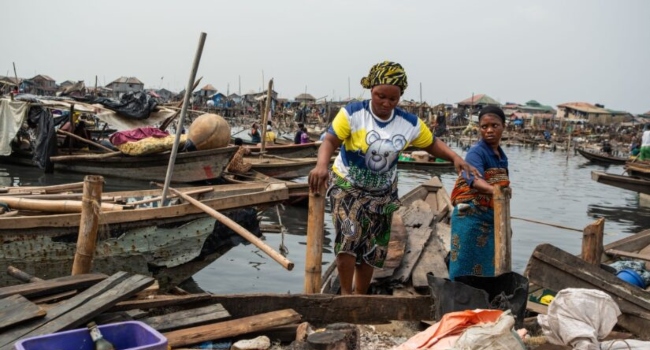
Lawmakers intervene in urban renewal exercise, demand shelter support for displaced residents and pledge inclusive dialogue
By Tope Awoniyi | Lagos, Nigeria
The Lagos State House of Assembly has ordered an immediate halt to ongoing demolitions in Makoko and adjoining communities, stepping in to de-escalate tensions triggered by the controversial urban renewal exercise.
The intervention follows growing outcry from residents affected by the demolitions in Makoko, Oko-Afon, and Shogunro areas.
Assembly Orders Immediate Suspension
The directive was issued during a stakeholders’ meeting led by the Majority Leader, Noheem Adams, who also chairs the House Committee on Makoko Demolition.
Adams instructed all relevant ministries, departments, and agencies to suspend further demolition activities pending a comprehensive review.
He assured residents that lawmakers would conduct on-the-spot assessments to verify compliance with government directives and evaluate the impact on affected communities.
Community Representation in Taskforce
As part of efforts to ensure inclusivity, the Assembly announced that elected community leaders would be incorporated into a Taskforce Committee to represent local interests in ongoing engagements.
The move is aimed at fostering transparency and bridging the trust gap between residents and government authorities.
Lawmakers Criticise Relief Approach
Lawmakers expressed dissatisfaction with the response of the Yaba Local Council Development Area leadership, particularly Chairman Bayo Adefuye.
They faulted the distribution of food items to displaced residents, insisting that immediate housing solutions should have been prioritised.
“What the people require most at this time is shelter, not palliatives,” Adams stated during the meeting.
Government Clarifies Urban Renewal Plan
The Lagos State Government, through the Special Adviser on e-GIS and Urban Development, Olajide Babatunde, maintained that the demolition exercise is not aimed at erasing Makoko.
He disclosed that Governor Babajide Sanwo-Olu has earmarked $2 million for the development of the community, describing Makoko as a critical part of Lagos’ cultural and historical identity.
According to Babatunde, the urban renewal initiative is focused on safety and environmental compliance, particularly the removal of structures located within 100 metres of transmission lines across the lagoon.
He also assured that affected residents would receive appropriate compensation.
Residents Demand Direct Engagement
Community leaders called for direct dialogue with government authorities, rejecting third-party representation by non-governmental organisations.
They emphasised the need for constructive engagement to prevent further displacement and ensure that residents’ concerns are adequately addressed in the redevelopment process.
Balancing Development and Preservation
While the state government insists the demolitions are necessary for safety and urban planning, the Assembly’s intervention signals a shift toward balancing infrastructure development with social protection.
Makoko, widely regarded as one of Lagos’ most iconic waterfront communities, remains at the centre of the debate between urban regeneration and heritage preservation.
The suspension of demolitions marks a critical pause in a contentious process, opening space for dialogue, review, and potential recalibration of government strategy.
As stakeholders engage, the outcome may define how Lagos navigates the complex intersection of development, human rights, and community identity.



Leave a Reply