
New bi-monthly dashboard reveals rising cases of sexual violence, restricted humanitarian access, child protection concerns and worsening socio-economic hardships as conflict continues to uproot thousands across seven Nigerian states.
By A1NEWS International
MAITAMA, Abuja — July 28, 2026
Nigeria’s humanitarian crisis continues to deepen as persistent insurgency, banditry and communal violence fuel widespread displacement, hunger and human rights abuses, according to the National Human Rights Commission (NHRC).
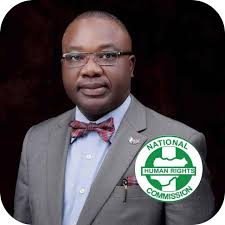
Presenting the 2026 Third Bi-Monthly (May/June) Human Rights Dashboard on the promotion and protection of the rights of Forcibly Displaced Persons (FDPs), refugees, asylum seekers and returnees, the Executive Secretary of the NHRC, Dr. Tony Ojukwu, OFR, SAN, warned that insecurity is increasingly preventing humanitarian agencies and human rights monitors from reaching some of the country’s most vulnerable populations.
Speaking in Abuja on Monday, Ojukwu said the figures contained in the dashboard represent more than statistics—they represent thousands of Nigerians whose lives have been shattered by conflict, violence and displacement.
“The figures to be presented through the dashboard represent real human beings, families, children and individuals who have been uprooted from their homes and who look to this project for protection, hope and a pathway to a dignified life,” he stated.
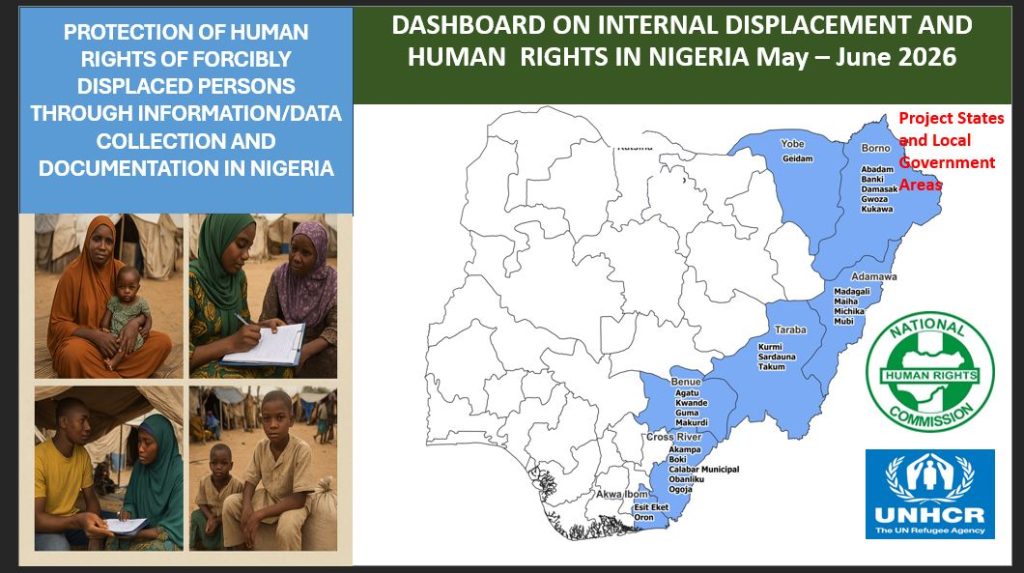
The report, produced with support from the United Nations High Commissioner for Refugees (UNHCR), provides one of the most comprehensive assessments of the human rights conditions affecting displaced populations across seven project states.
Dashboard Reveals Shrinking Access, Not Declining Displacement
Although the latest dashboard shows a reduction in the recorded number of internally displaced persons in several project states, the NHRC cautioned against interpreting the figures as evidence that Nigeria’s displacement crisis is easing.
According to Ojukwu, the apparent decline is largely the result of worsening insecurity that has prevented monitoring teams from accessing remote communities controlled or threatened by insurgents, bandits and kidnappers.
Only the refugee population recorded an increase during the reporting period.
This limitation, the Commission warned, means that many victims remain undocumented and without access to critical protection services.
Hunger and Shelter Remain the Most Widespread Human Rights Challenges
One of the report’s most troubling findings concerns socio-economic rights.
Large numbers of displaced persons continue to face severe shortages of:
- Food.
- Safe shelter.
- Livelihood opportunities.
- Basic humanitarian assistance.
The Commission said many affected families have exhausted their coping mechanisms and now rely heavily on humanitarian interventions for survival.
While community-based mechanisms helped resolve some cases, many others required referrals to humanitarian agencies and protection partners.
Experts say prolonged displacement without sustainable livelihoods increases vulnerability to exploitation, trafficking and recruitment by criminal groups.
Competition for Scarce Resources Fueling Community Tensions
The dashboard also highlights growing tensions between displaced populations and host communities.
According to the NHRC, disputes increasingly revolve around:
- Land ownership.
- Access to farmland.
- Water resources.
- Housing.
- Humanitarian assistance.
The Commission warned that unless governments invest in conflict-sensitive humanitarian programming, competition over limited resources could trigger fresh communal conflicts.
Lack of Identity Documents Leaving Thousands Invisible
The NHRC expressed concern over the large number of displaced persons without official identity documentation.
Without legal identification, many displaced Nigerians are unable to:
- Access healthcare.
- Enrol children in school.
- Obtain humanitarian assistance.
- Open bank accounts.
- Exercise certain legal rights.
Human rights advocates say documentation remains essential for restoring dignity and facilitating long-term reintegration.
Boko Haram Restrictions Continue to Isolate Communities
The report identifies restrictions on freedom of movement—particularly in parts of Yobe State—as another serious protection concern.
According to the Commission, suspected Boko Haram fighters continue imposing movement restrictions on civilians in some communities.
These restrictions limit access to:
- Healthcare services.
- Schools.
- Markets.
- Farming activities.
- Humanitarian relief.
The NHRC noted that insecurity continues to prevent humanitarian workers from accessing several communities in Geidam Local Government Area, leaving more than 15,000 residents and nomadic populations exposed to heightened risks.
Sexual and Gender-Based Violence Continues to Rise
Perhaps the most alarming finding in the report is the continued increase in cases of Sexual and Gender-Based Violence (SGBV).
During the May/June reporting period, the NHRC documented:
- 180 cases of SGBV, compared to 174 cases recorded during March/April.
The documented incidents include:
- Domestic violence.
- Sexual assault.
- Sexual exploitation.
- Harassment.
- Psychological abuse.
- Forced marriage.
- Spousal abandonment.
- Denial of inheritance and essential resources.
The Commission described the trend as evidence that women and girls remain among the most vulnerable groups within displaced communities.
Human rights experts say underreporting means the actual number of incidents could be considerably higher.
Children Continue to Bear the Burden of Displacement
The dashboard reveals that displaced children remain exposed to multiple forms of abuse.
Among the documented violations are:
- Child labour.
- Neglect.
- Lack of parental care.
- Educational exclusion.
- Exploitation.
The Commission also recorded persistent barriers preventing children from accessing education.
These include:
- Financial hardship.
- Lack of schools.
- Language barriers.
- Missing academic records.
Yobe State recorded particularly severe educational challenges.
Education specialists warn that prolonged disruption of schooling increases risks of child marriage, recruitment by armed groups and intergenerational poverty.
Access to Justice Improving Through Monitoring
Despite the challenges, the NHRC reported measurable progress in protecting human rights.
Regular visits to detention facilities contributed to reducing cases of prolonged detention, particularly within police facilities.
The Commission also reported increased referrals of victims to legal aid providers and human rights organisations.
State-by-State Interventions Deliver Tangible Results
The report highlights several notable interventions across project states.
Adamawa State
The project recorded:
- Increased birth registration.
- Rescue of children from exploitative labour.
- Prevention of forced marriages.
- Release of arbitrarily detained persons.
Benue State
NHRC teams successfully:
- Mediated gender-based violence cases.
- Reunited abused children with their families.
- Secured the release of an internally displaced person from vigilante custody.
Cross River State
Interventions resulted in:
- Resolution of land disputes affecting refugees.
- Return of displaced children to school.
Yobe State
Human rights monitors:
- Identified newly arrived asylum seekers from Cameroon and Niger Republic.
- Prevented misidentification of asylum seekers as members of armed groups.
- Secured the release of a detained minor.
- Encouraged Sharia courts to prioritise GBV cases involving women and children.
According to the NHRC, one survivor subsequently obtained justice through judicial intervention.
Violence Continues in Benue and North-East Nigeria
The Commission also highlighted worsening insecurity beyond displacement camps.
In Agatu Local Government Area of Benue State, attacks during June reportedly resulted in multiple fatalities and serious injuries.
Meanwhile, continued attacks by Boko Haram and the Islamic State West Africa Province (ISWAP) remain major obstacles to humanitarian access in North-East Nigeria.
UNHCR Partnership Strengthening Human Rights Protection
Dr. Ojukwu commended the United Nations High Commissioner for Refugees (UNHCR) for its continued partnership in supporting displaced populations across Nigeria.
He described the project as more than a data collection exercise.
“The interventions we have implemented are not merely administrative exercises; they are lifelines for those who have lost everything. They represent our collective determination to ensure that every displaced person is seen, heard and protected.”
Analysis: Nigeria’s Humanitarian Crisis Requires More Than Emergency Relief
The NHRC dashboard underscores the interconnected nature of Nigeria’s displacement crisis.
Conflict, poverty, food insecurity, weak institutions, climate pressures and inadequate humanitarian access continue to reinforce one another, leaving millions trapped in cycles of vulnerability.
Human rights advocates argue that while humanitarian assistance remains essential, long-term solutions require:
- Improved security.
- Expanded humanitarian access.
- Sustainable livelihoods.
- Justice for victims.
- Stronger protection for women and children.
- Investment in education and social services.
- Durable solutions for displaced populations.
Without these measures, experts warn that displacement will continue to fuel instability and undermine national development.
The NHRC’s latest dashboard paints a sobering picture of the realities confronting Nigeria’s forcibly displaced persons.
While the Commission has recorded important successes in community mediation, legal protection and awareness campaigns, the overall humanitarian situation remains fragile.
As insecurity continues to limit access to vulnerable communities and reports of gender-based violence, child exploitation and socio-economic deprivation increase, stakeholders say coordinated action by government, humanitarian agencies and international partners will be critical to protecting the dignity and rights of millions of displaced Nigerians.




Leave a Reply