
Risk intelligence report identifies Borno as Nigeria’s deadliest conflict zone, warns of expanding ISWAP attacks on humanitarian operations, schools and aid supply routes amid worsening insecurity nationwide.
By A1NEWS International
ABUJA, Nigeria — July 13, 2026
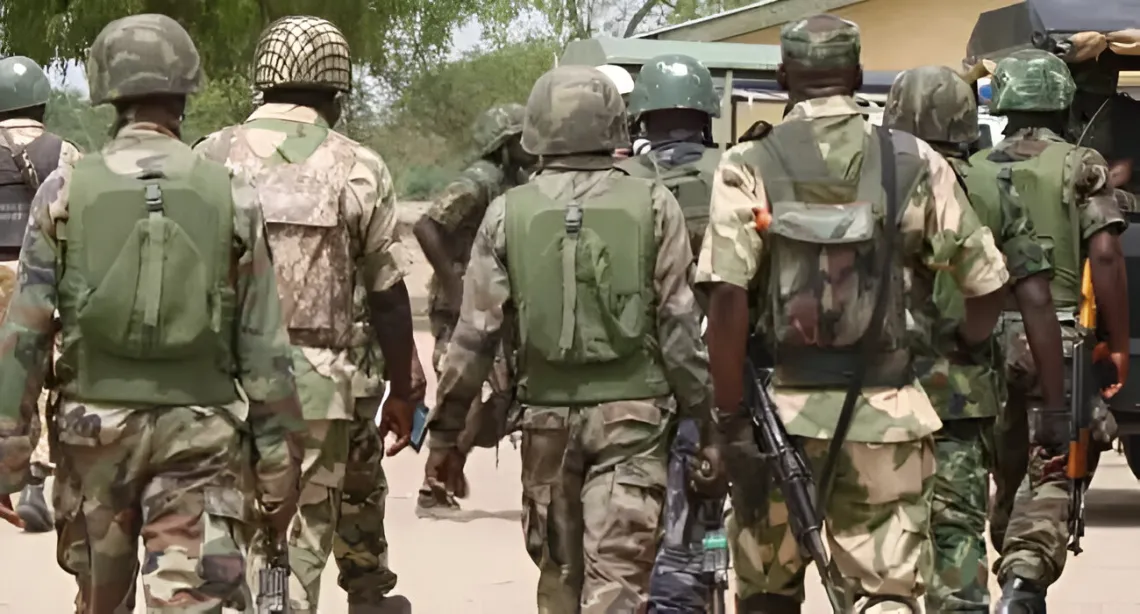
Nigeria experienced 882 security incidents across its 36 states and the Federal Capital Territory (FCT) in June 2026, resulting in 792 confirmed deaths, while military and other government security forces killed 274 insurgents during counter-terrorism operations, according to a new security intelligence assessment.
The findings are contained in the Nigeria Monthly Security Overview for June 2026, released by SARI Global, a United States-registered risk intelligence and security analysis firm that provides operational security assessments for humanitarian organisations, international agencies, diplomatic missions and multinational corporations operating in conflict environments.
Beyond the casualty figures, the report paints a troubling picture of an evolving security landscape in which insurgent groups, bandits and criminal networks are adopting more sophisticated tactics, targeting humanitarian operations, educational institutions and critical supply routes while stretching the capacity of Nigeria’s security architecture.
Military Operations Intensify Across Multiple Fronts
According to the report, government-affiliated security forces initiated 375 security operations, representing the largest share of all recorded incidents during the month.
These operations included military offensives, arrests, raids, seizures, cordon-and-search missions and counter-insurgency campaigns conducted across various theatres of operation.
The sustained offensive resulted in the deaths of 274 insurgents, reflecting the intensity of ongoing military campaigns against terrorist organisations and armed criminal groups.
However, analysts cautioned that increased military activity alone should not be interpreted as evidence of improved national security.
“A busy security apparatus is not the same as an improving environment,” the report warned.
792 Lives Lost Despite Security Operations
While security forces remained highly active, the report indicates that violence continued to exact a devastating human toll.
Of the 792 confirmed fatalities recorded nationwide:
- 337 deaths were attributed to non-state armed groups, including insurgents and terrorists.
- 274 insurgents were killed by government security forces.
- 86 deaths were linked to unidentified or unattributed actors.
- 64 civilians lost their lives.
- 30 deaths were attributed to criminal actors.
- One fatality was linked to politically motivated violence.
The report observed that although insurgent groups were responsible for fewer incidents than security agencies, they produced significantly higher fatality rates per attack.
Borno Emerges as Nigeria’s Most Violent State
The report identifies Borno State as the country’s most dangerous security hotspot in June.
The North-East state recorded:
- 109 security incidents
- 172 confirmed deaths
Most of the violence occurred around:
- Lake Chad Basin
- Sambisa Forest axis
- Gwoza
- Monguno
- Kukawa
- Baga
- Cross Kauwa
Analysts say the concentration of attacks demonstrates that despite years of military operations, insurgent groups continue to retain operational capabilities in several parts of northern Borno.
ISWAP Targets Humanitarian Operations
One of the report’s most alarming findings concerns what analysts describe as a coordinated campaign by the Islamic State West Africa Province (ISWAP) to disrupt humanitarian operations.
According to SARI Global, insurgents have increasingly shifted attention toward aid workers, humanitarian logistics and food distribution networks.
The report identifies the Monguno-Gajiram corridor as Nigeria’s most critical humanitarian flashpoint.
Among the incidents highlighted were:
- The abduction of an international humanitarian worker and a local security guard during a night raid on June 24.
- The burning of NGO-contracted food trucks on June 29.
- Earlier attacks targeting humanitarian cargo on June 18.
Security analysts believe these attacks are designed to discourage commercial transporters from working with humanitarian agencies while restricting food supplies to internally displaced persons (IDPs).
The consequence, according to the report, is worsening food insecurity during Nigeria’s annual lean season.
Aid Deliveries Under Growing Threat
The report warns that repeated attacks on humanitarian logistics are creating severe operational challenges.
Commercial transport companies are reportedly becoming reluctant to serve high-risk communities because of fears that their vehicles could be destroyed by insurgents.
SARI Global concludes that ISWAP has effectively created conditions where humanitarian workers remain unsafe after dark while supply routes are vulnerable during daylight hours.
The strategy allows insurgents to influence humanitarian access without maintaining permanent control of urban centres.
Schools Increasingly Become Targets
Another emerging concern highlighted in the report is the renewed targeting of educational institutions.
SARI Global cited the June 29 attack on Government Day Secondary School, Lassa, in Askira/Uba Local Government Area, where insurgents reportedly abducted students and teachers during daylight hours.
The analysts described the operation as both ideological and strategic.
According to the report, such attacks generate international publicity while exposing weaknesses in local security and early-warning systems.
The report warns that every successful school abduction increases the likelihood of copycat attacks.
It therefore recommends treating schools located near insurgent strongholds as high-risk facilities requiring enhanced security measures.
North-West Records Rising Tactical Sophistication
The report also highlights worrying developments in Nigeria’s North-West.
At least 67 insurgent-style ambushes and improvised explosive device (IED) attacks were documented across Zamfara, Katsina, Sokoto and Kebbi states.
Particularly significant was an IED attack along the Bagega-Anka Road in Zamfara State on June 15.
Analysts believe the increasing use of explosive devices outside the traditional North-East conflict zone suggests the transfer of tactics between insurgent organisations and armed bandit groups.
Such developments could further complicate humanitarian operations and civilian movement.
Violence Extends Beyond Conflict Zones
Although insecurity remained most severe in northern Nigeria, the report notes persistent instability elsewhere.
Among the states recording notable incident levels were:
- Zamfara – 63 incidents
- Plateau – 51 incidents
- Katsina – 44 incidents
- Lagos – 40 incidents
- Federal Capital Territory – 36 incidents
- Rivers – 32 incidents
- Oyo – 31 incidents
- Sokoto – 31 incidents
- Niger – 29 incidents
While southern states experienced comparatively lower fatality rates, analysts noted continuing criminal activity, civil unrest, protests and road traffic incidents.
Political Tensions Rise in Abuja
The report also identifies the Federal Capital Territory as an emerging centre of politically driven unrest.
According to SARI Global, many of the 36 incidents recorded in Abuja during June were associated with demonstrations linked to Nigeria’s developing 2027 general election cycle.
Analysts anticipate increased political mobilisation, protests and security deployments in the months ahead as electoral activities intensify.
Food Insecurity May Fuel New Security Risks
Looking ahead, SARI Global projects that humanitarian conditions may deteriorate further during July.
The report warns that increasing food shortages could lead to larger crowds at aid distribution centres, heightening tensions and increasing the possibility of violence.
It also points to an incident in Banki, Bama Local Government Area, where an aid worker was reportedly assaulted during food distribution by an individual excluded from the beneficiary list.
Analysts describe this trend as “beneficiary aggression”—an emerging security threat likely to become more common as economic hardship deepens.
Experts Call for Multi-Dimensional Response
The report concludes that Nigeria’s security crisis can no longer be viewed solely through a military lens.
While counter-insurgency operations remain essential, analysts argue that sustainable progress will require:
- stronger intelligence gathering,
- improved protection for schools,
- enhanced security for humanitarian corridors,
- better community early-warning systems,
- expanded social protection programmes,
- and stronger coordination among federal, state and local authorities.
Without addressing the humanitarian and socio-economic drivers of conflict, the report warns that violence could continue to spread across multiple regions.
The latest SARI Global assessment presents a sobering picture of Nigeria’s security environment, revealing that despite sustained military offensives and the elimination of hundreds of insurgents, armed groups continue to inflict significant casualties, disrupt humanitarian operations and exploit vulnerabilities across several regions.
As the country moves deeper into the 2027 electoral cycle amid worsening economic pressures and food insecurity, security experts warn that maintaining territorial gains alone will not be sufficient. Protecting civilians, securing humanitarian access and strengthening intelligence-led policing may prove decisive in determining whether Nigeria can reverse the current trajectory of violence.









Leave a Reply