
Debt servicing now consumes nearly 68% of federal revenue as borrowing costs crowd out infrastructure spending and widen fiscal pressure.
By Baron Eloagu / June 5. 2026
Abuja, Nigeria — Nigeria’s fiscal position has come under renewed scrutiny after official budget data revealed that Federal Government debt repayments surpassed budget projections by nearly ₦1.9 trillion within the first nine months of 2025.
Fresh figures from the Budget Office of the Federation show a widening gap between revenue generation and debt obligations, with debt servicing now consuming the majority of government income and leaving limited room for capital investment and development spending.
DEBT PAYMENTS OUTPACE BUDGET PROJECTIONS
According to the 2025 third-quarter Budget Implementation Report, total debt-related payments—including domestic and external obligations as well as sinking fund contributions—rose to ₦12.63 trillion, against a prorated budget estimate of ₦10.74 trillion.
This represents an overrun of ₦1.90 trillion (17.65%), underscoring the growing pressure of Nigeria’s debt profile.
Debt servicing alone accounted for ₦12.52 trillion, exceeding its allocation by ₦2.07 trillion, driven by both domestic and foreign repayments.
DOMESTIC AND FOREIGN DEBT PRESSURE MOUNTS
The breakdown shows sustained strain across all debt categories:
- Domestic debt service: ₦6.23 trillion (₦832.42 billion above projection)
- Foreign debt service: ₦6.30 trillion (₦1.24 trillion above allocation)
The figures reflect rising interest obligations and exchange rate pressures affecting external debt repayments.
REVENUE UNDERPRESSURE DEEPENS FISCAL IMBALANCE
While debt costs surged, government revenue significantly underperformed.
Total retained revenue stood at ₦18.63 trillion, against a target of ₦30.67 trillion, representing a shortfall of ₦12.03 trillion (39.24%).
This imbalance has resulted in a situation where:
For every ₦100 earned by the Federal Government, approximately ₦67 is consumed by debt servicing alone.
CAPITAL SPENDING CROUDED OUT
One of the most severe consequences of rising debt obligations is the collapse in capital investment.
- Capital expenditure: ₦3.10 trillion
- Budgeted capital expenditure: ₦17.58 trillion
Debt servicing has now become over four times higher than capital spending, raising concerns over infrastructure stagnation.
FISCAL DEFICIT AND BORROWING DEPENDENCY
The fiscal deficit for the period stood at ₦6.03 trillion, below projections but still heavily financed through borrowing.
Key financing sources include:
- Domestic borrowing: ₦7.08 trillion
- Multilateral and bilateral loans: ₦4.81 trillion
Total financing reached ₦12.07 trillion, indicating continued dependence on debt instruments to sustain government operations.
ANALYSTS WARN OF STRUCTURAL FISCAL PRESSURE
Economists argue that Nigeria’s fiscal crisis is driven more by weak revenue than uncontrolled spending.
Dr. Aliyu Ilias of CSA Advisory warned that rising borrowing inevitably compounds repayment obligations:
“The more you borrow, the more you are also incurring more debt services.”
He urged asset sales, improved oil revenue utilisation, and tax reforms as alternatives to further borrowing.
MONETARY PRESSURE AND INTEREST RATE CHALLENGES
Dr. Muda Yusuf of the Centre for the Promotion of Private Enterprise noted that high domestic interest rates are worsening debt sustainability.
He argued that government borrowing costs remain “too high” and are creating tension between attracting investors and maintaining fiscal stability.
He also recommended expanded public-private partnerships and reduced federal involvement in non-core economic activities.
GOVERNMENT SIGNALS REFINANCING STRATEGY
Despite the fiscal strain, the Federal Government has indicated plans to refinance expensive debts and tap concessional funding sources.
Finance authorities say favourable global conditions—driven partly by rising oil prices and improved investor sentiment—may provide temporary relief.
However, concerns remain over inflationary pressures and long-term debt sustainability.
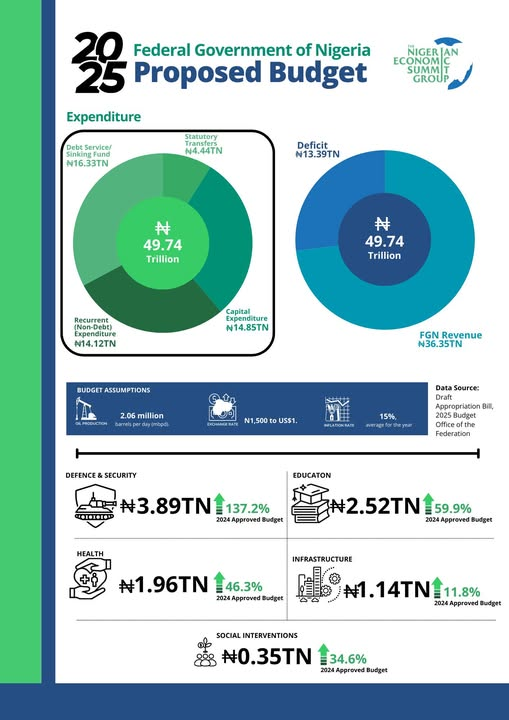
Nigeria’s fiscal data points to a deepening structural imbalance where debt obligations increasingly dominate national revenue, leaving limited fiscal space for development.
Without significant revenue expansion, expenditure rationalisation, and borrowing reforms, analysts warn that debt servicing could continue to constrain economic growth and infrastructure delivery.













Leave a Reply