

PSC says data-driven human rights monitoring will strengthen policing reforms, transparency, institutional accountability and democratic governance in Nigeria.
By A1NEWS International
Abuja, Nigeria — July 9, 2026
The Police Service Commission (PSC) has endorsed the National Human Rights Commission’s (NHRC) newly unveiled June 2026 Human Rights Situation Dashboard, describing it as a landmark initiative capable of transforming evidence-based policymaking, strengthening institutional accountability and advancing the protection of fundamental human rights across Nigeria.
In an official goodwill message addressed to the Executive Secretary of the NHRC, Dr. Tony Ojukwu, OFR, SAN, the Commission congratulated the human rights body on the successful presentation of the monthly dashboard and reaffirmed its commitment to closer collaboration in promoting justice, the rule of law and professional policing.
The message was conveyed on behalf of the Chairman of the Police Service Commission, DIG Hashimu Argungu (Rtd.), mni, and signed by Dame Victoria N. A. Onyekwuluje Orakwue, Esq., Assistant Director, Legal Services.
PSC Hails Data-Driven Human Rights Monitoring
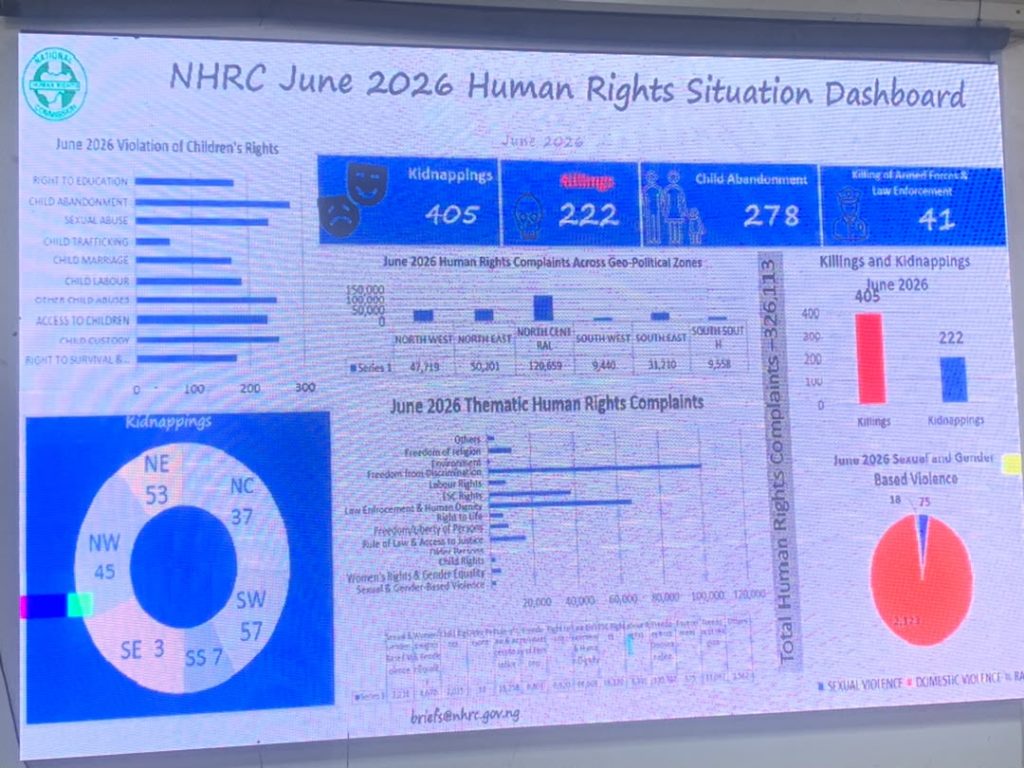
According to the Commission, the Human Rights Situation Dashboard represents a significant milestone in Nigeria’s efforts to institutionalise transparency, accountability and evidence-based monitoring of human rights.
The PSC noted that reliable data and timely reporting remain essential for identifying emerging challenges, evaluating institutional performance and developing effective public policies.
The Commission stated that the Dashboard would provide policymakers, security institutions, development partners and civil society organisations with credible information needed to formulate informed interventions and strengthen democratic governance.
Strengthening Police Accountability
The Police Service Commission emphasised that credible human rights data is indispensable to building public confidence in law enforcement institutions.
It observed that objective assessments of human rights trends can assist government agencies in identifying operational gaps, measuring reform outcomes and improving institutional responsiveness.
According to the PSC, stronger collaboration between oversight institutions is necessary to promote professionalism, integrity and accountability within Nigeria’s policing system.
The Commission reiterated that respect for the rights and dignity of every citizen must remain central to ongoing police reforms.
Partnership Between Oversight Institutions
Describing the NHRC as a strategic partner, the Police Service Commission reaffirmed its commitment to continued cooperation in advancing justice, accountability and the rule of law.
The Commission stressed that stronger institutional partnerships would contribute to improved human rights protection while supporting broader governance reforms across the country.
It added that effective collaboration between the NHRC and the PSC would enhance efforts to build a policing system that respects constitutional rights and operates within internationally recognised human rights standards.
Recognition of NHRC’s Growing National Role
The goodwill message comes as the National Human Rights Commission expands the use of its monthly Human Rights Situation Dashboard as a national accountability mechanism.
The Dashboard compiles complaints received by the Commission alongside nationwide monitoring of human rights incidents, providing stakeholders with data on violations, emerging threats and areas requiring urgent government intervention.
Observers believe endorsements from institutions such as the Police Service Commission underscore growing recognition of the Dashboard as an important governance and policy tool capable of influencing security reforms and strengthening institutional accountability.
Broader Implications for Governance
Governance analysts say stronger cooperation between the Police Service Commission and the National Human Rights Commission could improve oversight of policing practices, encourage compliance with constitutional safeguards and promote greater public trust in Nigeria’s justice system.
They also note that the use of evidence-based reporting can support reforms aimed at reducing abuse of authority, enhancing transparency and improving service delivery across public institutions.
While challenges surrounding insecurity and human rights violations persist, closer collaboration among oversight bodies is increasingly viewed as essential to achieving sustainable institutional reforms.

The Police Service Commission’s endorsement of the National Human Rights Commission’s Human Rights Situation Dashboard signals growing institutional support for data-driven governance and accountability in Nigeria. As security reforms continue to evolve, stakeholders say sustained collaboration between oversight agencies will be crucial to protecting citizens’ rights, strengthening democratic institutions and fostering a policing system anchored on professionalism, transparency and respect for human dignity.













Leave a Reply