
Former military and police chiefs split over scope of governors’ authority as National Assembly prepares landmark constitutional vote on decentralised policing.
By A1NEWS International – June 24, 2026
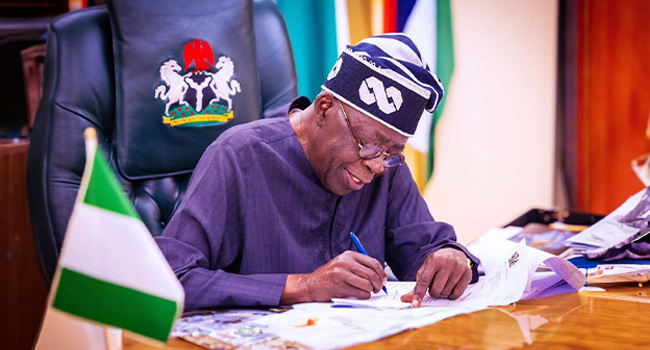
ABUJA, NIGERIA – The Nigerian Senate is set for a decisive vote today on the proposed constitutional amendment to establish State Police Services, following the formal transmission of the bill by President Bola Ahmed Tinubu to the National Assembly.
The development has triggered intensified political and security debate nationwide, with retired military and police chiefs divided over how much operational power should be granted to state governors under the proposed decentralised policing structure.
The vote is being described as one of the most consequential constitutional decisions since Nigeria’s return to democratic rule.
Senate Moves Toward Landmark Constitutional Vote
Senate President, Senator Godswill Akpabio, has mobilised lawmakers to ensure full attendance for today’s sitting, warning that the chamber must meet the constitutional two-thirds requirement for any amendment to succeed.
The bill seeks to alter provisions of the 1999 Constitution to formally create a dual policing system comprising federal and state police formations.
Akpabio described the proposal as a historic reform that could fundamentally reshape Nigeria’s internal security architecture, adding that lawmakers must treat the process as a national responsibility rather than a partisan exercise.
Tinubu Transmits Bill as Reform Momentum Builds
President Tinubu’s formal transmission of the Constitution Alteration Bill marks the strongest executive backing yet for the establishment of State Police Services.
The bill is expected to be debated and voted on following accelerated consideration by the Senate Committee on Constitutional Review.
If passed, it will proceed to the House of Representatives and subsequently to state Houses of Assembly for ratification, requiring approval from at least 24 states before final presidential assent.
Governors Push for Greater Security Control
Parallel to the legislative process, state governors are intensifying demands for expanded constitutional authority over security operations within their states.
A high-level strategic meeting convened by the Nigeria Governors’ Forum (NGF) Secretariat in Abuja reviewed proposals covering:
- Operational control of state security structures
- Funding mechanisms for state police
- Personnel management frameworks
- Oversight and accountability systems
Although governors are currently designated as “chief security officers,” they lack direct command over policing operations under the existing federal structure.
Military and Police Chiefs Divided on Scope of Power
Retired senior security officials have expressed sharply contrasting views on the proposed decentralised policing model.
While some support expanded state authority, others warn that unchecked powers could lead to political abuse and weakened national cohesion.
“State Police as Structured Reform, Not Political Tool”
Retired Brigadier General Peter Aro argued that state police should be treated as a structural security reform rather than a political initiative.
He said governors must be empowered to manage local security threats, including intelligence gathering and investigations, while remaining within clear constitutional limits.
However, he warned against politicisation of policing, urging the establishment of safeguards such as neutral oversight panels to prevent abuse of prosecutorial powers.
Support for Decentralisation and Local Control
Retired Assistant Inspector-General of Police Ali Amodu supported the creation of state police, arguing that governors should have significant influence over security operations since they would bear responsibility for funding and logistics.
He said the urgency of Nigeria’s security challenges outweighed concerns about potential misuse of power.
Similarly, retired Brigadier-General George Edim insisted that decentralisation aligns with democratic principles, arguing that over-centralisation in Abuja has weakened local accountability in security response.
Concerns Over Abuse and Oversight Mechanisms
However, retired AIG Wilson Inalegwu raised concerns over potential abuse of power, warning that policing authorities must not be placed in the hands of political actors without strong institutional checks.
He argued that existing federal oversight bodies such as the Police Service Commission and National Police Council must be replicated or adapted at state level to prevent arbitrary arrests and political interference.
He maintained that governors already exercise considerable informal influence over police operations, and any expansion of power must remain strictly within constitutional boundaries.
Experts Propose Independent Oversight Structures
Security analyst Commodore Omatseye Nesiama (retd.) proposed the establishment of independent commissions to oversee state police administration and policy formulation.
He argued that decentralised policing would improve intelligence response time and strengthen coordination between states, particularly in tracking insurgent movements across ungoverned spaces.
Nesiama noted that delays in intelligence processing under the current centralised system often allow criminal networks to exploit gaps before intervention occurs.
Senate Prepares for Quorum-Sensitive Vote
Senate Leader Opeyemi Bamidele warned that constitutional amendment voting requires strict attendance, noting that at least two-thirds of senators must be present for the vote to be valid.
He urged lawmakers to prioritise national interest over political considerations and ensure full participation in the historic decision.
Constitutional Thresholds for Passage
For the bill to become law, it must secure:
- Two-thirds approval in the Senate
- Two-thirds approval in the House of Representatives
- Ratification by at least 24 State Houses of Assembly
- Presidential assent
Failure at any stage would stall one of Nigeria’s most ambitious security reforms in decades.
The Senate’s vote on state police represents a defining moment in Nigeria’s constitutional and security evolution.
While governors and reform advocates push for decentralisation as a solution to persistent insecurity, retired security chiefs remain divided over risks of politicisation and institutional abuse.
The outcome of today’s legislative decision could determine whether Nigeria transitions toward a dual policing structure or continues with its centralised security model that has faced mounting criticism amid rising insecurity.







Leave a Reply