
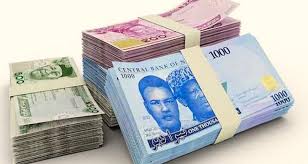
Employers’ body challenges state and local governments to disclose how ₦10.4 trillion allocated from resources generated after petrol subsidy removal was received and spent, intensifying calls for transparency over Nigeria’s post-subsidy finances.
By Amarachi Odenigbo
ABUJA, Nigeria — August 20, 2026:
The Nigeria Employers’ Consultative Association (NECA) has challenged Nigeria’s state and local governments to account publicly for ₦10.4 trillion distributed to them from resources generated following the removal of the petrol subsidy between June 2023 and December 2025.
The demand follows a disclosure by the Minister of Finance and Coordinating Minister of the Economy, Taiwo Oyedele, that the removal of the subsidy mobilised ₦15.8 trillion in resources for the Federation during the period.
According to Oyedele, the Federal Government received ₦5.4 trillion, while ₦10.4 trillion was distributed to state and local governments through the Federation Account.
NECA Director-General Adewale-Smatt Oyerinde said the disclosure should now trigger a corresponding level of financial reporting by subnational governments.
His challenge goes to the heart of Nigeria’s post-subsidy accountability debate: if governments received additional resources after one of the country’s most consequential economic reforms, what measurable public value did citizens receive in return?
NECA: States Must Publish What They Received and Spent
Speaking on Channels Television’s Sunrise Daily, Oyerinde said state governments should disclose the amounts received, the challenges encountered in managing the resources and how the funds were ultimately spent.
He specifically called on state commissioners for finance to provide the public with detailed accounts of the allocations.
“Absolutely. I think it should trickle down,” Oyerinde said, arguing that state governments should explain how much they received and how much they spent.
The demand effectively extends the transparency expected from the Federal Government to the second and third tiers of government.
For NECA, disclosure should not stop at announcing allocations. Citizens should be able to establish the relationship between money received, expenditure incurred and development outcomes achieved.
₦15.8tn: What the Subsidy Reform Generated
Oyedele’s disclosure provides an important financial snapshot of the period following the subsidy removal.
The minister said that between June 2023 and December 2025, subsidy savings mobilised ₦15.8 trillion in resources for the Federation.
However, he clarified an important distinction: the money did not enter the Federation Account as a separately labelled account called “subsidy savings.”
Instead, according to the minister, the savings were reflected in the overall resources available to the three tiers of government.
Of the ₦15.8 trillion:
- ₦5.4 trillion went to the Federal Government.
- ₦10.4 trillion was shared among state and local governments through the Federation Account.
That distinction is important for public accountability because tracking the money requires examining broader Federation Account distributions and government expenditure rather than searching for a single budgetary line item titled “subsidy savings.”
The Bigger Numbers Behind Nigeria’s Fiscal Picture
The subsidy savings were not the only additional resources identified by the Finance Minister.
Oyedele said the Federal Government generated ₦3.1 trillion in additional independent revenue during the same period, largely from remittances by government-owned entities and increased surpluses from government agencies.
The Federal Government also borrowed ₦11.9 trillion between June 2023 and December 2025.
Taken together, the additional independent revenue and borrowing increased Federal Government resources by ₦20.4 trillion, according to the minister.
But the expenditure side presents another significant dimension.
Oyedele said incremental expenditure during the period stood at ₦30.64 trillion.
The figures therefore raise a fundamental fiscal question: how efficiently were the additional resources generated, borrowed and distributed converted into public services and economic relief?
That question becomes even more significant at the subnational level, where the ₦10.4 trillion was distributed among states and local governments.
Why the ₦10.4tn Requires Closer Scrutiny
The scale of the allocation makes Oyerinde’s call more than a routine request for financial disclosure.
₦10.4 trillion represents a substantial pool of public resources distributed to subnational governments during a period when Nigerians were experiencing severe economic pressures associated with higher fuel prices, transportation costs, food inflation and increased production expenses.
The central accountability question is therefore not merely how much each state received, but what happened to the money after it arrived.
A credible accountability exercise would require state and local governments to disclose:
- The exact amount received through Federation Account distributions attributable to the period.
- The dates and channels through which the funds were received.
- The sectors or programmes to which the money was allocated.
- Actual expenditure against approved budgets.
- Procurement and contracting details where applicable.
- Projects completed or services delivered with the resources.
- Outstanding balances or reallocations.
- Independent audit findings and explanations for significant variances.
Without such information, citizens may know how much money entered government coffers without knowing whether it translated into tangible development.
NECA Invokes Private-Sector Accountability Standard
Oyerinde compared the transparency expected from government with financial reporting practices in the private sector.
He argued that private businesses routinely audit their accounts and present financial performance to shareholders.
Government, he said, should adopt a similar culture of disclosure and accountability.
“We believe strongly that as private businesses, at the end of the year you audit your accounts, you present your scorecard to your shareholders to gauge what we have done,” he said.
For NECA, the Minister of Finance’s disclosure should serve as the beginning rather than the end of the transparency process.
“The states also should follow,” Oyerinde said.
The analogy is significant because citizens effectively provide governments with the resources they administer through taxation, natural-resource revenues, borrowing and other public income.
The difference is that government accountability has an additional constitutional and democratic dimension: public officials are managing resources on behalf of citizens rather than private shareholders.
Citizens Must Follow the Money
NECA also placed responsibility on citizens to scrutinise government finances.
Oyerinde said Nigerians were now better positioned to engage state and local governments constructively because the Federal Government had publicly disclosed details of the resources involved.
He argued that development should begin at the subnational level and that citizens should demand explanations from the governments closest to them.
This creates an opportunity for civil society organisations, journalists, professional bodies and community groups to move beyond general accusations of waste and demand document-based accountability.
The key issue is not simply whether governments spent money, but whether spending complied with approved procedures and produced measurable outcomes.
Subsidy Removal: Reform With a Heavy Social Cost
President Bola Tinubu announced the removal of the petrol subsidy during his inauguration on May 29, 2023, declaring that “subsidy is gone.”
The decision immediately altered the economics of petrol consumption in Nigeria.
Fuel prices rose sharply, with consequences extending across the economy.
Transportation became more expensive. Logistics costs increased. Businesses faced higher operating expenses, while households confronted additional pressure on already stretched incomes.
The reform therefore created a difficult policy trade-off.
On one side was the government’s argument that the subsidy had become fiscally unsustainable and that eliminating it would free resources for other priorities.
On the other was the immediate economic burden imposed on households and businesses.
The government’s response has included measures such as wage adjustments, agricultural interventions and expansion of Compressed Natural Gas initiatives intended to cushion the effects of the reform.
But the effectiveness of those interventions remains inseparable from the broader question of how the resources freed by the reform are ultimately deployed.
From Subsidy Savings to Public Value
The most important issue emerging from the latest disclosure is therefore not whether subsidy removal generated resources.
According to the Finance Minister, it did.
The more difficult question is what public value those resources have generated.
If ₦15.8 trillion in resources was mobilised for the Federation, Nigerians should reasonably expect governments at all levels to demonstrate how those resources contributed to improved infrastructure, healthcare, education, transportation, security, social protection and economic productivity.
The Federal Government’s share is one part of the accountability equation.
The ₦10.4 trillion distributed to states and local governments is another — and arguably one that requires closer public scrutiny because subnational governments are directly responsible for many of the services citizens encounter daily.
The Local Government Accountability Gap
The inclusion of local governments in the ₦10.4 trillion distribution also raises questions about financial transparency at the grassroots.
Local governments are responsible for functions that directly affect communities, including aspects of primary healthcare, local infrastructure and other basic services.
Yet citizens often find it difficult to trace how funds allocated to local authorities are ultimately spent.
The NECA intervention could therefore provide an opportunity to widen the accountability debate beyond federal ministries and agencies.
If states are required to publish what they receive and spend, similar disclosure should logically extend to local government allocations and expenditure.
The Investigative Trail: Where Should the Money Be Traced?
The latest figures provide a potential starting point for a broader public-interest audit.
An accountability investigation would need to follow the money through several stages:
Federation resources → Federation Account distributions → state receipts → local government allocations → approved budgets → procurement → actual expenditure → completed projects and measurable outcomes.
At every stage, documentary evidence should establish how much money moved, who authorised the expenditure, what was purchased or constructed and whether citizens received the promised benefit.
That process could reveal whether the subsidy reform has merely increased government revenues or has actually strengthened public service delivery.
₦10.4tn Must Not Become Another Unanswered Fiscal Figure
NECA’s demand has placed the spotlight on one of the most important unanswered questions arising from Nigeria’s post-subsidy fiscal transformation.
The Federal Government says ₦15.8 trillion in resources was mobilised following the removal of the petrol subsidy between June 2023 and December 2025.
Of that amount, ₦10.4 trillion went to states and local governments through the Federation Account.
The next step should be straightforward: public disclosure of what happened to the money.
State and local governments should publish receipts, expenditure records, projects funded and measurable outcomes.
For citizens struggling with the consequences of higher fuel prices, transparency is not an abstract accounting principle. It is the mechanism through which they can determine whether the economic pain associated with subsidy reform is producing corresponding public benefits.
The real test of subsidy reform, therefore, should not be the amount of money government says it saved.
It should be what Nigerians can see, verify and measure from the money that was freed.



Leave a Reply