
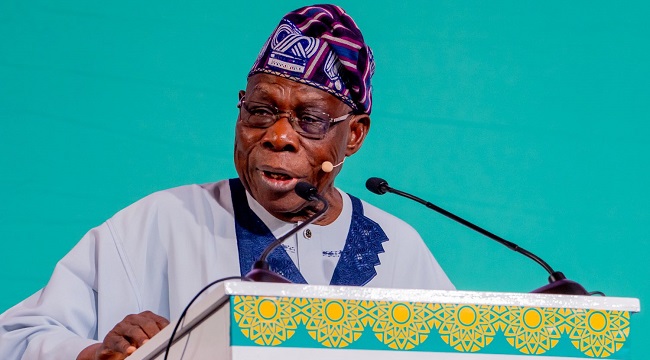
Former President says Western liberal democracy does not adequately reflect Africa’s history, culture and diversity, warning that winner-takes-all politics is deepening division and weakening democratic governance.
By A1NEWS International
BAUCHI, NIGERIA — August 12, 2026
Former Nigerian President Olusegun Obasanjo has called for a fundamental rethink of the democratic model practised across Africa, arguing that the Western liberal system inherited by many African states has failed to adequately accommodate the continent’s history, culture, diversity and political realities.
Obasanjo said the prevailing model has produced a winner-takes-all political culture in which electoral victories often translate into near-total control of state institutions, while those who lose elections are frequently treated as political enemies rather than legitimate participants in governance.
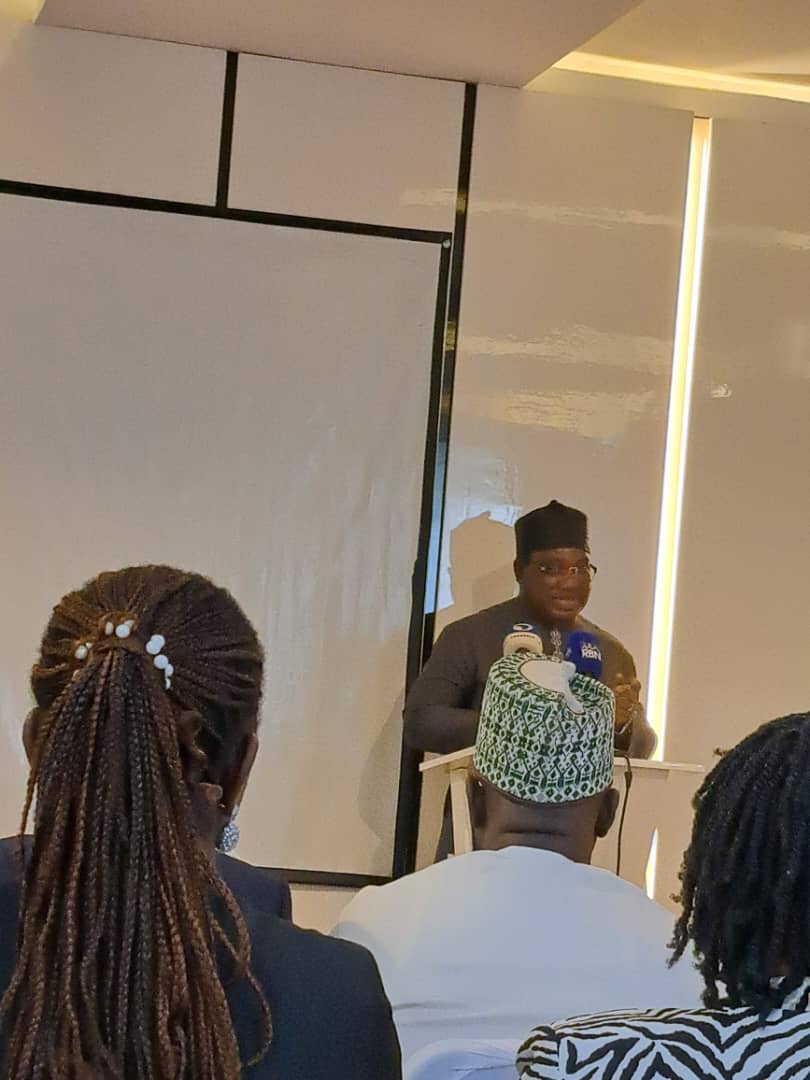
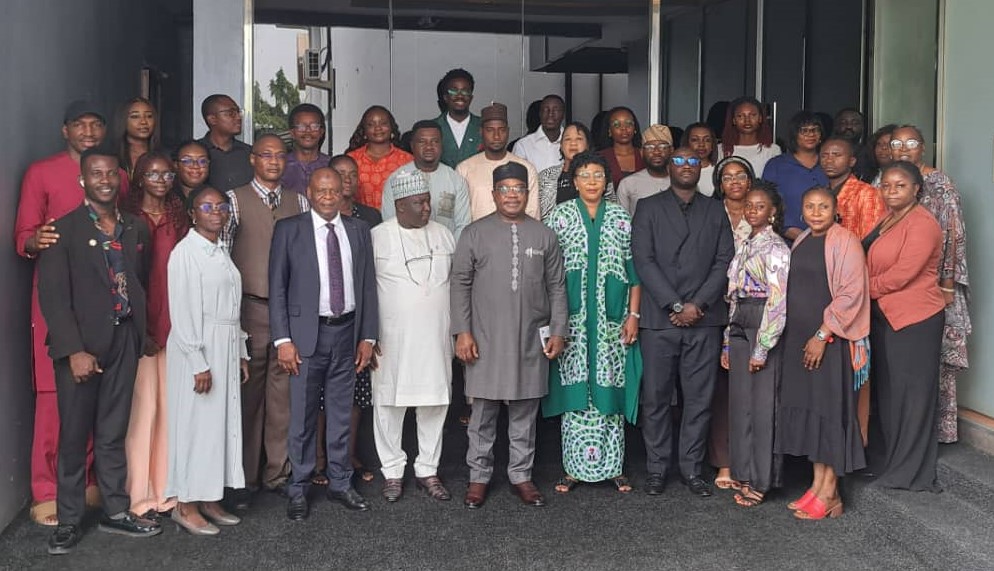
The former president made the remarks on Tuesday at the 2026 Goodluck Jonathan Foundation Democracy Dialogue in Bauchi, where former President Goodluck Jonathan, former Vice President Namadi Sambo, constitutional experts, civil society representatives and other stakeholders gathered to examine the state and future of democracy in Africa.
His intervention comes amid renewed concerns across the continent about declining public trust in political institutions, electoral manipulation, political exclusion, vote buying, weak opposition structures and the growing tendency of political contests to become battles for total control of government.
‘A Dress That Was Not Made to Fit’
Obasanjo used a striking analogy to describe Africa’s adoption of Western liberal democracy.
He argued that attempting to operate a political system developed in a different historical and cultural environment without adapting it to African realities was comparable to wearing a garment that had not been tailored to the wearer.
According to the former president, the challenge is not necessarily democracy itself, but the failure to develop democratic institutions that reflect Africa’s own political history, social structures and cultural values.
He argued that African countries should not simply reproduce political institutions inherited from colonial and Western traditions without asking whether those institutions actually serve their societies.
For Obasanjo, the issue is therefore one of adaptation rather than outright rejection of democracy.
The ‘Winner-Takes-All’ Problem
At the centre of Obasanjo’s criticism is the electoral principle in which the candidate who secures the highest number of votes wins political office while those who finish behind can effectively lose access to political power.
He argued that the first-past-the-post system can encourage an all-or-nothing mentality.
Under such a structure, a candidate may win an election by a relatively narrow margin but subsequently exercise authority over an entire government, leaving millions of voters who supported other candidates without meaningful representation in executive decision-making.
Obasanjo described this as one of the fundamental weaknesses of the democratic model currently practised in many African countries.
“If you beat me by one vote then you take it all and whatever I have does not matter.”
The implication is significant.
Where political office provides access to enormous state resources and patronage networks, losing an election can mean far more than losing political office. It can mean losing access to the networks through which influence, contracts, appointments and public resources are distributed.
That reality can make elections existential contests rather than ordinary democratic competitions.
When Political Opposition Becomes ‘The Enemy’
Obasanjo also focused on the meaning attached to political opposition in African societies.
He argued that in several African languages, the concept of opposition is associated with the idea of an enemy, making it difficult to reconcile with the Western parliamentary concept of a “loyal opposition.”
His broader argument is that political competition in Africa can too easily become personalised.
Rather than viewing opposition parties as institutions performing a constitutional function—scrutinising government, proposing alternatives and holding those in power accountable—governing parties may regard political opponents as threats to be neutralised.
This has consequences beyond parliament.
It can produce political exclusion, weaken institutions, encourage defections and turn public administration into an instrument of partisan competition.
Nigeria’s Diversity Cannot Be Treated as an Afterthought
Obasanjo placed Nigeria’s extraordinary diversity at the heart of his argument.
The former president warned that any democratic model that fails to deliberately accommodate Nigeria’s religious, ethnic, linguistic and regional diversity risks undermining national cohesion.
He argued that Nigeria’s identity is inseparable from its diversity and that attempts to govern without recognising this reality could ultimately threaten the country’s cohesion.
The argument raises a central constitutional question:
How should a democracy translate electoral majority rule into governance that also protects minority interests?
That problem is not uniquely Nigerian.
It is one of the fundamental challenges facing plural societies around the world.
Majoritarian democracy can provide a clear method for choosing governments. But without institutional safeguards, majority rule can become majority domination.
Beyond Elections: The Representation Question
Obasanjo’s intervention also raises questions about what happens after citizens cast their ballots.
A democracy is not sustained by elections alone.
Political scientists typically assess democratic quality through a wider range of institutions and practices, including accountability, representation, judicial independence, civil liberties, political participation and the protection of minorities.
This distinction is critical for Africa.
A country can conduct regular elections while still suffering from weak institutions, political exclusion and entrenched patronage.
The deeper challenge is therefore to build systems in which winning an election gives a government the authority to govern, but not unlimited authority to disregard those who did not vote for it.
Money Politics: The Other Threat to African Democracy
Obasanjo also criticised the growing influence of money and political inducement.
He said the use of money in Nigerian politics has increased “by leaps and bounds.”
The concern is particularly relevant in a political environment where poverty can make voters vulnerable to financial inducements and where election campaigns can require enormous sums of money.
Vote buying has become one of the most persistent concerns surrounding Nigerian elections.
It can transform citizens from political stakeholders into short-term consumers of electoral patronage.
Instead of asking candidates what they will do about unemployment, insecurity, education, healthcare or infrastructure, voters may be confronted with immediate financial incentives to support a particular candidate.
That creates a vicious cycle:
poverty fuels vote buying, vote buying increases the cost of politics, and expensive politics can encourage elected officials to recover campaign expenditure through patronage and corruption.
Breaking that cycle requires more than electoral regulation. It requires stronger institutions, political-party reform, civic education and economic empowerment.
Poverty and Illiteracy Remain Structural Challenges
The former president also acknowledged that widespread poverty and illiteracy create difficult conditions for democratic development.
A citizen struggling to meet basic needs may have limited capacity to scrutinise policy proposals, participate in political organisations or resist inducements from political actors.
This does not mean poor citizens are incapable of democratic participation.
Rather, it highlights the connection between economic conditions and political agency.
Democracy becomes stronger when citizens possess the education, information, economic security and institutional access required to make informed political choices.
Obasanjo Raises Nigeria’s Gender Imbalance
Another major issue highlighted by the former president was the underrepresentation of women in Nigerian politics.
He pointed to the absence of a female elected governor in Nigeria since the beginning of the Fourth Republic in 1999.
The observation exposes a persistent problem in Nigerian political representation.
Although women constitute roughly half of Nigeria’s population, their representation in elected political institutions remains disproportionately low.
The problem extends beyond governorships to the National Assembly, state assemblies and other elected offices.
Obasanjo questioned the political system’s failure to produce greater representation for women while also criticising the quality and character of some elected officials.
His point goes beyond gender symbolism.
If democratic institutions are intended to represent society, persistent exclusion of half the population raises legitimate questions about the representativeness of those institutions.
African Democracy: Reform or Reinvention?
Obasanjo’s most consequential proposal was his call for African countries to develop political systems that reflect their own historical, cultural and social realities.
He argued that democracy should not be treated as a finished product.
Instead, it should be viewed as a continuous political process that societies can refine as they gain experience.
That proposition challenges the assumption that there is only one legitimate institutional model for democratic government.
But it also creates a difficult question:
What exactly would an “African democracy” look like?
Would it retain competitive elections?
Would governments remain accountable through independent courts?
How would opposition parties operate?
What mechanisms would protect minorities?
How would traditional institutions interact with elected government?
How would political power be transferred peacefully?
And most importantly, how would an African model prevent cultural tradition from being used to justify authoritarian rule?
Those questions remain unanswered.
The Danger of Romanticising ‘African Values’
While Obasanjo’s argument for greater African ownership of democratic institutions is significant, the concept also requires careful scrutiny.
Africa is not politically or culturally homogeneous.
The continent contains more than 50 countries, thousands of ethnic groups, hundreds of languages and radically different political histories.
There is therefore no single definition of “African values” capable of automatically producing a democratic model.
Some traditional institutions emphasise consultation and consensus.
Others have historically been hierarchical.
Some societies prioritise communal decision-making.
Others have strong traditions of centralised authority.
An effective African democratic model would therefore need to distinguish between cultural practices that strengthen participation and accountability and traditions that could undermine individual rights or political equality.
Why Obasanjo’s Argument Matters Now
The debate comes at a time when democratic institutions across Africa are facing significant pressure.
Military coups have returned in parts of West and Central Africa.
Civilian governments face legitimacy crises.
Opposition parties frequently allege electoral manipulation.
Young Africans increasingly express frustration with political elites who have dominated national politics for decades.
At the same time, there is growing recognition that democracy cannot survive on elections alone.
Citizens want governments that deliver security, jobs, electricity, education, healthcare and economic opportunity.
This creates a fundamental challenge for African democracy:
Can democratic systems deliver both political freedom and competent governance?
The Nigerian Test
Nigeria’s political experience provides an important case study.
Since the return to civilian government in 1999, the country has experienced multiple peaceful transfers of presidential power between political parties.
That is a significant democratic achievement.
Yet problems remain.
Election-related violence, vote buying, allegations of electoral malpractice, political defections, weak internal party democracy and limited representation of women continue to undermine confidence in the political system.
The winner-takes-all structure also creates incentives for political actors to treat elections as battles for survival.
Whoever controls the presidency controls enormous political and administrative resources.
Whoever controls state governments controls another layer of patronage and public resources.
The stakes are therefore extraordinarily high.
A Democracy That Produces Winners—and Citizens
The central issue raised by Obasanjo is ultimately not whether Africa should abandon democracy.
It is whether Africans should own and redesign the institutions through which democracy operates.
A more inclusive system could potentially explore mechanisms for proportional representation, coalition government, stronger local governance, independent institutions and greater protection for minority interests.
But institutional reform alone will not solve the problem.
Political culture matters.
Parties must learn to tolerate opposition.
Governments must accept criticism.
Opposition parties must understand that political disagreement is not treason.
Citizens must demand accountability beyond election day.
And political leaders must recognise that public office is a temporary mandate—not private ownership of the state.
Africa Needs Democracy That Fits Its People
Obasanjo’s intervention at the 2026 Goodluck Jonathan Foundation Democracy Dialogue has reopened one of Africa’s oldest political questions:
Should African countries continue operating democratic systems largely inherited from Western political traditions, or should they develop models more deliberately shaped by their own histories, cultures and social realities?
The answer should not be a simplistic rejection of liberal democracy.
Nor should it be an unquestioning defence of the status quo.
Africa’s democratic experience deserves its own serious institutional experimentation—provided reform strengthens, rather than weakens, fundamental principles such as political participation, accountability, human rights, peaceful transfers of power and protection of minorities.
The objective should not merely be to replace one imported template with another.
It should be to build political systems in which winning an election does not mean owning the country, losing an election does not mean becoming an enemy, and every citizen—whether in the majority or minority—retains a meaningful stake in government.
That may ultimately be the real test of an African democracy that fits.


Leave a Reply