
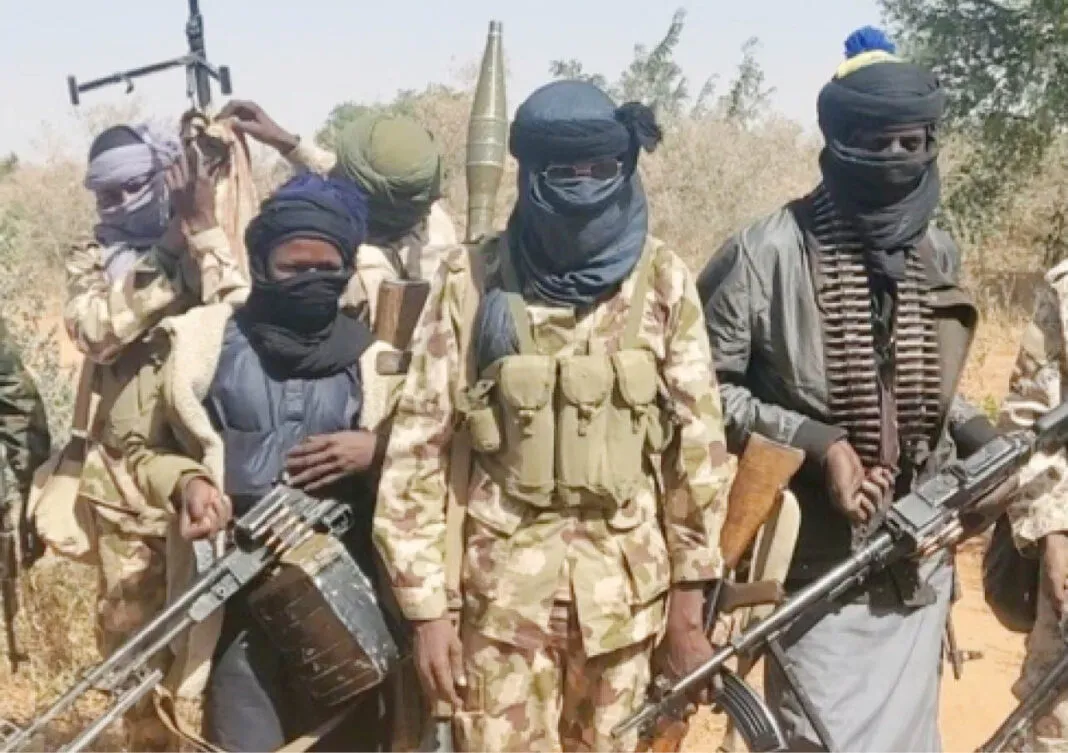
As kidnappings, mass killings, village raids, and ransom negotiations continue across Nigeria, citizens are increasingly questioning whether the country’s security architecture is winning the war against violent armed groups—or merely containing a crisis that has evolved into one of the greatest threats to national stability.
By Baron Eloagu / Abuja, Nigeria — June 3, 2026
INTRODUCTION: A NATION CONFRONTING A SECURITY EMERGENCY
As political alignments ahead of the 2027 general elections gather momentum, many Nigerians are calling for greater attention to what they consider the nation’s most urgent challenge: insecurity.
From the forests of the North-West to farming communities in the North-Central region and major highways linking cities across the country, incidents of kidnapping, mass abductions, village attacks, and violent assaults continue to dominate national discourse.
Despite repeated military offensives, billions of naira spent on security operations, and official assurances from successive administrations, armed groups continue to inflict devastating human and economic costs on communities nationwide.
The persistence of these attacks has triggered a growing debate about the effectiveness of Nigeria’s security strategy, the classification of violent armed groups, and whether enough is being done to dismantle what many experts now describe as a thriving “kidnap-for-ransom economy.”
A NATION STILL UNDER SIEGE
Across several states, insecurity has become an unfortunate part of daily life.
Communities in Zamfara, Katsina, Kaduna, Niger, Sokoto, Kebbi, Benue, Plateau, Borno and other states continue to face recurring attacks that leave dozens dead, many injured, and hundreds displaced.
For many victims, the experience follows a familiar pattern.
Armed men arrive in large numbers, often on motorcycles or in convoys. They attack villages, burn homes, kidnap residents, demand ransom payments, and retreat into forests or remote territories before security forces arrive.
Survivors frequently recount how attackers communicate openly with victims’ families, negotiate ransom payments via mobile phones, record propaganda videos, and threaten communities with apparent impunity.
These realities have fueled public frustration and renewed questions about why criminal networks continue to operate despite advances in surveillance technology, intelligence gathering, telecommunications monitoring, and military operations.
BANDITS OR TERRORISTS? THE CONTROVERSY OVER TERMINOLOGY
One of the most contentious debates in Nigeria’s security landscape revolves around how violent armed groups are described.
Traditionally, “bandits” have been associated with criminal activities such as cattle rustling, kidnapping, armed robbery, and extortion.
“Terrorists,” however, are generally defined as groups that employ violence and intimidation to pursue ideological, political, religious, or strategic objectives.
Security analysts increasingly argue that several armed groups operating across Nigeria now exhibit characteristics commonly associated with terrorist organizations.
These include:
- Large-scale attacks on civilian populations;
- Occupation and control of territories;
- Organized command structures;
- Mass abductions;
- Systematic intimidation of communities;
- Propaganda campaigns and public threats;
- Attacks designed to instill widespread fear.
For many observers, the distinction between banditry and terrorism has become increasingly blurred.
Critics argue that the continued use of the term “banditry” may understate the scale and sophistication of the threat confronting the country.
Government authorities, however, maintain that different security threats require distinct operational and legal classifications.
THE RISE OF NIGERIA’S KIDNAP-FOR-RANSOM ECONOMY
Beyond the security implications lies a troubling economic reality.
Kidnapping has evolved into one of the most lucrative criminal enterprises in Nigeria.
Security experts estimate that criminal networks generate billions of naira annually through ransom payments extracted from families, businesses, institutions, and communities.
In many cases, victims are held for weeks or months while negotiations take place.
The profitability of kidnapping has transformed what was once an isolated criminal activity into an organized industry supported by informants, negotiators, financiers, logistics providers, and weapons suppliers.
Experts warn that as long as ransom payments remain profitable and financial networks remain intact, criminal groups will continue to find incentives to operate.
WHY ARE NIGERIANS ASKING TOUGH QUESTIONS?
Growing public frustration has led to increasing scrutiny of security institutions and government responses.
Citizens, civil society organizations, and policy experts continue to raise critical questions:
- Why do some notorious criminal leaders remain at large despite repeated intelligence reports?
- Why do ransom networks continue to operate with apparent sophistication?
- Are intelligence failures contributing to recurring attacks?
- Is there adequate coordination among security agencies?
- Why do many arrests fail to result in successful prosecutions?
- Are criminal sponsors being identified and prosecuted?
Security experts caution against drawing conclusions without evidence but acknowledge that public concerns deserve credible answers.
GOVERNMENT’S POSITION: A COMPLEX SECURITY CHALLENGE
Successive governments have argued that Nigeria faces multiple overlapping security threats, including terrorism, insurgency, kidnapping, organized crime, communal violence, separatist agitations, and transnational criminal networks.
Officials frequently cite several challenges:
- Vast ungoverned territories;
- Difficult terrain and forested regions;
- Porous international borders;
- Limited technological infrastructure;
- Sophisticated criminal networks;
- Resource constraints.
Military authorities have repeatedly announced the elimination of criminal commanders, destruction of camps, rescue of kidnapped victims, and recovery of weapons.
Yet the persistence of attacks continues to fuel public skepticism.
FOLLOWING THE MONEY: THE MISSING LINK?
Security specialists argue that one of the most effective ways to dismantle kidnapping networks is to target their financial infrastructure.
Recommendations include:
- Tracking ransom payments through financial institutions;
- Monitoring suspicious transactions;
- Strengthening anti-money laundering enforcement;
- Freezing accounts linked to criminal operations;
- Prosecuting financiers and collaborators.
Experts contend that many kidnapping operations survive because of extensive support networks beyond the armed perpetrators themselves.
THE CASE FOR INTELLIGENCE-LED SECURITY OPERATIONS
Counterterrorism experts consistently emphasize that successful security campaigns are driven by intelligence rather than force alone.
Recommended reforms include:
- Strengthening human intelligence networks;
- Improving community engagement;
- Integrating intelligence databases;
- Enhancing inter-agency coordination;
- Expanding surveillance capabilities;
- Improving real-time information sharing.
Many analysts believe that intelligence failures often allow criminal groups to strike before authorities can respond.
SECURING FORESTS AND UNGOVERNED SPACES
Large forest corridors across Nigeria have become strategic hideouts for criminal groups.
Security experts recommend:
- Permanent security bases in vulnerable locations;
- Drone-assisted surveillance operations;
- Continuous rather than periodic military presence;
- Improved road access and communications infrastructure.
They argue that areas lacking effective government presence frequently become safe havens for criminal activity.
THE NEED FOR POLICE AND JUSTICE REFORMS
Experts also point to structural weaknesses within law enforcement and the criminal justice system.
Key recommendations include:
- Expansion of community policing initiatives;
- Recruitment of additional personnel;
- Improved welfare and equipment for officers;
- Specialized kidnapping and terrorism courts;
- Faster prosecution processes;
- Enhanced witness protection mechanisms;
- Improved forensic capabilities.
Without effective prosecution and convictions, analysts warn that criminal networks will continue to operate with confidence.
BORDER SECURITY AND ARMS TRAFFICKING
Nigeria’s extensive borders remain a major security concern.
Security professionals argue that stronger border management is critical to reducing arms trafficking and cross-border criminal operations.
Suggested measures include:
- Enhanced surveillance technology;
- Greater cooperation with neighboring countries;
- Improved border intelligence systems;
- Increased deployment of security personnel at strategic crossing points.
The uncontrolled flow of weapons continues to fuel insecurity across multiple regions.
THE POLITICAL WILL QUESTION
Many analysts believe the most important factor in addressing insecurity is political will.
They argue that successful security reforms require sustained commitment, transparency, accountability, and the courage to confront criminal networks regardless of political, ethnic, religious, or economic affiliations.
Experts also stress that investigations into alleged sponsors of criminal activity must be pursued wherever evidence exists.
According to them, no security strategy can achieve lasting success if influential facilitators remain beyond the reach of the law.
THE HUMAN COST OF INSECURITY
Beyond policy debates and security statistics lies a devastating human reality.
Thousands of Nigerians have lost their lives to violence over the past decade.
Entire communities have been displaced.
Farmers have abandoned their lands.
Businesses have collapsed.
Children have lost access to education.
Families have exhausted life savings paying ransoms.
For victims, the debate is often not whether perpetrators should be called bandits or terrorists.
The pressing question is whether the violence can be stopped.
CONCLUSION: DEMANDING RESULTS, NOT PROMISES
As Nigeria moves toward another electoral cycle, insecurity remains one of the defining challenges confronting the nation.
While experts differ on classifications, strategies, and policy approaches, there is widespread agreement that the current situation is unsustainable.
Citizens are increasingly demanding more than political rhetoric and security briefings.
They want safer roads, secure communities, successful prosecutions, accountable institutions, protected livelihoods, and measurable reductions in violence.
Ultimately, the success of Nigeria’s security strategy will not be measured by the number of operations announced or statements issued.
It will be measured by whether ordinary Nigerians can travel, farm, trade, attend school, conduct business, and live without fear.
That remains the benchmark by which the nation’s security efforts will continue to be judged.












Leave a Reply