
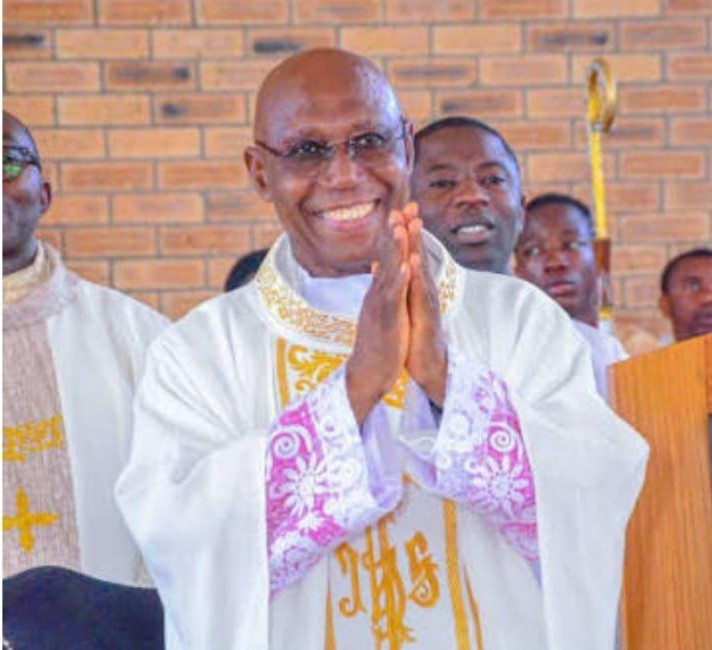
Renowned cleric says global conflict is unfolding through regional wars as he urges Nigerians to confront impunity, insecurity and the erosion of justice at the launch of the Southeast Human Rights Bureau.
By Chijioke Udenta
Enugu, Nigeria | July 30, 2026
Renowned Catholic priest, human rights advocate and founder of the Catholic Institute for Development Justice and Peace (CIDJAP), Rev. Fr. Prof. Obiora Ike, has delivered a stark assessment of the state of global peace and Nigeria’s democratic institutions, declaring that the world is already experiencing a Third World War fought through multiple regional conflicts rather than a single global battlefield.
Speaking in Enugu at the inauguration of the Southeast Human Rights Bureau and an Open Source Reporting Platform organized by the Rule of Law and Accountability Advocacy Centre (RULAAC), Ike argued that Nigeria’s worsening insecurity, kidnapping epidemic and governance failures are symptoms of a deeper collapse of the rule of law.
His remarks come at a time when Nigeria continues to grapple with terrorism, banditry, kidnapping, communal violence and growing public concerns over accountability, justice and the effectiveness of state institutions.
Human Rights Initiative Beyond a Ceremonial Launch
Fr. Ike described the inauguration of the Southeast Human Rights Bureau as more than the unveiling of another civil society initiative.
According to him, the event represented a renewed commitment by citizens, advocacy groups and institutions to confront impunity, defend human rights and strengthen democratic accountability at a time when both Nigeria and the international community face increasing threats to justice and constitutional governance.
He urged participants to view the initiative as part of a broader struggle to preserve the rule of law against forces that undermine democratic institutions.
‘The Third World War Has Already Started’
One of the most striking aspects of Ike’s address was his assertion that humanity is already living through what amounts to a Third World War.
Rejecting the conventional view that a world war must involve a single global battlefield, he argued that today’s conflicts are dispersed across multiple regions but collectively represent an unprecedented global security crisis.
According to him, violent conflicts in Nigeria, Niger, Mali, Chad, Sudan, the Russia-Ukraine war and continuing hostilities in the Middle East demonstrate that the world is experiencing interconnected instability.
“You cannot tell me we don’t have a World War now. There’s no central front, but there is a war in Nigeria. There is a war in Niger, in Mali, in Chad, in Sudan. You can go to Europe and focus on Russia and Ukraine. You can go to the Middle East and focus on what’s happening there.”
He warned that the cumulative impact of these regional conflicts is reshaping global peace and security in ways comparable to previous world wars.
Rule of Law ‘Has Collapsed’ in Nigeria
Turning to Nigeria’s internal challenges, Ike expressed concern that insecurity has become a defining feature of national life because institutions responsible for enforcing justice have weakened.
He argued that the country’s persistent cases of kidnapping, banditry, violent crime and corruption reflect the absence of effective legal order.
Drawing from the writings of fourth-century theologian St. Augustine, he questioned whether any society can function without justice.
“Without justice, without law, are societies and states nothing else but a band of robbers put together?”
According to him, when criminality continues unchecked while citizens lose confidence in public institutions, the rule of law ceases to serve as the foundation of governance.
Biblical Lessons on Human Nature and Accountability
To explain what he described as humanity’s recurring struggle with obedience and justice, the cleric turned to biblical history.
Referencing the story of Adam and Eve in the Book of Genesis, he argued that resistance to lawful authority has existed since the earliest chapters of human civilization.
He also cited the account of Moses receiving the Ten Commandments, suggesting that people have historically sought ways to evade accountability rather than uphold moral and legal obligations.
According to Ike, contemporary societies continue to demonstrate the same tendency by attempting to circumvent laws instead of respecting them.
Warning Over Weakening International Institutions
Beyond Nigeria, Ike criticized what he described as growing attacks on international institutions established to protect justice and human rights.
He expressed concern over attempts by some countries to undermine the International Criminal Court (ICC) and sanction judges carrying out their judicial responsibilities.
According to him, weakening international accountability mechanisms threatens the global system created after previous world wars to prevent impunity and protect human dignity.
He argued that the erosion of confidence in multilateral institutions could have long-term consequences for international peace and justice.
Kidnapping Compared to a Modern Slave Trade
The priest drew one of his strongest comparisons when discussing Nigeria’s kidnapping crisis.
He likened the country’s widespread ransom economy to a modern version of the transatlantic slave trade.
According to him, whereas victims centuries ago were captured and sold by others, today’s kidnapping victims are forced to finance their own freedom through ransom payments.
He further expressed concern over recurring allegations that some individuals within official institutions may benefit indirectly from ransom payments, stressing that such allegations underscore the need for transparent investigations and stronger institutional accountability.
A Child’s Question: ‘Are We Serious?’
Reflecting on a recent church service in Enugu, Ike recounted an encounter that he said perfectly summarized Nigeria’s current predicament.
After asking children why they believed the country continued to experience numerous challenges, a young girl reportedly responded in Igbo:
“Ndi a erogho serious.”
Translated as “These people are not serious,” the brief response, according to Ike, captured the essence of Nigeria’s governance crisis more effectively than lengthy political speeches.
He said the experience continues to remind him that meaningful national progress requires seriousness of purpose from both leaders and citizens.
Hope Through Civil Society and Legal Intervention
Despite his critical assessment of national and global affairs, Ike maintained that Nigeria’s challenges are not insurmountable.
He highlighted the work of the Catholic Institute for Development Justice and Peace (CIDJAP), revealing that the organization’s legal intervention programme secured the release of more than 600 inmates through bail applications during the first half of the year.
He also disclosed that the organization successfully resolved over 2,000 disputes through alternative dispute resolution mechanisms, demonstrating that civil society organizations can complement government efforts in expanding access to justice.
According to him, sustained collaboration between faith-based organizations, civil society, legal institutions and citizens remains essential to rebuilding public confidence in justice and governance.
Experts Say Rule of Law Remains Central to Democratic Stability
Legal analysts note that the rule of law remains one of the most critical pillars of democratic governance.
They argue that sustained investment in judicial independence, accountable policing, human rights protection and transparent institutions is necessary to reduce insecurity and strengthen public confidence in government.
They also emphasize that addressing Nigeria’s security challenges requires more than military operations, calling for institutional reforms capable of tackling corruption, improving criminal justice administration and ensuring equal application of the law.
Rev. Fr. Prof. Obiora Ike’s remarks have reignited debate over the state of governance, security and justice in Nigeria. By describing the world’s current conflicts as a fragmented Third World War and warning that the rule of law has deteriorated at home, the respected cleric has challenged both public officials and citizens to confront difficult questions about accountability, democratic resilience and national priorities.
Whether or not one agrees with his characterization of global events, his central message is clear: societies cannot achieve lasting peace, development or democracy where impunity replaces justice and where the rule of law is allowed to weaken. As Nigeria continues to confront insecurity and institutional challenges, his call for renewed commitment to justice is likely to resonate far beyond the gathering in Enugu.






Leave a Reply