
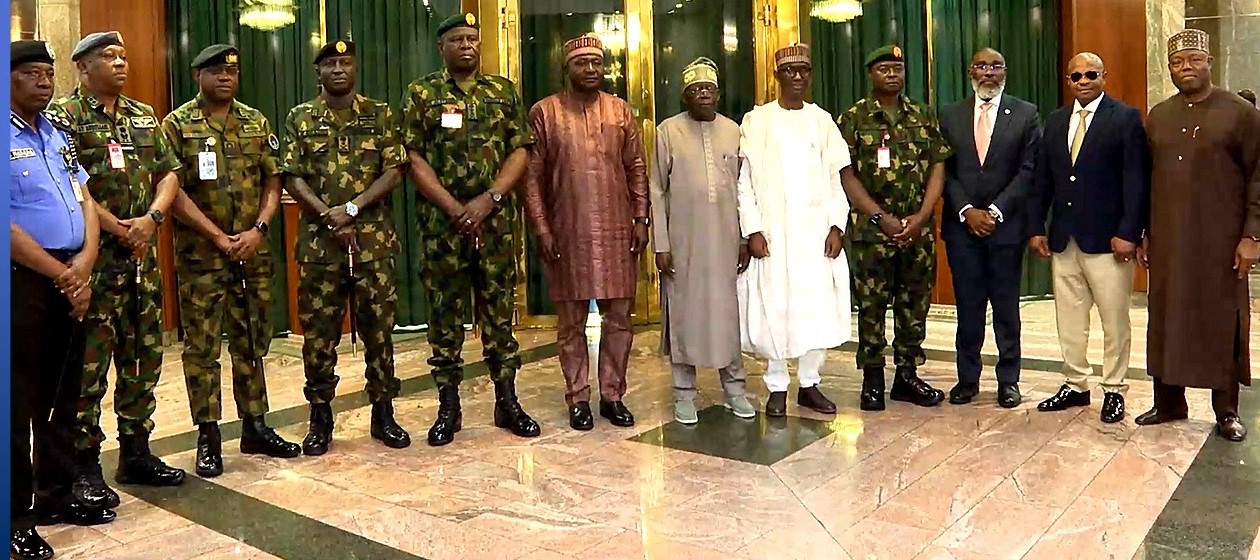
President convenes high-level security meeting at Aso Rock as military and intelligence chiefs report progress against insecurity while outlining new strategies for regional cooperation and internal security.
By John Ishaku
Abuja, Nigeria — July 10, 2026
President Bola Ahmed Tinubu on Thursday convened a high-level security meeting at the Presidential Villa, Abuja, where Nigeria’s top military and intelligence officials conducted a comprehensive review of the country’s security situation and discussed fresh strategies to consolidate recent gains against insurgency, banditry, kidnapping and other violent crimes.
The closed-door session brought together the nation’s security leadership, including the Minister of Defence, Mohammed Badaru Abubakar, the Chief of Defence Staff, General Christopher Musa, the National Security Adviser (NSA), Mallam Nuhu Ribadu, and other service chiefs responsible for coordinating Nigeria’s internal and external security operations.
The meeting comes amid renewed efforts by the Federal Government to strengthen security architecture through intelligence-driven operations, enhanced regional cooperation and ongoing constitutional reforms aimed at decentralising policing.
Security Chiefs Present Nationwide Assessment
Sources familiar with the meeting said each security agency presented operational updates covering developments across Nigeria’s six geopolitical zones.
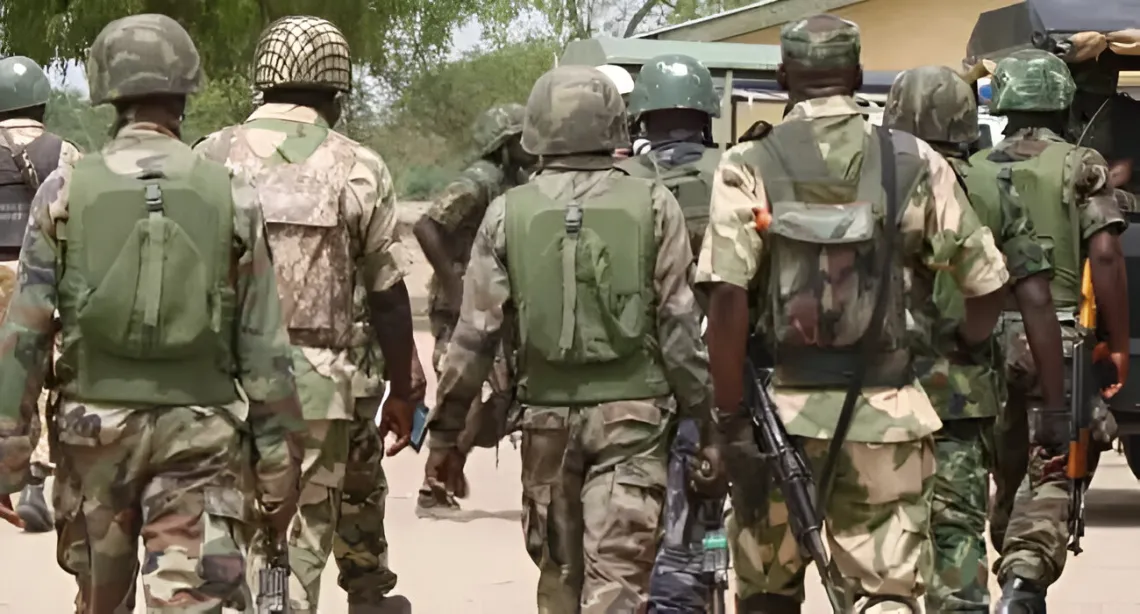
The briefings reportedly focused on ongoing military offensives against terrorist groups, anti-banditry operations, anti-kidnapping efforts, maritime security, protection of critical national infrastructure and intelligence-led interventions targeting organised criminal networks.
According to officials who spoke after the meeting, security chiefs acknowledged improvements in several theatres of operation while stressing that significant challenges remain.
They pledged to sustain current momentum through improved operational coordination and intelligence sharing.
Intelligence Takes Centre Stage
One of the major outcomes of the meeting was a renewed emphasis on intelligence gathering as the foundation of Nigeria’s evolving national security strategy.
The security leadership agreed that timely intelligence, technological surveillance and inter-agency information sharing remain essential to disrupting criminal networks before attacks occur.
Security experts have increasingly argued that intelligence-led policing and military operations provide more sustainable security outcomes than reactive deployments alone.
The renewed commitment aligns with the Federal Government’s broader objective of preventing attacks rather than responding after incidents occur.
Regional Security Cooperation Strengthened
The security chiefs also agreed to deepen collaboration with neighbouring countries in addressing cross-border threats.
Nigeria shares extensive land borders with Benin Republic, Niger, Chad and Cameroon, making regional cooperation critical in combating terrorism, arms trafficking, kidnapping syndicates and transnational organised crime.
Officials noted that criminal groups increasingly exploit porous borders to evade security operations, underscoring the importance of coordinated regional intelligence and joint military operations.
The renewed commitment to cross-border collaboration is expected to strengthen existing partnerships under regional security frameworks.
State Police Reform Remains on the Agenda
Thursday’s meeting also took place against the backdrop of ongoing constitutional reforms designed to establish state police in Nigeria.
President Tinubu has already transmitted the relevant constitutional amendment bill to the National Assembly, where lawmakers are considering proposals aimed at decentralising policing responsibilities.
Supporters argue that state policing would improve local intelligence gathering, reduce response times and enhance community-based security.
However, critics have continued to express concerns about possible political interference, abuse of power and inconsistent operational standards among state-controlled police formations.
Analysts say the proposed reforms will require strong legal safeguards, independent oversight and adequate funding to achieve their intended objectives.
Government Seeks Sustained Security Gains
Although government officials acknowledged improvements in parts of the country, insecurity continues to pose significant economic and humanitarian challenges.
Armed attacks, kidnappings for ransom, communal violence and criminal activities have affected farming communities, disrupted commercial activities and displaced thousands of citizens in several regions.
Security analysts argue that lasting stability will depend not only on military operations but also on addressing underlying socio-economic factors, including unemployment, poverty, illegal arms proliferation and weak border management.
The administration has repeatedly maintained that restoring security remains one of its highest governance priorities.
Inside the Closed-Door Meeting
While the Presidency did not disclose detailed operational decisions reached during the meeting due to national security considerations, officials described the discussions as strategic and forward-looking.
The gathering underscored the administration’s emphasis on improving synergy among the armed forces, intelligence agencies and law enforcement institutions.
Observers say such periodic reviews allow government to evaluate operational effectiveness, identify emerging threats and adjust security strategies where necessary.
Why the Meeting Matters
The security review comes at a critical period as Nigeria continues efforts to improve investor confidence, boost agricultural production and stimulate economic recovery.
Security remains a major determinant of economic growth, with businesses and development partners closely monitoring the government’s ability to reduce violence and protect critical infrastructure.
Analysts believe sustained improvements in security could enhance food production, encourage domestic and foreign investment and reduce humanitarian pressures in conflict-affected communities.
President Bola Tinubu’s latest security meeting reflects the Federal Government’s continued effort to strengthen Nigeria’s national security architecture through intelligence-led operations, enhanced inter-agency coordination and regional cooperation. While officials expressed optimism over recent operational gains, the persistence of insecurity across parts of the country highlights the need for sustained military pressure, institutional reforms and long-term socio-economic interventions. As the administration advances proposals for state police and other security reforms, the effectiveness of implementation will remain central to public confidence in Nigeria’s ability to achieve lasting peace and national stability.







Leave a Reply