
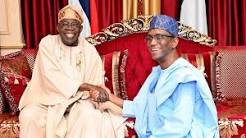
How a new Homeland Security structure, Washington diplomacy, ethnic trust networks, and Tinubu’s long-standing political doctrine may be reshaping Nigeria’s security architecture ahead of the 2027 power struggle.
By Baron Eloagu | ABUJA, Nigeria — May 17, 2026
The corridors of Nigeria’s Presidential Villa are once again saturated with speculation following the Presidency’s hurried denial of reports alleging that the National Security Adviser, Nuhu Ribadu, had resigned.
The rebuttal, issued on Monday, May 11, was intended to extinguish mounting rumors. Instead, it intensified political curiosity inside Abuja’s elite circles, where silence, timing, and structural changes often reveal more than official statements.
At the center of the unfolding intrigue is the appointment of retired Major General Adeyinka A. Famadewa as Nigeria’s pioneer Special Adviser on Homeland Security — a role many analysts now interpret as far more than a bureaucratic expansion of the national security framework.
While the Presidency publicly describes the new office as a complementary mechanism designed to strengthen internal security coordination, political observers and insiders increasingly believe the move reflects deeper anxieties within the administration as the battle for 2027 quietly intensifies.
The emerging narrative points toward a sophisticated restructuring of influence inside the security establishment — one rooted in political survival, loyalty management, ethnic calculations, and the enduring governance philosophy of President Bola Ahmed Tinubu.
The Washington Trip That Triggered Questions
Multiple Presidency insiders say the timing of Famadewa’s emergence cannot be separated from Ribadu’s recent diplomatic engagements in the United States.
Last week, the NSA reportedly participated in high-level meetings in Washington D.C., where he engaged senior figures within the current American administration, including U.S. Vice President JD Vance and Secretary of State Marco Rubio.
Though officially framed around counter-terrorism cooperation and regional security stabilization, sources familiar with the meetings suggest broader political conversations may also have taken place behind closed doors.
For the Nigerian Presidency, such engagements carry strategic implications.
American policymakers increasingly assess African governments through the lens of political continuity, institutional resilience, electoral stability, and elite fragmentation. Any intelligence assessments concerning Nigeria’s internal political fractures ahead of 2027 would inevitably become highly sensitive information within the Presidency.
Political analysts argue that an NSA who possesses direct international diplomatic access, substantial intelligence influence, and growing global credibility can gradually evolve into an independent political variable within a fragile succession environment.
In highly centralized political systems, proximity to foreign power centers often creates suspicion at home.
The 2027 Anxiety Inside the Presidency
Sources close to the administration say the central fear within Tinubu’s political circle is not necessarily Ribadu’s competence, but uncertainty surrounding his long-term political alignment if Northern political interests begin consolidating ahead of the next presidential election.
Ribadu, a former anti-corruption czar and influential Northern political figure, occupies one of the most sensitive offices in the country. His regional identity, combined with his institutional reach, has reportedly generated quiet unease among some members of the President’s inner caucus.
According to insiders, concerns revolve around whether, at a decisive political moment, the NSA would prioritize national command loyalty or succumb to pressure from broader Northern political networks seeking power realignment.
This perception — whether grounded in evidence or paranoia — appears to be shaping new layers of internal surveillance and counterbalance within the Presidency.
Tinubu’s Long History of Building Parallel Power Structures
For close observers of Tinubu’s political evolution, the creation of overlapping authority centers is neither accidental nor new.
Throughout his decades-long dominance of Lagos politics, Tinubu consistently operated a governance model built around managed rivalries, layered loyalties, and institutional counterweights.
No subordinate, regardless of loyalty or competence, was traditionally permitted to become politically indispensable.
The Lagos political architecture under Tinubu frequently relied on multiple competing influence blocs operating simultaneously within the same ecosystem.
The Sanwo-Olu–Obasa Balancing Model
The administration of Lagos State Governor Babajide Sanwo-Olu has often been cited as a modern example of this doctrine.
Although Sanwo-Olu formally heads the executive branch, political observers note that the Lagos State House of Assembly under Speaker Mudashiru Obasa has functioned as an independent political force rather than merely a subordinate legislative institution.
Obasa’s entrenched grassroots structure and institutional influence created what analysts describe as a deliberate equilibrium within Lagos politics — ensuring no single actor monopolized authority.
This layered structure allowed Tinubu’s political network to maintain ultimate supervisory control over the broader ecosystem.
The Ambode Precedent
Perhaps the clearest historical illustration of Tinubu’s governance philosophy remains the political downfall of former Lagos governor Akinwunmi Ambode.
Ambode entered office in 2015 widely perceived as a loyal technocrat expected to sustain the existing political order. However, tensions reportedly emerged as his administration developed a more independent governing style.
Despite delivering major infrastructure projects and earning public approval in several sectors, Ambode allegedly became politically vulnerable after influential blocs within the ruling establishment concluded that he was attempting to cultivate an autonomous power base.
The consequences were swift and historic.
Party structures gradually shifted away from him. Elite endorsements disappeared. Political coordinators reportedly withdrew support behind the scenes.
Ultimately, Ambode became the first sitting governor in modern Lagos history to lose his party’s ticket for a second term.
For many analysts, the lesson was unmistakable: within the Tinubu political system, competence is secondary to structural alignment and continuous deference to the larger political architecture.
Homeland Security Office Seen as Strategic Counterweight
Against this historical backdrop, the appointment of Famadewa is being interpreted in many quarters as the federal extension of the same political doctrine.
Officially, the Homeland Security office will coordinate areas linked to immigration, civil defence, and domestic security management.
Unofficially, critics believe it represents a strategic fragmentation of the NSA’s traditional monopoly over sensitive internal intelligence coordination.
By creating another security power center within the Presidency, Tinubu may effectively be introducing institutional redundancy into the nation’s security command structure.
In political terms, redundancy often functions as insurance.
Why Famadewa Matters
The significance of Famadewa’s appointment extends beyond ethnicity or symbolism.
The retired general previously served as Principal General Staff Officer at the Office of the National Security Adviser between 2015 and 2021 under former President Muhammadu Buhari.
During that period, he reportedly played major roles in inter-agency intelligence coordination and helped develop the Intelligence Fusion Centre — a system designed to integrate information from the Department of State Services, National Intelligence Agency, and Defence Intelligence Agency.
Security insiders say Famadewa possesses extensive institutional memory regarding the operational architecture of the NSA’s office.
That experience makes him uniquely positioned to operate within the same intelligence ecosystem without depending entirely on Ribadu’s chain of command.
More importantly for the Presidency, observers note that Famadewa’s Yoruba background may carry additional political significance in Nigeria’s deeply ethnicized power structure.
To some within the administration, ethnic familiarity may represent an additional layer of political trust.
“Eyes and Ears” of the Presidency?
Several political analysts now describe the Homeland Security office as an internal monitoring mechanism designed not only to oversee domestic threats, but also to monitor the broader security establishment itself.
The assignment of immigration oversight, paramilitary coordination, and domestic intelligence functions effectively places substantial internal surveillance capabilities within Famadewa’s sphere of influence.
Critics argue this could dilute the traditional operational authority of the NSA while simultaneously creating direct reporting channels to the President.
In essence, the Homeland Security office may evolve into both a security institution and a political stabilization mechanism for the Presidency.
Northern Political Circles Watching Closely
Meanwhile, Northern political stakeholders are reportedly observing developments with growing suspicion.
Although no major Northern political bloc has publicly challenged the appointment, conversations within influential regional circles increasingly reflect concerns about ethnic consolidation around the Presidency.
Some Northern political elders privately interpret the Homeland Security structure as evidence of rising insecurity within the administration itself.
One Northern source familiar with elite political consultations described the move as “fortification politics.”
“He can appoint as many loyalists as he wants,” the source said. “But Nigerian politics has always moved beyond structures at decisive moments.”
The statement reflects a broader sentiment among some Northern power brokers that 2027 may ultimately be determined less by institutional engineering and more by elite consensus shifts closer to the election period.
Regime Security Versus National Security
At the heart of the controversy lies a deeper question: is the current restructuring primarily about strengthening Nigeria’s security system or protecting the political survival of the Presidency?
Supporters of the administration insist the new Homeland Security office addresses longstanding coordination gaps within Nigeria’s fragmented internal security framework.
Critics, however, argue the move reflects increasing preoccupation with regime preservation rather than structural national reform.
For them, the creation of parallel command structures inside sensitive institutions signals growing distrust within the ruling establishment itself.
The appointment of Major General Adeyinka Famadewa has opened a revealing window into the internal mechanics of power inside the Tinubu Presidency.
Whether viewed as strategic foresight or political paranoia, the decision appears deeply consistent with Tinubu’s long-standing governing philosophy: never permit unchecked authority to accumulate around any single political actor.
As Nigeria edges closer to the 2027 elections, the battle for control may increasingly unfold not only at campaign rallies or party conventions, but inside intelligence networks, security corridors, and overlapping bureaucratic structures built to manage loyalty, influence, and survival.
For now, Ribadu remains officially secure in office.
But within Abuja’s unforgiving power ecosystem, the emergence of a parallel Homeland Security structure suggests that trust alone is no longer considered sufficient protection.






Leave a Reply