
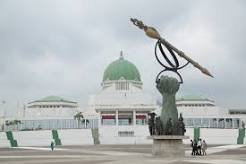
Former Senate President Warns That Democracy Risks Collapse When Parliament Becomes a Rubber Stamp
By Umar Baba
ABUJA, Nigeria — June 12, 2026
Former Senate President Bukola Saraki has issued a strong warning on the state of democratic governance in Nigeria, declaring that a legislature incapable of challenging executive authority has failed in its constitutional duty and poses a threat to democratic accountability.
Speaking at the 2026 Democracy Day edition of The Platform, a public policy forum organised by the The Covenant Nation, Saraki argued that the survival of democracy depends on the independence and effectiveness of the legislature as a critical check on executive power.
His remarks come amid ongoing national conversations about the relationship between the executive and legislative arms of government, the quality of democratic oversight, and the strength of institutions tasked with safeguarding public accountability.
“A Legislature That Cannot Say No Is Not a Legislature”
Reflecting on his experience as Senate President between 2015 and 2019, Saraki maintained that lawmakers must possess both the courage and institutional capacity to scrutinise government proposals rather than merely endorsing them.
According to him, the constitutional responsibility of parliament extends beyond approving executive requests and requires rigorous examination of policies, budgets and programmes before they are implemented.
“A legislature that cannot say no is not a legislature at all,” Saraki declared.
He warned that when parliament merely receives executive proposals, approves them without scrutiny and returns home, it reduces itself to a ceremonial institution rather than an effective democratic safeguard.
According to the former Senate President, such a legislature ceases to function as an independent arm of government and instead becomes an echo chamber for executive decisions.
“A democracy made only of echoes is only one election away from becoming something else entirely,” he cautioned.
Why Checks and Balances Matter
Saraki argued that one of the greatest dangers facing democratic societies is not necessarily weak leadership but unchecked power.
According to him, governments that operate without effective oversight are vulnerable to abuse, arbitrary decision-making and the erosion of civil liberties.
He noted that the architects of Nigeria’s constitutional framework deliberately separated governmental powers among the executive, legislature and judiciary to prevent the concentration of authority in any single institution.
“The framers of our Constitution built friction into the system intentionally,” he explained.
“That friction is not dysfunction. It is the very thing that guarantees freedom.”
The former Kwara State governor stressed that disagreements between the executive and legislature should not automatically be interpreted as signs of instability.
Instead, he argued, such engagements represent the practical application of constitutional checks and balances designed to protect democratic governance.
Lessons From June 12 and the Failure of Institutions
Drawing parallels with the annulment of the June 12, 1993 presidential election, Saraki said Nigeria’s democratic setback at the time was not caused by a failure of the electorate but by weaknesses within institutions that were unable to defend the people’s mandate.
According to him, the enduring lesson of June 12 is that strong institutions are indispensable to preserving democracy.
“On this June 12, the lesson is plain,” he said.
“We did not lose democracy in 1993 because the people failed; we lost it because the institutions that should have defended the people’s verdict were too weak to do so.”
He maintained that strengthening democratic institutions remains one of the most urgent tasks facing Nigeria’s political leadership.
Legislature as a Safety Valve for Public Grievances
Saraki also described parliament as an important mechanism for managing social and political tensions within society.
According to him, legislative institutions provide citizens with a legitimate avenue for expressing grievances and seeking policy solutions before frustrations escalate into wider unrest.
He warned that suppressing public concerns rather than addressing them through democratic channels could have serious consequences.
“Political tension does not disappear when suppressed,” he stated.
“It accumulates.”
The former Senate President argued that where institutions fail to provide platforms for public participation and accountability, citizens may resort to protests, unrest and other forms of social resistance.
In his view, the legislature serves as a democratic safety valve capable of preventing such outcomes by facilitating dialogue, representation and conflict resolution.
Revisiting the Fuel Subsidy Fraud Investigations
To illustrate the importance of legislative oversight, Saraki recounted how the National Assembly investigated alleged irregularities within Nigeria’s fuel subsidy regime.
He revealed that parliamentary scrutiny exposed suspicious transactions involving petroleum importation claims that appeared inconsistent with shipping records.
According to Saraki, investigators discovered instances where payments were allegedly processed for vessels purportedly delivering petroleum products to Nigeria despite evidence suggesting the vessels were located elsewhere.
Recalling one particular case, he explained that a vessel listed in official documents as being in Lagos was allegedly traced to another continent.
“I checked the register and discovered that the vessel supposedly in Lagos was actually somewhere in Colombia,” he disclosed.
The revelation, he said, demonstrated the value of a legislature equipped with the expertise, resources and independence required to investigate government activities.
The former Senate President argued that such oversight functions help protect public funds and ensure accountability in government operations.
Capacity Building Remains Essential
Beyond independence, Saraki stressed the need for legislative institutions to possess the technical capacity necessary to perform their oversight responsibilities effectively.
He noted that modern governance increasingly involves complex financial, security and economic issues that require specialised knowledge and investigative competence.
Without adequate institutional capacity, he warned, even well-intentioned legislatures may struggle to hold the executive accountable.
According to him, strengthening parliamentary research, investigative mechanisms and policy analysis capabilities should form part of broader democratic reforms.
Democracy Requires Strong Institutions, Not Strongmen
Political analysts have long argued that sustainable democracies are built on resilient institutions rather than the personalities occupying public office.
Saraki’s Democracy Day intervention reflects growing concerns among governance experts that democratic consolidation depends on maintaining institutional independence, transparency and accountability.
As Nigeria continues to navigate economic challenges, security concerns and governance reforms, questions surrounding the effectiveness of constitutional checks and balances remain central to the country’s democratic future.
As Nigerians commemorate Democracy Day and reflect on the sacrifices that followed the annulment of the June 12, 1993 election, former Senate President Bukola Saraki’s message underscores a fundamental democratic principle: institutions must be strong enough to challenge power when necessary.
For Saraki, the health of Nigeria’s democracy will not be measured solely by periodic elections but by the ability of its legislature to independently scrutinise executive actions, defend public interests and uphold constitutional accountability. Without that capacity, he warns, democracy risks becoming a mere formality rather than a genuine expression of the people’s will.


Leave a Reply