
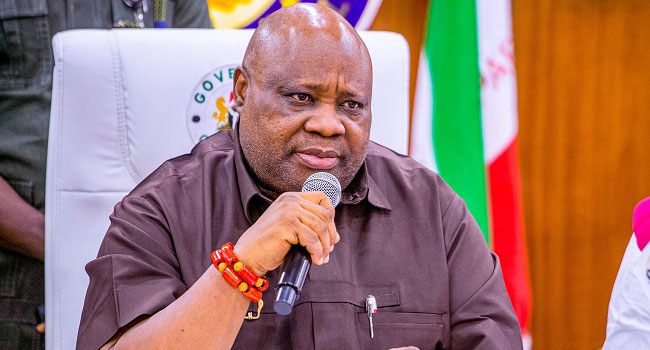
Constitutional showdown deepens as Osun Governor challenges EFCC’s powers in court while President Tinubu distances himself from the agency’s action, citing concerns over election timing.
By Angela Unigbe
ABUJA, Nigeria — August 6, 2026
A major constitutional and political confrontation has erupted between the Osun State Government and the Economic and Financial Crimes Commission (EFCC) after Governor Ademola Adeleke filed a ₦2 billion lawsuit challenging the anti-graft agency’s decision to freeze the state’s Federal Statutory Allocation Account.
The legal battle comes as President Bola Ahmed Tinubu ordered the EFCC to immediately approach the court to vacate the freezing order and discontinue actions against the Osun State Government, saying he was “deeply embarrassed” by the timing of the agency’s intervention just days before the state’s governorship election.
The dispute has ignited national debate over the limits of the EFCC’s investigative powers, constitutional safeguards protecting state finances, judicial oversight and whether anti-corruption enforcement should intersect with politically sensitive electoral periods.
Adeleke Challenges EFCC in Federal High Court
Governor Adeleke, alongside the Attorney-General of Osun State and the State Accountant-General, filed an originating summons before the Federal High Court in Abuja, seeking judicial intervention against what they describe as an unconstitutional interference with the state’s finances.
Named as defendants are:
- Economic and Financial Crimes Commission (EFCC);
- EFCC Chairman;
- First Bank of Nigeria Limited.
The plaintiffs contend that the EFCC acted outside its statutory authority by directing the bank to freeze the state’s Federal Statutory Allocation Account without first obtaining a valid order from a court of competent jurisdiction.
According to the suit, the Commission’s action violated constitutional provisions governing due process, financial autonomy of federating states and the rule of law.
₦2 Billion Damages Sought
In addition to seeking the immediate lifting of the restriction, the Osun State Government is demanding ₦2 billion as exemplary and aggravated damages.
The suit argues that the freezing of the account disrupted government operations and interfered with funds intended for public administration and service delivery.
Among the reliefs sought are:
- A declaration that the EFCC’s action was unlawful and unconstitutional;
- An order nullifying the freezing directive;
- Immediate restoration of unrestricted access to the account;
- A perpetual injunction restraining the EFCC from freezing state accounts without judicial approval;
- An order preventing First Bank from acting on future administrative directives lacking court authorization;
- ₦2 billion in damages and litigation costs.
The plaintiffs argue that allowing administrative directives to override constitutional procedures could undermine Nigeria’s federal structure.
Core Legal Question: Can EFCC Freeze State Accounts Without Court Order?
At the heart of the litigation is a constitutional question likely to have implications beyond Osun State.
The plaintiffs ask the court to determine whether the EFCC possesses legal authority under:
- Sections 1, 6, 36, 44 and 162 of the 1999 Constitution;
- Section 34 of the EFCC Establishment Act;
- Section 7(6) of the Money Laundering (Prevention and Prohibition) Act 2022.
Specifically, they argue that the anti-corruption agency cannot lawfully impose a “Post No Debit” restriction on a state’s statutory allocation account without first obtaining a specific court order.
Legal observers say the eventual judgment could clarify the balance between anti-corruption enforcement and constitutional protections enjoyed by sub-national governments.
EFCC Defends Action, Cites ₦11 Billion Investigation
The EFCC has maintained that its decision was lawful and driven solely by ongoing criminal investigations.
According to the Commission, investigations commenced in March 2026 into the alleged handling of:
- Ecology Funds;
- Intervention Funds;
- Federal Account Allocation Committee (FAAC) allocations.
The agency said the investigation involves approximately ₦11 billion.
It further claimed investigators detected significant transfers from the account into several corporate entities, prompting immediate intervention to prevent further movement of public funds.
According to the Commission, freezing the account formed part of its preventive mandate to safeguard public resources pending completion of investigations.
The EFCC also rejected suggestions that the action was politically motivated.
“It would be uncharitable for the Commission to suspend its constitutional responsibilities merely because an election is approaching,” the agency maintained.
Tinubu Distances Presidency from EFCC Action
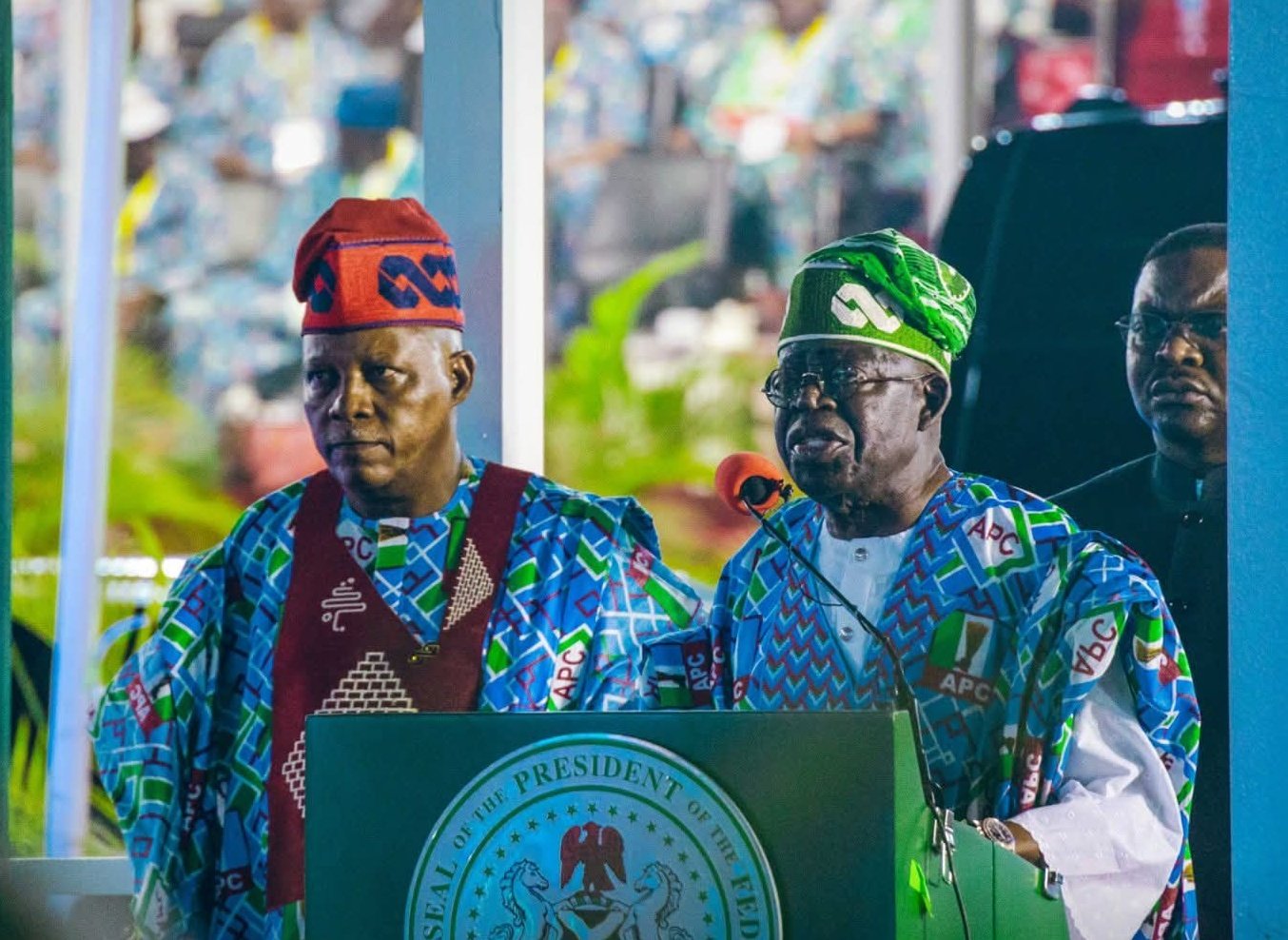
The controversy took a dramatic turn after President Tinubu personally intervened.
In a statement issued Thursday, the President acknowledged that although anti-corruption agencies must operate independently, the timing of the EFCC’s action had created unnecessary political controversy.
Tinubu stressed that every action of federal institutions is ultimately associated with the Presidency.
“I feel deeply embarrassed—not by the EFCC’s exercise of its mandate—but by the timing of the agency’s action,” the President stated.
Consequently, he directed the EFCC to immediately approach the court to vacate the freezing order and discontinue proceedings against the Osun State Government concerning the affected account.
The President emphasized that since assuming office in May 2023, he has consistently refrained from interfering in operational decisions of anti-corruption agencies.
However, he explained that the proximity of the Osun governorship election required exceptional caution.
“Nothing ought to be done that gives the impression that any federal institution is being used to influence the electoral process,” Tinubu added.
Election Timing Raises Political Questions
The account freeze has generated intense political debate because it occurred only days before Osun State’s governorship election.
Governor Adeleke alleged that the affected account was used primarily for payment of workers’ salaries and warned that the action could disrupt governance.
He further claimed the EFCC planned to freeze additional accounts belonging to senior state officials.
Opposition politicians have described the development as politically sensitive, arguing that the action could affect public perception during the election period.
The EFCC, however, insists its investigation is unrelated to politics and is based solely on intelligence gathered during ongoing financial investigations.
Constitutional Implications Beyond Osun
Legal analysts say the dispute extends beyond the immediate conflict between Osun State and the EFCC.
The case could define:
- limits of anti-corruption powers;
- financial autonomy of state governments;
- judicial oversight over investigative agencies;
- constitutional safeguards for public funds;
- relationship between federal institutions and sub-national governments.
Depending on the Federal High Court’s interpretation, the ruling may establish an important precedent governing future investigations involving state accounts.
Growing Calls for Institutional Balance
Governance experts argue that while anti-corruption agencies must retain the independence needed to investigate financial crimes, enforcement actions should always comply with constitutional safeguards and due process.
The competing arguments reflect two important public interests:
- protecting public resources from alleged diversion; and
- preserving constitutional rights, democratic governance and uninterrupted public administration.
How the judiciary balances these competing principles may shape future interactions between investigative agencies and state governments.
The Osun account freeze has evolved into one of Nigeria’s most consequential legal and constitutional disputes in recent years.
With Governor Adeleke challenging the EFCC’s powers in court and President Tinubu ordering the agency to seek the lifting of the restriction, the controversy now places the judiciary at the centre of determining the constitutional limits of anti-corruption enforcement.
Beyond the immediate political implications, the case is expected to test the boundaries between federal investigative authority, state financial autonomy and the rule of law—issues that could influence governance and anti-corruption practice across Nigeria for years to come.








Leave a Reply