
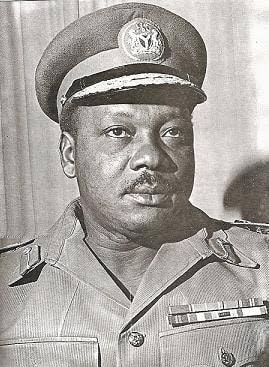
Relatives of Nigeria’s first military Head of State say the nation owes Major General Johnson Aguiyi-Ironsi justice, insisting he was wrongly blamed for the January 1966 coup before his assassination during the July counter-coup.
By Ukanma Onyeze
ABUJA, Nigeria — July 31, 2026
Nearly six decades after the assassination of Nigeria’s first military Head of State, Major General Johnson Thomas Umunnakwe Aguiyi-Ironsi, his family has renewed calls for the Federal Government to formally apologise, compensate his relatives, and initiate genuine national reconciliation over what they describe as one of the country’s greatest historical injustices.
The demand, made during a televised interview on Arise News, reopens one of Nigeria’s most sensitive historical debates—the political crises of 1966 that fundamentally altered the nation’s trajectory and eventually culminated in the Nigerian Civil War.
For the Aguiyi-Ironsi family, the issue is no longer merely historical. They argue it is a matter of justice, historical truth and national healing, insisting that the former Head of State paid with his life for a military coup in which he had no involvement.
Family Demands Official Apology and Compensation
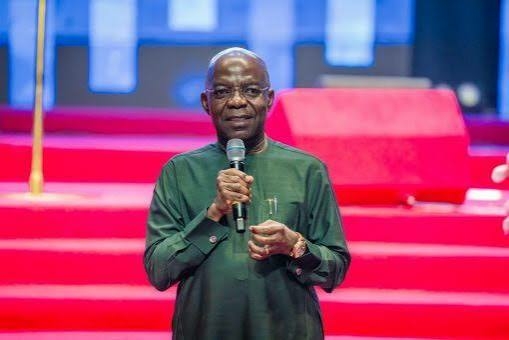
Speaking during the interview, Imo Aguiyi-Ironsi, head of the Aguiyi-Ironsi family, said the Federal Government should formally acknowledge the injustice suffered by the former military leader and his family.
According to him, beyond financial compensation, the family seeks an official apology and meaningful reconciliation.
“I think the family needs apology. The family needs to be compensated. We need sincere apology. We need sincere reconciliation,” he said.
The appeal comes amid renewed national conversations about historical justice, transitional reconciliation and efforts to address unresolved grievances arising from Nigeria’s political history.
‘He Was Killed for a Coup He Did Not Plan’
The family insists that Aguiyi-Ironsi was unfairly associated with the January 15, 1966 military coup, despite evidence indicating he neither planned nor participated in the mutiny.
According to Imo Aguiyi-Ironsi, the late Head of State only assumed leadership because he was the most senior serving military officer after the country’s civilian government collapsed.
“Everybody knows that.
“Only because of his position as the most senior military officer, he was told to take charge. And then that cost him his life.”
The family argues that historical records clearly distinguish between the coup plotters and Aguiyi-Ironsi’s subsequent assumption of power.
Remembering a Six-Month Presidency
Major General Aguiyi-Ironsi became Nigeria’s Head of State on January 16, 1966, one day after the country’s first military coup overthrew the civilian government of Prime Minister Sir Abubakar Tafawa Balewa.
The coup resulted in the deaths of several prominent political and military leaders, including:
- Prime Minister Sir Abubakar Tafawa Balewa.
- Premier of Northern Nigeria, Sir Ahmadu Bello.
- Premier of Western Nigeria, Chief Samuel Ladoke Akintola.
- Federal Minister of Finance, Chief Festus Okotie-Eboh.
- Senior military officers.
Although Aguiyi-Ironsi successfully restored order after suppressing the mutiny, he inherited a deeply divided nation facing political instability, ethnic tensions and widespread mistrust.
His administration lasted only about six months.
The Controversy That Defined His Government
Historians note that Aguiyi-Ironsi’s brief administration remains one of the most debated periods in Nigeria’s political history.
Among the most controversial decisions was the promulgation of Decree No. 34 of 1966, which replaced Nigeria’s federal structure with a unitary system of government.
Supporters argued the decree sought to strengthen national unity following the coup.
Critics, particularly in Northern Nigeria, viewed it as an attempt to centralise power and diminish regional autonomy.
The administration also faced criticism for what many perceived as inadequate prosecution of the officers responsible for the January coup.
Those developments fuelled political resentment that eventually culminated in the military counter-coup of July 1966.
The July Counter-Coup and Assassination
On July 29, 1966, northern military officers staged a counter-coup that resulted in the assassination of Aguiyi-Ironsi while he was on an official visit to Ibadan.
He was killed alongside his host, the Military Governor of the Western Region, Lieutenant Colonel Adekunle Fajuyi, who reportedly refused to surrender his guest despite demands from the mutineers.
Fajuyi’s actions have since become a symbol of loyalty, courage and sacrifice in Nigeria’s military history.
The assassination brought Aguiyi-Ironsi’s government to an abrupt and violent end, paving the way for Lieutenant Colonel Yakubu Gowon to assume leadership.
Historians Continue to Debate His Legacy
Nearly sixty years later, scholars remain divided over Aguiyi-Ironsi’s place in Nigerian history.
Some historians credit him with preventing total military collapse immediately after the January coup and attempting to preserve national unity during an unprecedented constitutional crisis.
Others argue that some of his policy decisions, particularly the introduction of the unitary system, unintentionally deepened regional distrust and accelerated political fragmentation.
However, there is broad agreement among many contemporary historians that Aguiyi-Ironsi was not one of the planners of the January 1966 coup.
Instead, he emerged as Head of State because he was the highest-ranking military officer available after the collapse of civilian authority.
Calls for Historical Justice Gain Momentum
The family’s appeal reflects a broader movement across Nigeria advocating greater recognition of historical injustices.
Over recent years, families of political leaders, civil war victims and communities affected by past conflicts have increasingly called for official acknowledgements, apologies and reconciliation initiatives.
Political analysts say addressing unresolved historical grievances could contribute to national healing, particularly as Nigeria continues to grapple with questions of unity, inclusion and historical memory.
However, they note that implementing such measures would require careful consultation to avoid reopening old ethnic and political divisions.
National Reconciliation Beyond Symbolism
Experts in conflict resolution argue that official apologies can play an important role in rebuilding public trust when accompanied by broader institutional reforms.
Such measures, they say, may include:
- Formal historical recognition.
- Public memorialisation.
- Educational reforms.
- National dialogue initiatives.
- Archival transparency.
- Institutional accountability.
While compensation may acknowledge individual suffering, analysts argue that sustainable reconciliation ultimately depends on creating an accurate and inclusive national historical narrative.
Family Expresses Hope for Justice
Despite the decades that have passed, Imo Aguiyi-Ironsi expressed optimism that Nigeria’s leaders may still respond positively to the family’s appeal.
“I hope there are people who are in positions to make this happen that are listening,” he said.
Whether the Federal Government will formally respond remains uncertain.
As of the time of filing this report, there had been no official reaction to the family’s request for an apology or compensation.
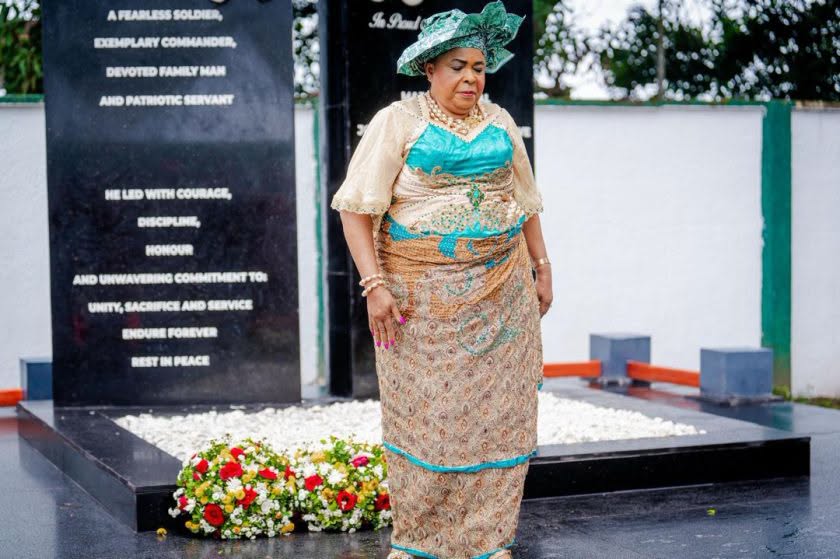
The renewed appeal by the Aguiyi-Ironsi family has revived one of Nigeria’s most consequential historical conversations.
Nearly 60 years after the events of 1966, the family’s demands raise broader questions about historical accountability, national reconciliation and how Nigeria chooses to remember one of the defining chapters in its political evolution.
Whether the government responds with an official apology, compensation or broader reconciliation measures, the debate underscores the enduring impact of unresolved historical grievances on Nigeria’s quest for national unity.

Leave a Reply