

Stakeholders at the maiden convening of the Disability Inclusion Technical Working Group call for stronger institutional coordination, adequate funding, accessible public infrastructure and measurable action to implement the African Disability Protocol and Nigeria’s disability rights law.
By A1 News International
ABUJA, Nigeria — October 23, 2026
The Senior Special Assistant to President Bola Ahmed Tinubu on Special Needs and Equal Opportunities, Hon. Mohammed Abba Isa, alongside the National Human Rights Commission (NHRC) and other disability rights stakeholders, has called for urgent, coordinated action to translate Nigeria’s disability inclusion commitments into measurable improvements in the lives of persons with disabilities.
The call was made at the maiden convening of the Disability Inclusion Technical Working Group (DITWG), a multi-stakeholder platform established to strengthen coordination and advance the implementation of the Protocol to the African Charter on Human and Peoples’ Rights on the Rights of Persons with Disabilities in Africa, commonly known as the African Disability Protocol (ADP), and other disability-related laws and policies.
The participants stressed that the existence of legislation and policy commitments would not, on its own, eliminate discrimination or guarantee equal opportunities for persons with disabilities. They emphasised the need for sustained collaboration among government institutions, organisations of persons with disabilities, civil society groups and development partners.
Isa, whose goodwill message was delivered by Lanre Oluyede, reaffirmed the Tinubu administration’s commitment to inclusive governance, equal opportunities and the protection of the dignity and rights of all Nigerians, irrespective of disability.
He challenged the working group to move beyond consultations and establish practical mechanisms for implementation, monitoring and accountability.
Tinubu’s Aide Calls for Action on Disability Rights
Isa commended the NHRC, the National Commission for Persons with Disabilities (NCPWD) and Sightsavers for supporting efforts to strengthen disability inclusion and promote the effective implementation of relevant laws.
He noted that the DITWG provided an important platform for improving government-wide coordination, ensuring that disability inclusion was reflected in public policies and strengthening accountability for the implementation of national and international commitments.
According to him, President Tinubu’s administration recognises inclusion, dignity, empowerment and equal opportunities as essential elements of governance under the Renewed Hope Agenda.
He cited Nigeria’s ratification of the African Disability Protocol in October 2023 as a significant milestone in the country’s commitment to protecting the rights of persons with disabilities.
The Protocol, adopted in Addis Ababa, Ethiopia, on January 29, 2018, subsequently entered into force in May 2024 after the required threshold of ratifications was attained.
Isa said Nigeria’s international commitments must translate into practical improvements through legislation, public policies, budgetary allocations, institutional reforms and measurable outcomes.
He stressed that the success of disability inclusion efforts would depend on the ability of public institutions to remove barriers that prevent persons with disabilities from participating fully in society.
Five Per Cent Employment Provision, Accessibility Standards Require Attention
The presidential aide identified several priority areas requiring urgent attention, including accessible public infrastructure and transportation, inclusive education, healthcare, employment, assistive technology, political participation and access to justice.
He particularly called for the implementation of the five per cent employment provision under Section 29 of the Discrimination Against Persons with Disabilities (Prohibition) Act, 2018.
The provision is intended to promote employment opportunities for persons with disabilities in the public sector.
Isa also urged stakeholders to strengthen enforcement of accessibility standards and address institutional barriers that restrict the ability of persons with disabilities to access public services and participate in economic and political activities.
He advocated meaningful participation by organisations of persons with disabilities, women and young people with disabilities, as well as individuals representing different disability groups, throughout the processes of planning, implementation, monitoring and evaluation.
He further called for a review of existing policies, laws and programmes to ensure alignment with the African Disability Protocol and the Disability Act.
According to him, disability inclusion must extend beyond the Federal Government to state and local governments, where many essential public services are delivered.
He maintained that Nigeria, given its population and influence in Africa, should demonstrate how political commitment, effective institutions and sustained investment can advance disability rights across the continent.
NHRC Seeks Functional Subcommittees, 2027 Workplan
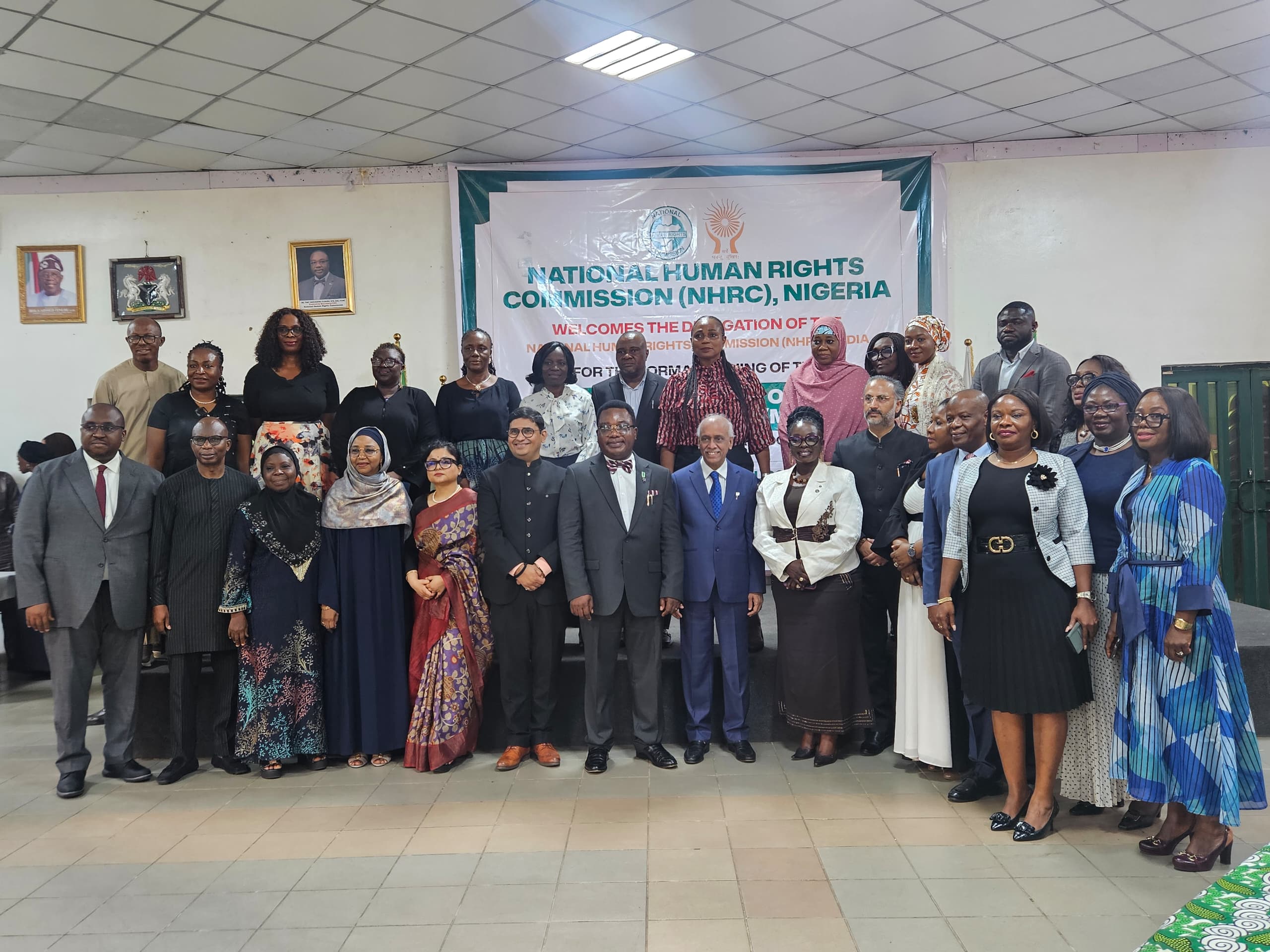
In his welcome address, the Executive Secretary of the National Human Rights Commission, Dr Tony Ojukwu, OFR, SAN, represented by Mrs Rabi Anwar, Director of Legal Services and Enforcement, described the convening as an important opportunity to translate Nigeria’s commitments under the African Disability Protocol into coordinated and measurable action.
The NHRC expressed appreciation to Sightsavers for its continued support for disability inclusion and commended the NCPWD, the Joint National Association of Persons with Disabilities (JONAPWD) and other members of the working group for their participation.
The Commission noted that the DITWG was established to provide strategic direction, strengthen stakeholder coordination and advance the implementation of the Protocol and other relevant disability-related legislation.
It also recalled that stakeholders had participated in a two-day workshop on October 8 and 9, 2024, following Nigeria’s signing and ratification of the Protocol, to improve their understanding of their respective responsibilities in implementing its provisions.
The Commission identified the maiden convening as an opportunity to operationalise the working group through clearly defined responsibilities, functional subcommittees and a comprehensive workplan for 2027.
The proposed subcommittees are expected to align with different provisions of the Protocol, allowing stakeholders to contribute technical expertise, identify implementation gaps and develop targeted interventions within their respective areas of responsibility.
The working group is also expected to contribute to the preparation of periodic reports for submission to the African Commission on Human and Peoples’ Rights, as appropriate.
Ojukwu, through his representative, reaffirmed the NHRC’s commitment to coordinating stakeholder engagement, facilitating the working group’s activities and following up on the recommendations and outputs of its subcommittees.
He noted that the Commission’s statutory responsibilities and its role under Article 34(2) of the African Disability Protocol placed it in a significant position to support monitoring and implementation efforts.
The NHRC urged members to ensure that the proposed 2027 workplan contains clear priorities, achievable activities, measurable indicators and realistic timelines.
Sightsavers Reaffirms Commitment to Disability Inclusion
Sightsavers also reaffirmed its commitment to supporting initiatives that promote disability rights, inclusive development and equal participation.
Representing the organisation’s Country Director, Professor Joy Shuaimu, a representative conveyed the organisation’s congratulations to the working group on its maiden convening.
The representative described the meeting as an important milestone in efforts to ensure that the rights, dignity and aspirations of persons with disabilities are fully recognised and protected.
Sightsavers stressed that the African Disability Protocol and Nigeria’s disability-related laws provide an important foundation for advancing equality and inclusion, but warned that legislation alone cannot guarantee meaningful change.
It called for sustained collaboration among government institutions, organisations of persons with disabilities, civil society organisations, development partners and other stakeholders.
The organisation also emphasised the importance of keeping the lived experiences and perspectives of persons with disabilities at the centre of policy decisions.
It encouraged members of the DITWG to develop practical strategies for accelerating implementation, strengthening monitoring mechanisms and removing barriers that prevent persons with disabilities from participating fully in society.
Sightsavers pledged to continue working with relevant stakeholders towards a society in which disability does not prevent anyone from accessing opportunities or exercising their rights.
Jake Epelle Urges Development Partners to Fund Disability Rights Work
Human rights advocate Dr Jake Epelle called on development partners to provide stronger financial support for disability rights initiatives and the institutional work of the National Human Rights Commission.
Epelle commended the NHRC and Sightsavers for supporting the establishment of the working group, describing the initiative as an opportunity to address persistent human rights challenges affecting persons with disabilities.
He argued that the Commission and non-governmental organisations should work collaboratively rather than compete for funding, insisting that institutional partnerships should be judged by their impact on communities.
According to him, development partners should be encouraged to support the NHRC’s activities while helping civil society organisations contribute their expertise and resources to the broader disability inclusion agenda.
Epelle maintained that the working group should not become another forum where discussions and resolutions fail to produce tangible outcomes.
He urged its members to begin advocacy visits to international development partners, seek funding for planned activities and establish partnerships capable of supporting implementation.
He also called for greater openness to collaboration between the Commission, non-governmental organisations and other human rights defenders.
Epelle stressed that accountability and the effective use of resources should remain central to any funding arrangement, adding that the ultimate objective should be to deliver results for persons whose rights and opportunities remain restricted.
He further encouraged the NHRC to broaden engagement with human rights defenders and integrate disability inclusion into wider human rights advocacy programmes.
His remarks underscored a central challenge facing the working group: securing the financial resources, institutional cooperation and sustained commitment required to turn policy objectives into practical interventions.
From Policy Commitments to Measurable Results
The deliberations highlighted several areas requiring sustained attention, including the enforcement of disability rights legislation, the accessibility of public facilities and transport systems, inclusive education, healthcare access, employment opportunities and the participation of persons with disabilities in decision-making.
The establishment of functional subcommittees and the preparation of a 2027 workplan could provide a framework for translating these priorities into coordinated activities.
However, the effectiveness of the initiative will depend on whether participating institutions assign clear responsibilities, mobilise adequate resources, establish measurable indicators and regularly assess progress.
Meaningful participation by organisations of persons with disabilities will also be essential to ensuring that interventions address the barriers people encounter in their daily lives.
The DITWG’s proposed monitoring and reporting responsibilities could further strengthen accountability by helping stakeholders identify implementation gaps and track progress against Nigeria’s obligations under the African Disability Protocol.
The maiden convening of the Disability Inclusion Technical Working Group has renewed calls for Nigeria to move from formal commitments on disability rights to practical and measurable action.
The messages delivered by the presidential aide, the NHRC, Sightsavers and human rights advocate Dr Jake Epelle converged on the need for effective coordination, adequate funding, stronger accountability and the meaningful participation of persons with disabilities.
The proposed 2027 workplan will be an important test of the working group’s ability to convert these commitments into concrete interventions.
Ultimately, progress will be measured not by the number of meetings held or policy documents produced, but by the barriers removed, public services made accessible, employment opportunities created and rights effectively protected.
For Nigeria’s disability inclusion agenda to deliver lasting results, government institutions, development partners and civil society organisations must sustain their collaboration and ensure that persons with disabilities can participate fully and equally in national life.









Leave a Reply