
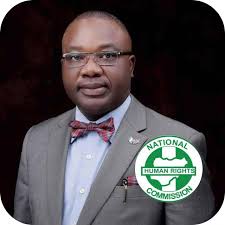
The Commission says its draft handbook will guide journalists on their rights, field and digital safety, risk assessment and steps to take when those rights are violated.
By A1NEWS International
ABUJA, Oct. 19, 2026
The National Human Rights Commission (NHRC) has described the safety of journalists as a human rights issue, urging media organisations and practitioners to help strengthen a draft handbook intended to protect journalists working in Nigeria.
The Commission made the call on Monday at a validation meeting in Abuja organised in partnership with the Konrad-Adenauer-Stiftung (KAS). The meeting brought together journalists, lawyers and civil society representatives to review the handbook and identify gaps before it is finalised.
NHRC says journalists face threats in the course of their work
In a speech delivered on his behalf by Fatimah Agwai-Mohammed, the Commission’s Director of External Linkages, NHRC Executive Secretary Tony Ojukwu said journalists play a vital role in promoting democracy, protecting human rights and holding people in positions of authority accountable.
But threats, harassment, intimidation and other risks faced by journalists make their safety a serious concern, he said.
“Journalist safety is a human rights issue. Protecting journalists is also a responsibility of the State,” Ojukwu said.
He said the Commission developed the handbook in response to the challenges journalists encounter while carrying out their work. The draft is intended to provide practical guidance on journalists’ rights, risk assessment, field safety, digital security and steps to take when rights are violated.
Draft handbook draws on Nigerian and international law
According to Ojukwu, the handbook draws on the 1999 Constitution of the Federal Republic of Nigeria, as amended; the Universal Declaration of Human Rights; the International Covenant on Civil and Political Rights; the African Charter on Human and Peoples’ Rights; the NHRC Act 2010, as amended; and the Freedom of Information Act, among other relevant instruments.
The draft contains 13 sections, including material on journalists’ rights and safety measures. The Commission said the validation meeting was intended to test whether its guidance is practical and responsive to the conditions journalists face in Nigeria.
“We are here not merely to present a document, but to critically examine the content, identify gaps, and ensure that it is practical, relevant, and responsive to the realities journalists face in Nigeria,” Ojukwu said.

Participants asked to identify gaps
Ojukwu urged participants to offer frank and constructive recommendations, saying the handbook’s usefulness would depend on their professional experience and contributions.
The Commission said protecting journalists is essential to safeguarding freedom of expression, access to information and the public’s right to know. It also reaffirmed its commitment to working with media stakeholders to promote an environment in which journalists can carry out their legitimate work safely.
The NHRC said it would engage media organisations and students of journalism once the final copies of the handbook are produced. No publication date was provided in the information released at the meeting.
Where journalists can seek help
Journalists who are in danger were encouraged to contact the NHRC through its toll-free line, 6472, or by email at info@nhrc.gov.ng and nhrcanigeria@gmail.com.
The Commission also listed the Press Attack Tracker at 07060794989 and the International Press Institute at 08065388114 as contacts journalists may reach.
The Abuja meeting marks a review stage for the NHRC’s proposed safety guidance. The Commission has invited media practitioners and other stakeholders to help ensure the final handbook offers useful protections and clear steps for journalists facing threats or violations of their rights.


Leave a Reply