
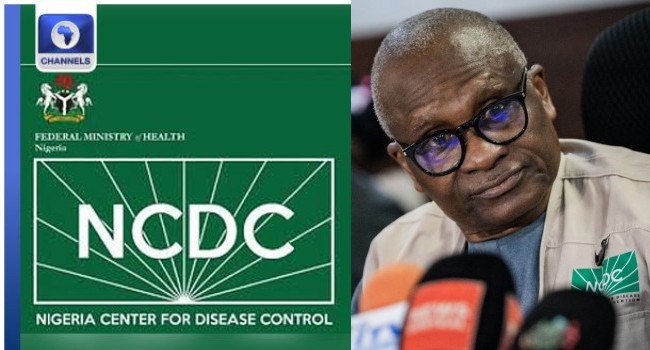
Nigeria’s disease-control agency says the June 2026 emergency allocation was intended to strengthen preparedness for a range of outbreaks—not Ebola alone. But its explanation of the fund’s scale contains a significant mathematical discrepancy, while the statement provides no detailed breakdown of how the money will be spent.
By A1NEWS International
ABUJA, Nigeria — November 2, 2026
The Nigeria Centre for Disease Control and Prevention (NCDC) says the Federal Government’s ₦10 billion emergency intervention fund, approved in June 2026 as an Ebola outbreak spread in the Democratic Republic of the Congo, was intended to strengthen Nigeria’s wider health-security system—not finance an Ebola response alone.
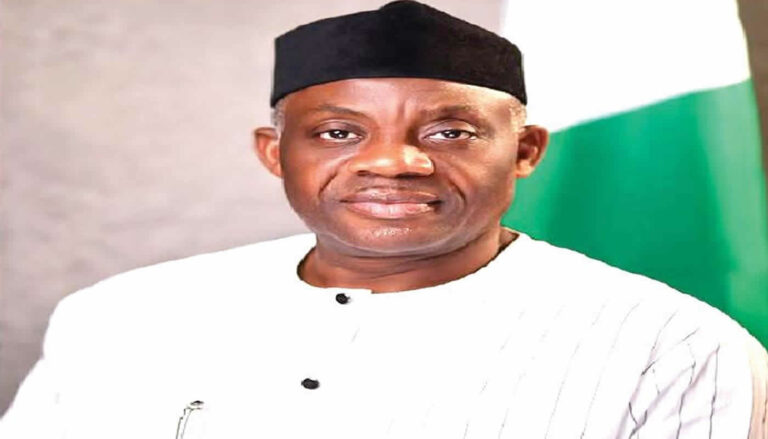
NCDC Director-General Dr Jide Idris made the disclosure on Monday while responding to questions about the allocation, which drew renewed public attention after Nigeria confirmed an imported case of Ebola in October.
Idris said the money was released to the NCDC, not the Presidential Task Force on Ebola, chaired by Chief of Staff to the President Femi Gbajabiamila. He said the task force’s role was primarily to coordinate the national response, while the agency would use the funding to support prevention, preparedness, early detection, rapid response and recovery.
The threats identified by the NCDC include Ebola, Lassa fever, cholera, cerebrospinal meningitis, diphtheria, measles, monkeypox and antimicrobial resistance.
NCDC disputes claims that the fund was for Ebola alone
Idris said the allocation should be understood as part of a broader effort to prepare for diseases of public-health importance. He criticised what he described as the politicisation of health-security funding and warned that misleading claims during an emergency could undermine public trust.
“Health security is a matter of national security and should not be reduced to partisan contestation,” he said, urging politicians and public commentators to avoid fuelling what he called “infodemics”.
The NCDC’s statement clarified the intended purpose and recipient of the fund, but did not provide a detailed spending plan showing how the ₦10 billion would be divided among disease programmes, preparedness activities or response operations. It also did not set out project-level timelines or expenditure and reporting arrangements.
Those details would help the public assess how the intervention translates into practical improvements in surveillance, laboratories, emergency coordination and frontline response capacity.
NCDC’s comparison of the fund with national needs contains a calculation error
Idris said the five-year National Action Plan for Health Security (NAPHS) 2.0, covering 2025 to 2029, has an estimated implementation cost of ₦522 billion—an average of ₦104.4 billion a year.
He described the ₦10 billion intervention as about two per cent of the plan’s average annual cost. That comparison is not mathematically accurate: ₦10 billion is about 9.6 per cent of ₦104.4 billion. It is about 1.9 per cent of the plan’s total five-year estimate of ₦522 billion.
The distinction matters. The NCDC’s broader argument—that Nigeria’s health-security needs exceed the emergency allocation—may still stand, but the agency’s statement appears to have compared the fund with the five-year total while describing it as a share of the annual average.
Idris also noted that not all NAPHS activities are funded through the NCDC. The plan’s estimated cost therefore indicates the wider scale of investment required, rather than the NCDC’s own budgetary requirement alone.
Agency funding has risen, but the gap remains substantial
According to Idris, the NCDC’s budgetary allocation rose from ₦4 billion in 2024 to ₦7 billion in 2025, while the 2026 Appropriation provides ₦22 billion. He also said the Federal Government approved a separate ₦5 billion intervention fund in 2025, before President Bola Tinubu authorised the additional ₦10 billion in June 2026.
The statement did not provide a breakdown of how the earlier intervention fund was spent or how the 2026 allocations relate to one another. Without those details, it is difficult to distinguish the agency’s regular budget from emergency funding or to assess the full amount available for specific preparedness activities.
Idris cited estimates by the Global Preparedness Monitoring Board that countries need between US$1 and US$2 per person each year for an acceptable level of epidemic preparedness. Applied to a population of about 240 million, he said, that would amount to US$240 million to US$480 million annually. He called for sustained contributions from the Federal Government, states and partners.
Imported Ebola case prompted renewed scrutiny
The NCDC’s statement came after Nigeria confirmed its first imported case of the Bundibugyo strain of Ebola on October 20, 2026. According to the account provided by the agency, a 42-year-old woman who had travelled from Uganda tested positive in Abuja.
Authorities activated surveillance, contact tracing, quarantine and monitoring measures. The NCDC identified 62 contacts, whose monitoring was expected to continue until November 13. The patient, described as clinically improved, stable and conscious, was evacuated to Switzerland on October 26 with her husband.
The imported case has sharpened questions about whether Nigeria’s emergency funding is sufficient—and how the money will be tracked. The NCDC says the ₦10 billion was intended to address multiple health threats, but the public explanation leaves important questions about spending priorities and oversight unanswered.
Funding claims need figures the public can verify
The NCDC has made the case that Nigeria’s health-security requirements extend well beyond Ebola and that the ₦10 billion allocation is only a fraction of the country’s stated preparedness needs. But the agency’s percentage comparison does not match its own figures, and its statement did not include a detailed account of planned or actual expenditure.
Publishing a clear allocation, implementation timetable and regular spending updates would help establish whether the intervention is strengthening preparedness across the range of threats identified—and allow the public to judge the results.







Leave a Reply