
Labour turns to former Greater Manchester mayor as Britain enters another chapter of leadership change amid economic uncertainty, rising Reform UK challenge and mounting public pressure over living costs
By A1NEWS International
LONDON, United Kingdom | July 20, 2026
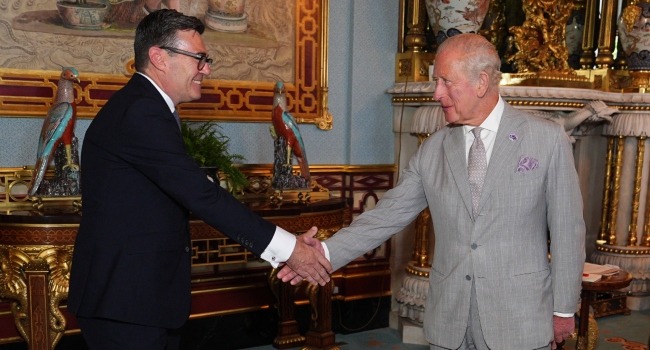
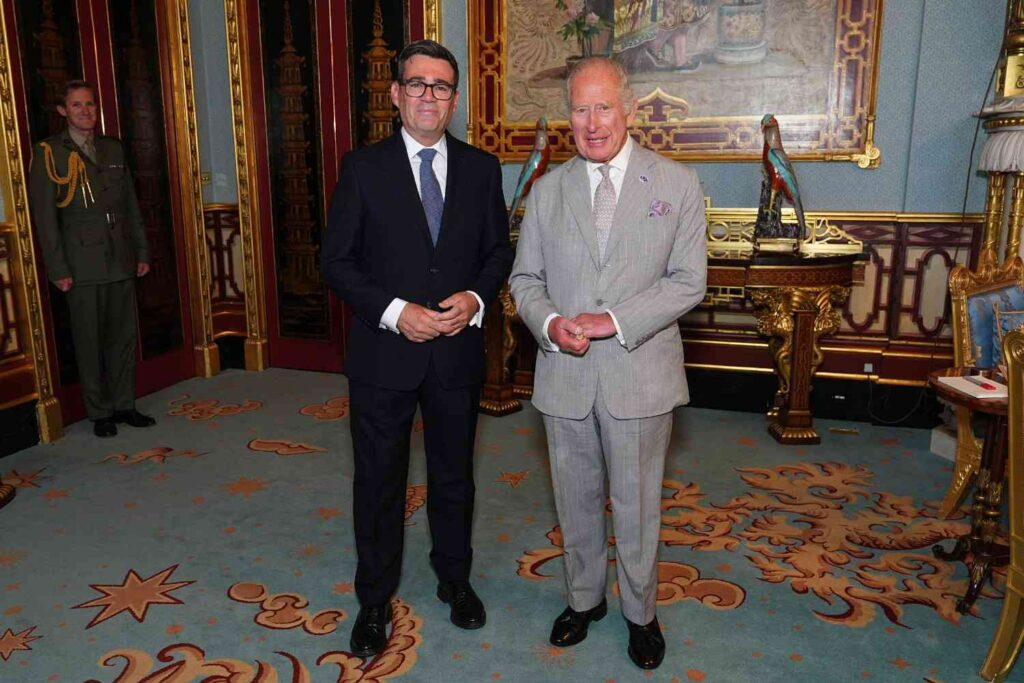
Britain entered yet another political transition on Monday as Andy Burnham formally became the United Kingdom’s Prime Minister after an audience with King Charles III at Buckingham Palace, succeeding Sir Keir Starmer, who resigned after just two years in office.
Burnham’s appointment marks the latest leadership change in a decade of political volatility that has seen Britain cycle through six prime ministers in ten years. His emergence comes at a defining moment for the Labour government, which faces mounting economic challenges, declining public confidence, increasing support for Nigel Farage’s Reform UK, and persistent questions over Britain’s long-term political and economic direction.
The constitutional transition unfolded after Starmer travelled to Buckingham Palace to tender his resignation to the monarch. Shortly afterwards, Burnham was invited by King Charles III to form a new government, officially making him Britain’s new Prime Minister.
The ceremony followed centuries-old constitutional convention, but the political implications extend far beyond royal protocol.
A New Occupant at Number 10
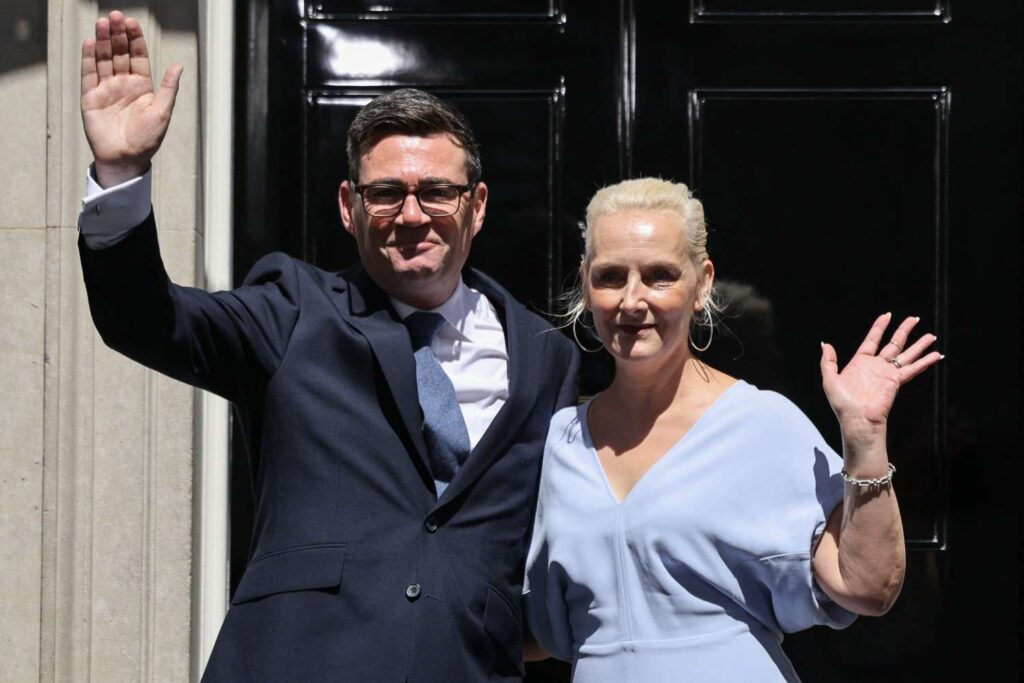
Standing outside 10 Downing Street after assuming office, Burnham promised to restore public confidence in government and tackle Britain’s economic challenges with what he described as a different governing philosophy.
His first address focused on rebuilding trust in public institutions, easing pressure from the cost-of-living crisis, stimulating economic growth, and expanding devolved powers for regional governments.
According to his office, the new administration intends to pursue policies aimed at providing “more breathing room” for households struggling with inflation, rising housing costs and stagnant wages.
Burnham is also expected to unveil a new Cabinet designed to reposition Labour ahead of the next general election expected in 2029.
Starmer Leaves Claiming Progress
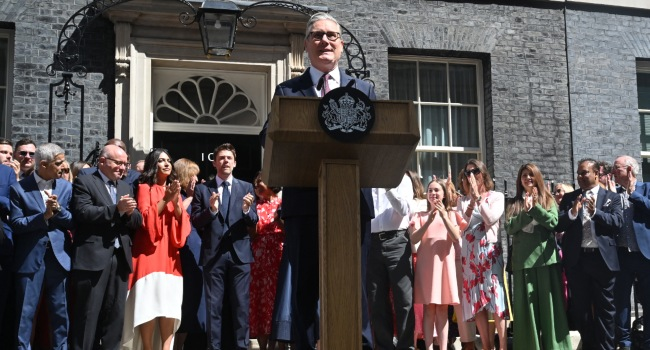
Earlier Monday, outgoing Prime Minister Keir Starmer defended his record during a farewell speech outside Downing Street.
Reflecting on his administration, Starmer maintained that Britain had become stronger and fairer during his tenure.
“I am confident that Britain is now stronger and fairer than it was two years ago,” Starmer said.
He added that he was leaving office “with good grace” and expressed pride in what his government had accomplished despite growing political pressure that ultimately forced his resignation.
Starmer announced his decision to step down in June following months of political setbacks, internal party dissatisfaction, policy reversals and declining public approval.
Why Labour Turned to Andy Burnham
Burnham’s rise represents more than a routine leadership transition.
For many Labour MPs, the former Greater Manchester mayor was viewed as the party’s strongest available figure capable of reconnecting with working-class voters while countering the electoral momentum of Nigel Farage’s Reform UK.
Often described as the “King of the North,” Burnham built his national profile through campaigns on regional investment, public transport reform, health services and devolution during his tenure as Mayor of Greater Manchester.
Before becoming mayor, he served as a Member of Parliament from 2001 to 2017 and held ministerial positions under former Prime Ministers Tony Blair and Gordon Brown.
Political analysts note that his experience combines Westminster credentials with local executive leadership—qualities Labour hopes will strengthen its standing nationally.
The Challenges Waiting on Day One
Burnham assumes office at a time when Britain’s economic and political landscape remains fragile.
Among the immediate issues confronting his administration are:
- Persistent cost-of-living pressures;
- Sluggish economic growth;
- Rising government borrowing costs;
- Increasing welfare expenditure;
- Housing affordability concerns;
- Illegal migration across the English Channel;
- Volatile global energy markets;
- Geopolitical tensions affecting international trade.
International uncertainty has also intensified following conflicts affecting energy supplies and continuing unpredictability in global markets.
Economic experts say the new Prime Minister has limited fiscal room to introduce major spending programmes while maintaining Britain’s fiscal rules.
Economic Strategy: ‘Invest Early Rather Than Pay for Failure’
During an interview published shortly before taking office, Burnham outlined what he described as a fundamentally different economic philosophy.
Instead of relying primarily on reactive government spending, he argued for greater investment in education, healthcare, employment and early intervention programmes designed to reduce future public expenditure.
His approach, he suggested, would focus on preventing social problems rather than paying to address their consequences later.
He also promised immediate measures to ease pressure on households affected by rising living costs.
Although detailed policy announcements are expected in the coming weeks, economic observers say implementation may prove challenging given Britain’s debt levels and constrained public finances.
First Major Policy Decision
Even before formally assuming office, Burnham announced his first significant policy reversal.
He scrapped the nationwide Digital Identity Scheme introduced under the previous administration.
The project had been expected to cost approximately £1.8 billion over three years.
According to Labour officials, resources previously allocated to the programme will instead be redirected toward measures addressing the cost-of-living crisis.
Supporters argue the decision reflects Burnham’s intention to prioritise household welfare over expensive government technology projects.
Critics, however, question whether cancelling the scheme could delay wider digital reforms across public services.
Can Burnham Reverse Labour’s Declining Fortunes?
Perhaps Burnham’s greatest political challenge lies not within government but at the ballot box.
Opinion polls in recent months have shown increasing support for Reform UK under Nigel Farage, particularly among working-class voters frustrated by immigration, inflation and declining living standards.
Political analysts say Burnham has roughly three years to convince voters that Labour deserves another mandate.
His leadership therefore represents what some within Labour have privately described as the party’s final opportunity to regain political momentum before the next general election.
Speaking to supporters before taking office, Burnham described the leadership change as Labour’s “last chance” to restore public confidence.
Expert Analysis: A Different Political Style
Unlike Starmer’s legalistic and cautious approach, Burnham has cultivated an image centred on accessibility, regional identity and grassroots engagement.
His years leading Greater Manchester transformed him into one of Britain’s most recognisable local leaders.
His communication style—combining traditional politics with active social media engagement—has broadened his national appeal.
However, analysts caution that popularity as a regional mayor does not automatically translate into success as Prime Minister.
National government demands balancing fiscal discipline, international diplomacy, defence policy and complex parliamentary management.
Whether Burnham can successfully make that transition remains one of the defining political questions of the coming years.
Constitutional Continuity Amid Political Change
Although Britain has experienced frequent changes of Prime Minister over the past decade, Monday’s transfer of power again demonstrated the resilience of the country’s constitutional system.
The peaceful handover followed long-established parliamentary conventions in which the monarch appoints the individual capable of commanding the confidence of the House of Commons.
While governments change, the constitutional process has continued to provide continuity during periods of political uncertainty.
Andy Burnham begins his premiership facing immense expectations and limited time.
With Britain grappling with economic pressures, voter dissatisfaction and shifting political loyalties, his government will be judged less by rhetoric than by measurable improvements in living standards, public services and economic stability.
Whether Burnham can deliver the political reset he has promised—or simply become another short-lived occupant of Downing Street—will shape not only Labour’s electoral future but Britain’s broader political trajectory in the years ahead.
For now, one chapter has closed with Keir Starmer’s departure, and another begins under a leader promising a new direction for a country searching for stability after years of political turbulence.





Leave a Reply