
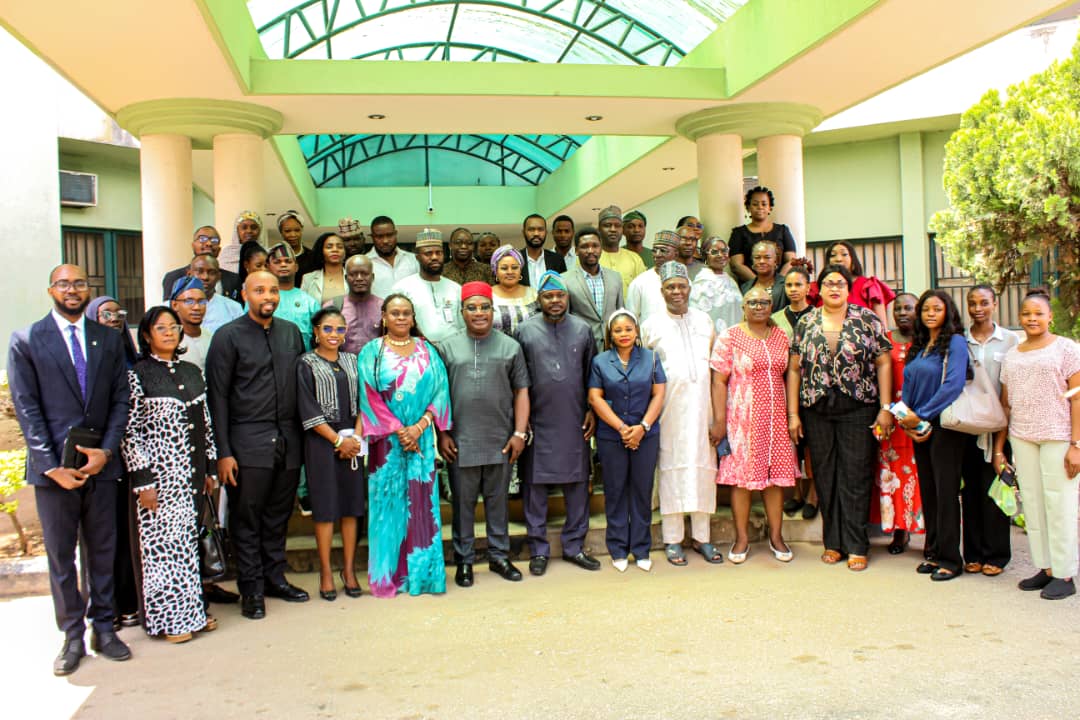
Commission unveils multi-stakeholder initiative to place human dignity, climate justice and vulnerable Nigerians at the heart of the nation’s climate response
By A1NEWS International
ABUJA, Nigeria — July 21, 2026
Climate change is no longer merely an environmental concern measured by rising temperatures, unpredictable rainfall or increasing carbon emissions. Across Nigeria, it has evolved into a humanitarian emergency that is displacing families, destroying livelihoods, fuelling violent conflicts and threatening fundamental human rights.
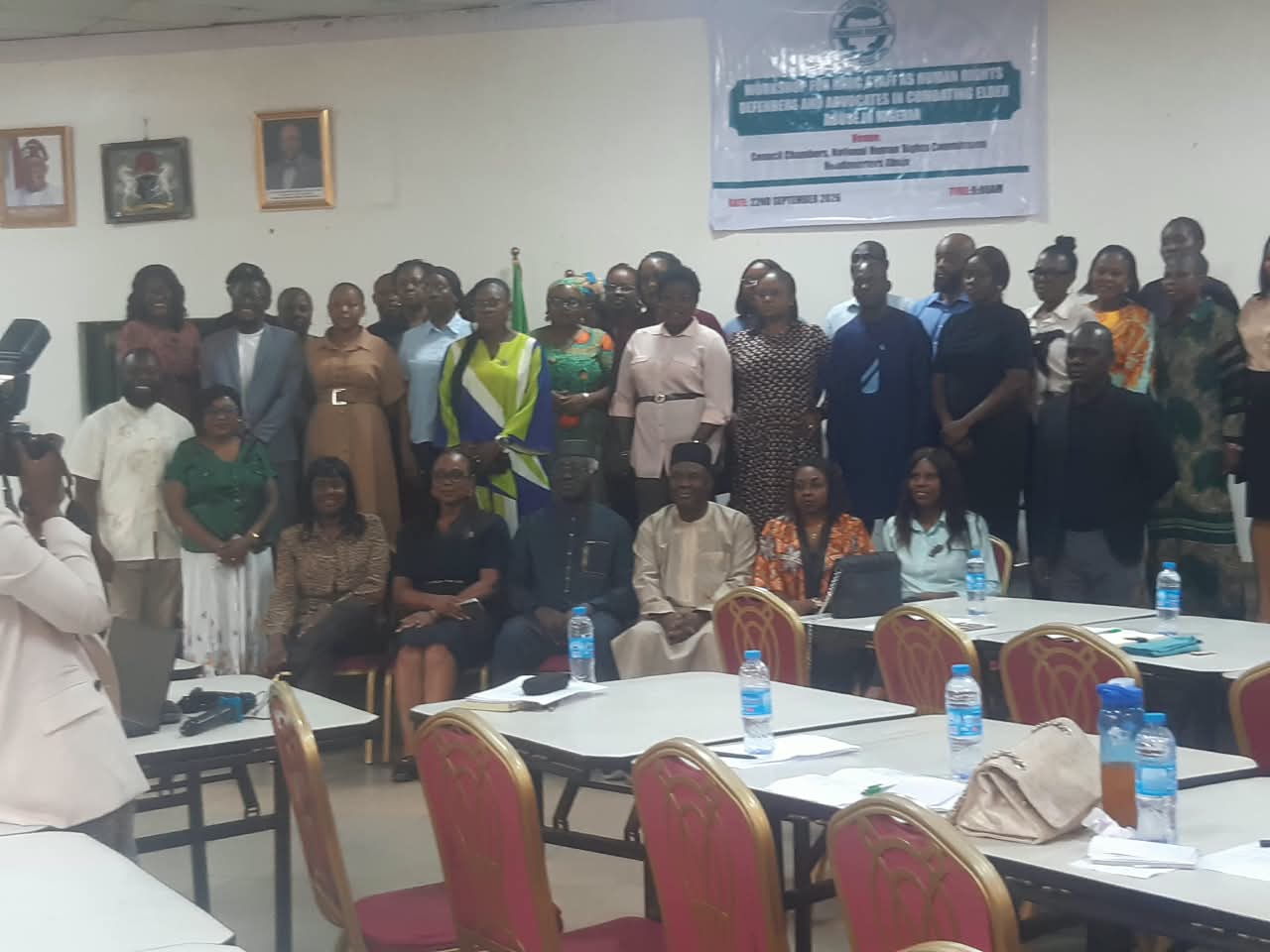
Recognising the growing intersection between environmental degradation and human dignity, the National Human Rights Commission (NHRC) has inaugurated a National Working Group on Human Rights and Climate Change, describing the initiative as a strategic intervention to ensure that Nigeria’s climate response protects people as much as it protects the environment.
The Working Group, inaugurated in Abuja, signals a significant policy shift that places human rights at the centre of climate governance, bringing together government institutions, environmental experts, civil society organisations, academics and development partners to address one of Nigeria’s fastest-growing national challenges.
Beyond Rising Temperatures: Climate Change Becomes a Human Rights Emergency
For many Nigerians, climate change is no longer an abstract scientific concept.
It is the flooded home in Bayelsa.
The drought-ravaged farmland in Katsina.
The displaced family in Benue.
The fishing community in Kogi that has lost its livelihood.
The internally displaced child unable to return to school after floods swept away classrooms.
These experiences, increasingly common across the country, formed the backdrop of discussions at the inauguration ceremony.
Opening the event, the Executive Secretary of the NHRC, Chief Tony Ojukwu, OFR, SAN, challenged policymakers to rethink the nation’s climate agenda through the lens of human rights.
According to him, climate change should no longer be viewed solely as an environmental issue but as a crisis affecting the rights to life, food, housing, education, health, livelihood and security.
“It’s not just about rising temperatures,” Ojukwu stated. “It’s about people.”
He stressed that every climate policy must begin with a simple but profound question:
“How does it affect people?”
That question, he explained, will guide the work of the newly inaugurated National Working Group.
Communities Already Living the Climate Reality
Nigeria remains one of Africa’s most climate-vulnerable countries.
Annual flooding continues to devastate states across the Niger and Benue river basins, destroying homes, schools, hospitals and critical infrastructure.
Northern communities increasingly face prolonged droughts and desertification, reducing agricultural productivity and threatening food security.
Experts have also linked shrinking grazing lands and declining water resources to persistent farmer-herder conflicts affecting several parts of the country.
Communities that once depended on farming, fishing and livestock now face difficult choices between migration, poverty and insecurity.
The NHRC argues that these realities directly affect constitutionally protected rights and therefore require a coordinated human rights response alongside environmental policies.
Working Group to Mainstream Human Rights into Climate Policy
The newly inaugurated Working Group represents a partnership involving:
- National Human Rights Commission (NHRC)
- Federal Ministry of Environment
- National Council on Climate Change (NCCC)
Its mandate extends beyond policy discussions.
The committee is expected to ensure that climate adaptation, mitigation and disaster-response initiatives adequately protect vulnerable populations while promoting accountability, inclusion and justice.
Membership includes representatives from government agencies, civil society organisations, research institutions and international development partners.
The collaborative approach is designed to ensure that communities most affected by climate disasters actively participate in shaping climate policies rather than merely becoming recipients of emergency interventions.
Environment Ministry Promises Inclusive Climate Action
Representing the Honourable Minister of Environment, Dr. Iniobong Abiola Awe reaffirmed the Federal Government’s commitment to implementing climate policies that leave no Nigerian behind.
She noted that climate resilience cannot succeed if vulnerable populations remain excluded from national planning.
According to the Ministry, integrating social protection and human rights into climate programmes will improve both policy effectiveness and long-term sustainability.
Evidence of Climate Impact Is Becoming Impossible to Ignore
The Director-General of the National Council on Climate Change, Dr. (Mrs.) Omotenioye Majekodunmi, observed that Nigeria’s climate challenges have become increasingly visible.
She identified flooding, forced migration, extreme weather events, declining agricultural productivity and resource-based conflicts as evidence that climate change has moved beyond environmental theory into everyday reality.
According to her, protecting ecosystems must now go hand in hand with protecting human lives and livelihoods.
Civil Society Demands Climate Justice
Civil society organisations welcomed the initiative as an opportunity to strengthen climate justice in Nigeria.
Founder of the Women Environmental Programme, Dr. Priscilla Achakpa, pledged continued collaboration with government institutions to ensure that women, young people and other vulnerable groups remain central to climate policymaking.
She observed that these populations often bear the greatest burden of environmental disasters despite contributing the least to global greenhouse gas emissions.
Achakpa called for stronger community participation, gender-responsive policies and equitable access to climate adaptation resources.
Displacement Crisis Highlights Humanitarian Dimension
Climate-induced displacement also featured prominently during the inauguration.
Representing the Federal Commissioner for Refugees, Migrants and Internally Displaced Persons, Aliyu Tijani Ahmed, former NHRC Director Mr. Dahiru Bobbo reaffirmed the Commission’s commitment to protecting Nigerians displaced by floods, droughts and other climate-related emergencies.
As climate disasters intensify, internally displaced persons continue to face increased risks of food insecurity, unemployment, poor healthcare, inadequate shelter and violations of fundamental rights.
Presidency Backs New Initiative
The Presidency also pledged institutional support for the Working Group.
Representing President Bola Ahmed Tinubu, the Special Assistant on Climate Change, Comrade Yussuf Olatunji Kelani, assured stakeholders that the Federal Government would support initiatives aimed at strengthening climate governance while protecting affected communities.
The endorsement reflects growing recognition within government that climate resilience requires coordinated action across multiple sectors.
Investigative Perspective: Climate Justice Beyond Committees
While stakeholders welcomed the establishment of the National Working Group, environmental policy analysts argue that Nigeria’s challenge lies not in creating committees but in implementing recommendations.
Several national climate strategies and environmental policies already exist.
However, weak enforcement, inadequate funding, poor inter-agency coordination and limited community engagement have often slowed implementation.
Climate experts maintain that meaningful progress will depend on whether the Working Group can influence legislation, improve disaster preparedness, strengthen accountability and secure sustained investment in vulnerable communities.
Without measurable action, observers warn that climate-related displacement, food insecurity and resource conflicts could continue to escalate.
Human Stories Must Shape Climate Policy
Beyond policy frameworks and institutional announcements, the NHRC insists that climate governance must remain rooted in human experience.
The flooded classroom where children can no longer learn.
The mother who loses her harvest after months of labour.
The young graduate forced to abandon his ancestral home because farming is no longer viable.
The displaced family searching for shelter after another devastating flood.
These stories illustrate why climate change is no longer simply about protecting forests, rivers or biodiversity.
It is increasingly about protecting the people whose lives depend on them.
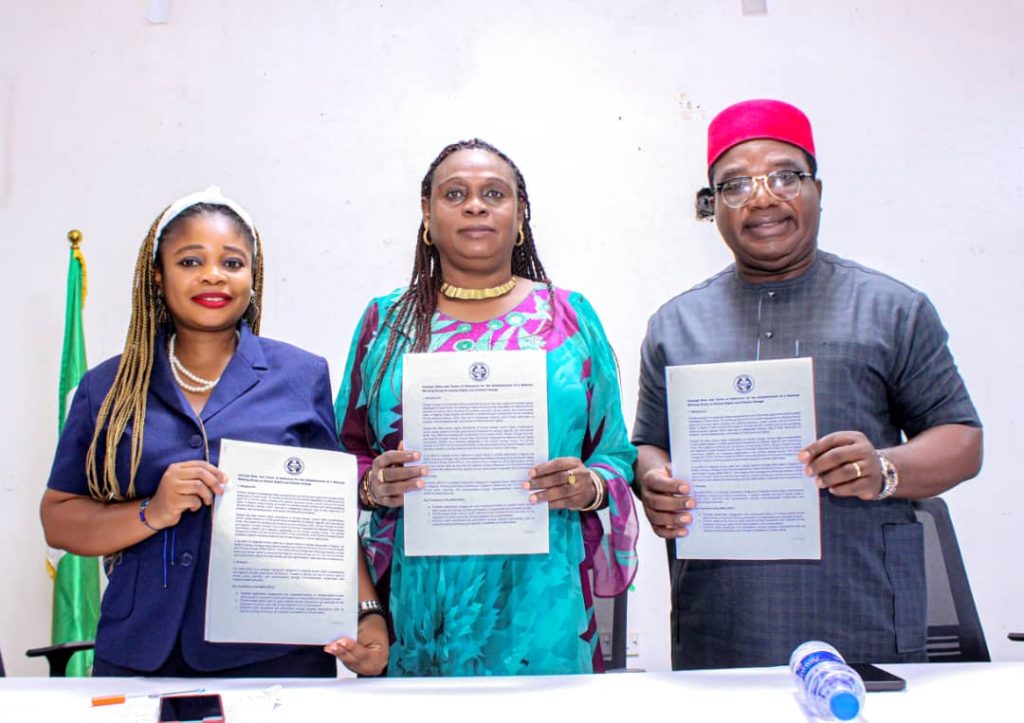
The inauguration of the National Working Group on Human Rights and Climate Change represents a significant milestone in Nigeria’s evolving climate governance framework.
By placing human dignity, inclusion and justice at the centre of environmental policy, the NHRC seeks to ensure that the nation’s climate response addresses not only ecological sustainability but also the protection of fundamental rights.
Whether this initiative translates into stronger institutions, better disaster preparedness and improved protection for vulnerable communities will depend on sustained political commitment, adequate funding and effective implementation.
For millions of Nigerians already living on the frontlines of climate change, the success of the Working Group could mean the difference between continued vulnerability and a future built on resilience, justice and hope.




Leave a Reply