
Human rights commission says cleric’s alleged religiously divisive remarks threaten equality, peaceful coexistence and Nigeria’s already fragile electoral environment.
By A1NEWS International
ABUJA, NIGERIA — August 12, 2026
The National Human Rights Commission (NHRC) has called for the immediate arrest and prosecution of Islamic cleric Sheikh Sani Yahaya Jingir, accusing him of making hateful and inciting remarks capable of aggravating religious tensions ahead of Nigeria’s 2027 general elections.
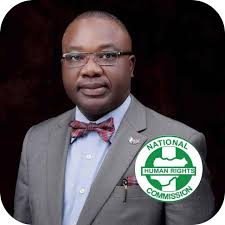
The commission’s Executive Secretary, Chief Tony Ojukwu, OFR, SAN, said the NHRC viewed with grave concern a viral video in which the cleric allegedly advocated religiously exclusive politics and used derogatory language referring to non-Muslims as “infidels” while urging supporters to obtain their Permanent Voter Cards to “show their limit.”
The NHRC said the remarks amounted to hate speech and incitement to religious hatred and had the potential to trigger violence in a country where political competition frequently intersects with religious and ethnic identities. The commission called on the Inspector-General of Police, the Director-General of the Department of State Services (DSS) and other relevant authorities to arrest and prosecute Jingir.
The demand comes as political activity ahead of the 2027 elections intensifies and concerns grow over the use of religious identity as an instrument of political mobilisation.
NHRC: ‘We Cannot Afford to Look Away’
In its statement, the human rights commission said it had watched the video with concern and considered the reported remarks a direct challenge to the constitutional principles of equality, non-discrimination and peaceful coexistence.
Ojukwu warned that allowing influential religious figures or political actors to make increasingly divisive statements without consequence could create an environment in which more extreme rhetoric becomes normalised.
“We cannot afford to look away.”
The Executive Secretary argued that failure to respond could embolden religious and political actors across the divide to make even more inflammatory statements as the 2027 electoral contest approaches.
The NHRC’s position is significant because the commission’s mandate includes the promotion and protection of human rights and the monitoring of threats to those rights.
What Happened in the Viral Video?
The controversy centres on a video that circulated widely online on Sunday.
According to the NHRC and multiple reports quoting its statement, Jingir was seen making remarks that the commission interpreted as advocating religiously exclusive politics ahead of the 2027 election.
The commission specifically took issue with the cleric’s alleged reference to non-Muslims as “infidels” and his reported call for supporters to obtain voter cards in order to demonstrate their numerical strength.
Those remarks have generated a wider debate over where political mobilisation ends and religious incitement begins.
The available reports, however, primarily document the NHRC’s characterization of the video. A1NEWS International has not independently established the full context in which every statement in the circulated recording was made. Consequently, the allegations should not be treated as a judicial finding of guilt.
From Political Speech to Alleged Incitement
Nigeria’s Constitution protects freedom of expression and religion, but those freedoms operate within a broader legal framework designed to protect other citizens and preserve public order.
That creates a difficult boundary.
Religious leaders, like other citizens, can express political opinions and encourage their followers to participate in elections. Political advocacy based on religious values is not, by itself, necessarily a criminal offence.
The more serious question is whether speech crosses into incitement, threats, discrimination or advocacy capable of provoking violence against a protected group.
That distinction will become increasingly important as the 2027 campaign season develops.
The NHRC’s intervention suggests that the commission believes the alleged statements crossed that line.
Whether they legally amount to an offence, however, is ultimately a matter for law-enforcement investigation and, where charges are filed, the courts.
Why the 2027 Election Context Matters
Nigeria’s political history demonstrates the danger of allowing political competition to become framed primarily as a contest between religious or ethnic blocs.
The country’s population is broadly divided between Muslims and Christians, alongside adherents of traditional religions and Nigerians who identify with no religion. Political coalitions frequently cut across these boundaries, but religious identity remains a powerful factor in electoral mobilisation.
The controversy surrounding Jingir therefore arrives at a politically sensitive moment.
The 2027 elections are still ahead, but political alignments and campaign narratives are already beginning to take shape.
The NHRC’s warning is that inflammatory religious rhetoric could deepen mistrust before voters even reach the polling stations.
NHRC Calls for Equal Application of the Law
Ojukwu did not limit his warning to one religious community.
He called on religious leaders, traditional rulers and politicians generally to avoid divisive rhetoric and urged Nigerians to reject identity-based politics in favour of evaluating candidates according to competence, public service and respect for human rights.
That broader position is important.
If hate speech and incitement are to be confronted credibly, enforcement cannot be perceived as targeting only one religion, ethnic group or political tendency.
The test for Nigerian institutions will therefore be consistency.
If similar inflammatory statements are made by Christian clerics, Muslim clerics, traditional leaders or politicians of different parties, the same legal and institutional standards should apply.
Selective enforcement would risk transforming an otherwise legitimate human-rights intervention into another political controversy.
The Arrest Demand Raises a Second Question
The NHRC’s call for immediate arrest and prosecution also raises an important legal question: what evidence and legal threshold should be required before a citizen is arrested for allegedly inflammatory speech?
Freedom of expression remains a fundamental right.
At the same time, Nigeria’s security agencies have responsibilities to investigate credible allegations of criminal incitement and prevent violence.
The appropriate response therefore cannot simply be to ignore inflammatory speech.
Nor should allegations automatically become convictions.
A credible investigation should establish the authenticity and full context of the video, identify the specific statements alleged to constitute an offence, determine whether they meet the relevant legal threshold and allow the accused person due process.
That process is essential if the government is to confront hate speech without weakening the very rights it is expected to protect.
A Test for Police, DSS and Other Authorities
The NHRC has now placed the matter squarely before Nigeria’s law-enforcement institutions.
The Inspector-General of Police and DSS Director-General must determine whether the allegations warrant criminal investigation and what legal provisions, if any, apply.
The challenge is considerable.
A failure to investigate credible allegations could create the impression that influential religious figures enjoy immunity from accountability.
But an arrest carried out without sufficient legal basis could equally generate accusations of political persecution and deepen religious tensions.
The institutions therefore face a dual obligation:
Protect citizens from incitement while protecting due process and freedom of expression.
The Larger Issue: Religion, Politics and the Nigerian State
The Jingir controversy is ultimately bigger than one cleric or one viral video.
It exposes a recurring problem in Nigerian politics: the use of religious identity as a shortcut to political loyalty.
When voters are encouraged to support candidates primarily because they share a religion, political accountability can become secondary.
Questions about unemployment, insecurity, inflation, education, healthcare, infrastructure and corruption can be displaced by arguments over who belongs to which religious bloc.
That is dangerous for democratic accountability.
A politician who knows that religious identity guarantees political loyalty has less incentive to compete solely on performance.
What Political Leaders and Religious Authorities Should Do
The NHRC has urged religious leaders, traditional rulers and politicians to reject divisive rhetoric.
That call deserves broader attention.
Political parties should establish clear internal standards against religious incitement by their candidates and supporters.
Religious institutions should distinguish between legitimate civic participation and mobilisation that portrays fellow Nigerians as enemies because of their faith.
Security agencies should investigate credible threats impartially.
The media and social-media platforms also have a responsibility to provide context rather than amplify provocative statements simply because they generate engagement.
And voters ultimately have the greatest responsibility: to judge political leaders by their record of governance rather than their ability to exploit identity.
Nigeria Cannot Afford an Election Built on Religious Fear
The NHRC’s demand for the arrest and prosecution of Sheikh Sani Yahaya Jingir has opened a significant debate about the limits of political speech, religious advocacy and incitement in Nigeria’s approaching 2027 electoral cycle.
The commission has made a serious allegation. The appropriate next step is therefore neither silence nor trial by social media, but a transparent, evidence-based investigation conducted according to law.
If the alleged remarks constitute a criminal offence, the law should apply regardless of the speaker’s religious standing, political connections or social influence.
If they do not, the authorities must equally respect the constitutional protections governing expression and due process.
Nigeria’s democratic stability will depend not merely on conducting elections, but on preventing those elections from becoming contests in which citizens are encouraged to fear, hate or exclude one another because of religion.
The standard must be simple and universal:
No cleric, politician, traditional ruler or influential citizen should be above the law—and no citizen should lose fundamental rights simply because an accusation has gone viral.
As the country moves towards 2027, the real test will be whether Nigerian institutions can enforce that principle without fear, favour or religious preference.


Leave a Reply