

Commission says over 3.2 million displaced Nigerians remain exposed to hunger, violence, and poor living conditions despite humanitarian interventions.
By Baron Eloagu | ABUJA, Nigeria — August 19, 2025
The National Human Rights Commission (NHRC) has raised fresh alarm over Nigeria’s growing humanitarian challenges, warning that millions of displaced and vulnerable citizens continue to face severe hardship despite ongoing intervention efforts by humanitarian agencies.
The Commission issued the warning on Tuesday as the global community commemorated the 2025 International Humanitarian Day, while simultaneously honouring humanitarian workers for what it described as extraordinary sacrifices in conflict and disaster-affected communities.
NHRC Hails Humanitarian Workers As “Heroes Of Compassion”
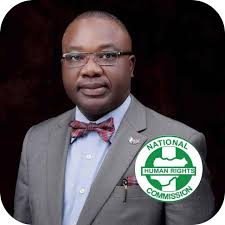
In a statement issued in Abuja, the Executive Secretary of the NHRC, Dr. Tony Ojukwu, OFR, SAN, praised humanitarian workers for risking their lives daily to provide support to vulnerable populations across Nigeria and other crisis-hit regions.
Ojukwu described aid workers as symbols of compassion, empathy, and solidarity whose interventions continue to preserve human dignity in the face of armed conflict, displacement, natural disasters, and worsening socio-economic conditions.
“They provide lifesaving assistance to Internally Displaced Persons, refugees, persons with disabilities, and marginalized groups, often at great personal risk,” Ojukwu stated.
He noted that humanitarian responders remain at the frontline of efforts to protect civilians trapped in crises and called for stronger global solidarity to support humanitarian operations.
Millions Of Nigerians Still Vulnerable
Despite years of humanitarian interventions, the Commission warned that millions of vulnerable persons still lack access to critical services such as healthcare, education, shelter, food, and security.
According to humanitarian data referenced by the NHRC, Nigeria currently hosts more than 3.2 million internally displaced persons (IDPs), most of whom were uprooted by insurgency, banditry, communal violence, flooding, and other humanitarian emergencies.
Investigations by A1NEWS International indicate that displacement camps and affected communities across parts of the North-East, North-West, and North-Central regions continue to grapple with overcrowding, inadequate healthcare facilities, poor sanitation, food shortages, and rising insecurity.
Human rights advocates have also warned that displaced populations remain highly vulnerable to gender-based violence, exploitation, child trafficking, and other abuses.
NHRC, UNHCR Launch Humanitarian Monitoring Initiative
The NHRC disclosed that it is partnering with the United Nations High Commissioner for Refugees (UNHCR) to document and monitor human rights conditions affecting displaced persons across Nigeria’s six geopolitical zones.
According to the Commission, the initiative aims to provide reliable humanitarian data that will support evidence-based interventions and policy responses.
The project will:
- Identify major challenges confronting IDPs and refugees;
- Monitor human rights conditions in affected communities;
- Support targeted humanitarian interventions; and
- Produce a quarterly Humanitarian Dashboard to track trends nationwide.
The proposed dashboard is expected to provide regular updates on displacement patterns, humanitarian conditions, and protection concerns across the country.
Calls For Stronger Collaboration And Support
Dr. Ojukwu urged governments, international development partners, civil society organisations, and individuals to intensify support for humanitarian operations and vulnerable communities.
He called for:
- Greater protection for displaced populations;
- Increased support for humanitarian workers operating in dangerous environments; and
- Stronger collaboration aimed at achieving sustainable and inclusive humanitarian responses.
Analysts say Nigeria’s humanitarian sector has come under increasing pressure amid funding gaps, insecurity affecting aid delivery, and rising displacement figures linked to insecurity and climate-related disasters.
NHRC Appreciates Humanitarian Organisations
The Commission commended humanitarian institutions operating in Nigeria, including the United Nations system, UNHCR, the International Committee of the Red Cross (ICRC), the Nigerian Red Cross Society, and several civil society organisations.
Ojukwu reaffirmed the Commission’s commitment to protecting the rights and dignity of displaced and vulnerable persons.
“As we honour the sacrifices of humanitarian workers, we reaffirm our commitment to creating a more just, equitable, and compassionate world,” he stated.
Why International Humanitarian Day Matters
World Humanitarian Day is observed annually on August 19 following its designation by the United Nations to honour aid workers who risk or lose their lives while delivering humanitarian assistance globally.
The annual observance also seeks to mobilize international support for millions of people affected by armed conflicts, natural disasters, displacement, hunger, and other humanitarian crises.
In Nigeria, the commemoration comes amid worsening insecurity, climate-related disasters, and socio-economic hardship affecting millions across several states.
As humanitarian pressures continue to rise across Nigeria, the NHRC’s latest warning highlights growing concerns over the widening gap between humanitarian needs and available support systems.
While humanitarian workers remain critical to relief efforts in crisis-affected communities, experts insist that long-term solutions will require improved governance, stronger security measures, sustainable development policies, and increased investment in social protection systems.









Leave a Reply