
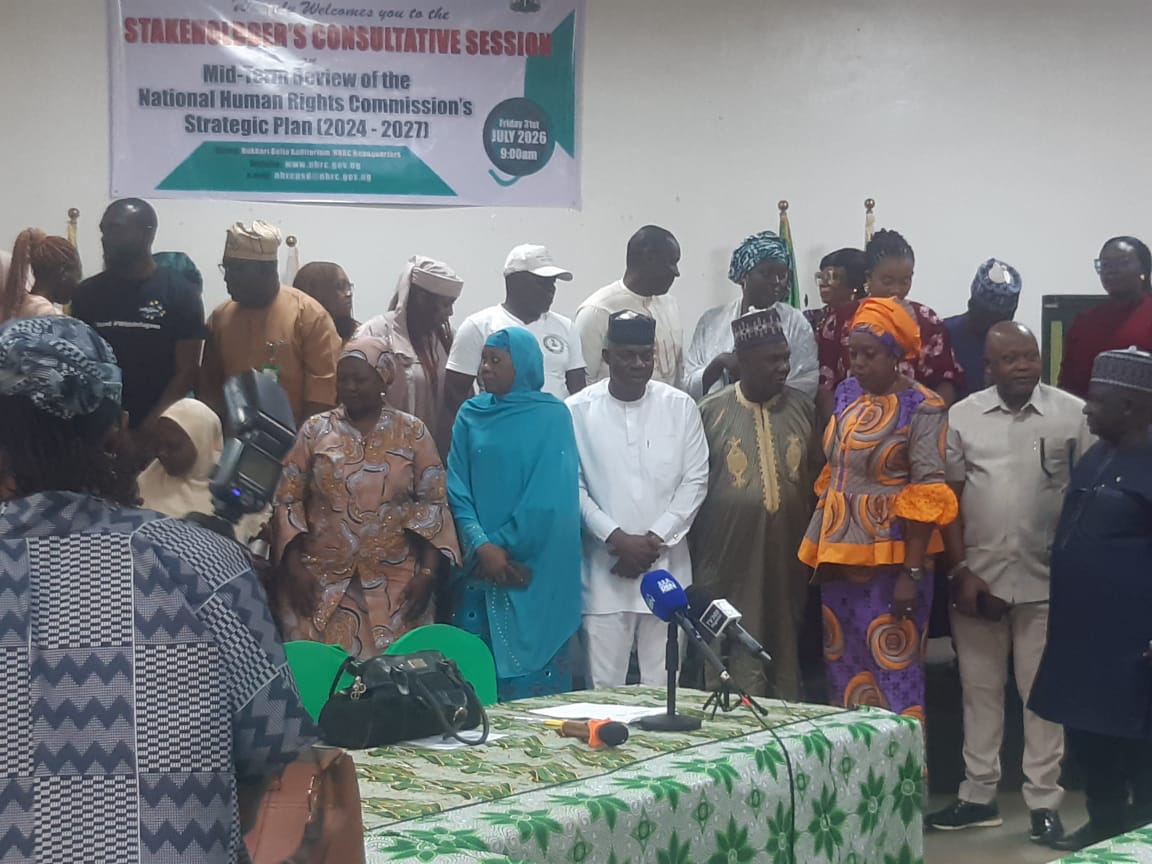
Stakeholders identify implementation gaps, institutional challenges, and pathways to strengthen justice, accountability, and protection of vulnerable citizens.
By A1NEWS International
ABUJA, Nigeria – July 31, 2026
The National Human Rights Commission (NHRC) has commenced a comprehensive mid-term review of its 2024–2027 Strategic Plan, bringing together government institutions, development partners, civil society organisations, diplomatic representatives and media stakeholders to evaluate progress made in advancing human rights across Nigeria.
The consultative meeting, held on Friday at the Buhari Bello Auditorium in Abuja, focused on assessing achievements recorded over the first half of the strategic plan, identifying implementation challenges, and developing practical recommendations to strengthen the Commission’s performance during the remaining implementation period.
NHRC Calls for Honest Assessment of Human Rights Agenda
Opening the meeting, the Executive Secretary of the National Human Rights Commission, Dr. Tony Ojukwu, OFR, SAN, FICMC, described the gathering as a critical milestone in measuring the effectiveness of the Commission’s Strategic Plan (2024–2027).
According to him, the review is designed not merely as an administrative exercise but as a platform for stakeholders to critically evaluate achievements, examine lessons learned, identify operational shortcomings and propose realistic measures capable of improving the Commission’s impact nationwide.
He emphasized that the consultative process would ensure that the final review reflects the experiences and recommendations of institutions directly involved in promoting and protecting human rights across Nigeria.
Strategic Plan Targets Institutional Reforms
The NHRC Strategic Plan was developed as a roadmap to strengthen the Commission’s institutional capacity while improving public access to justice and expanding protection for vulnerable and marginalized populations.
Key objectives include:
- Strengthening institutional efficiency.
- Improving service delivery.
- Expanding access to justice.
- Enhancing protection of fundamental human rights.
- Providing greater support for vulnerable and marginalized groups nationwide.
The Commission believes these priorities remain central to Nigeria’s efforts to consolidate democratic governance and improve respect for constitutional rights.
Mid-Term Review Identifies Critical Challenges
Although the review recorded broad participation from NHRC headquarters departments, operational units and all 36 state offices, it also exposed several institutional weaknesses requiring urgent attention.
Among the major concerns highlighted are:
- Weak implementation mechanisms.
- Inadequate monitoring and evaluation systems.
- Poor reporting structures.
- Limited institutional capacity.
- Need for more efficient utilization of available resources.
According to the Commission, addressing these shortcomings will significantly improve operational effectiveness and increase public confidence in Nigeria’s human rights protection framework.
Stakeholder Engagement Seen as Key to Success
The Executive Secretary stressed that meaningful stakeholder participation remains essential to achieving the objectives of the Strategic Plan.
He urged government agencies, civil society organisations, international development partners, state coordinators and members of the media to actively contribute ideas that would strengthen implementation during the remaining years of the programme.
He also acknowledged the efforts of Commission staff and partners whose contributions made the mid-term assessment possible before formally declaring the consultative meeting open.
Why the Mid-Term Review Matters
From an investigative governance perspective, the review comes at a time when Nigeria continues to face increasing concerns over human rights violations, insecurity, access to justice, gender-based violence, unlawful detention, and protection of vulnerable populations.
Policy experts argue that while strategic plans often outline ambitious objectives, measurable success depends on adequate funding, institutional independence, political commitment, robust monitoring mechanisms and transparent reporting.
The findings from this review are therefore expected to shape future reforms and influence how the Commission allocates resources, measures performance and responds to emerging human rights challenges over the next two years.
As Nigeria navigates increasingly complex governance and security challenges, the National Human Rights Commission’s mid-term review offers an important opportunity to reassess national human rights priorities.
Whether the recommendations emerging from the consultation translate into tangible reforms will largely depend on sustained collaboration among government institutions, development partners, civil society organisations and the Commission itself. For many observers, the true measure of success will not lie in the review document but in improved protection of citizens’ rights, stronger institutional accountability and greater access to justice across the country.













Leave a Reply