
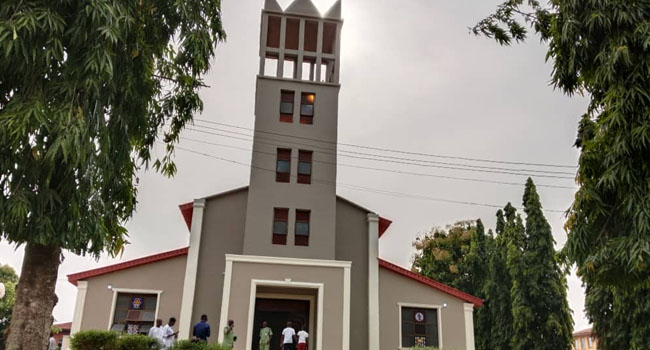
A growing public debate is emerging over whether some of Nigeria’s most influential church leaders have become less vocal in challenging political power than they were during previous administrations. Critics point to perceived inconsistencies, while supporters argue that spiritual leaders should prioritize prayer and national unity over political confrontation.
By Swill Mavua
Abuja, Nigeria – For decades, Nigeria’s religious leaders have occupied a unique place in national life.
Beyond the pulpit, they have often functioned as moral voices, social commentators and, at critical moments, outspoken critics of governments. Their sermons have influenced public opinion, shaped political conversations and occasionally challenged those in authority.
Today, however, a growing number of Nigerians—particularly younger citizens active on social media—are questioning whether some of the country’s most prominent Christian leaders have become noticeably quieter in the face of mounting economic hardship, insecurity and governance concerns.
The debate has sparked wider discussions about the intersection of religion, politics, ethnicity and power in Africa’s most populous nation.
From Prophetic Activism to Political Proximity?
Historically, religious leaders have often been viewed as society’s moral watchdogs.
Biblical narratives frequently depict prophets confronting rulers and speaking against injustice regardless of political consequences. Figures such as Elijah, Nathan and John the Baptist are commonly cited as examples of religious voices challenging authority.
Critics argue that Nigeria’s Fourth Republic has witnessed a gradual shift in that tradition.
Since the return to democratic rule in 1999, the relationship between political leaders and influential clerics has become increasingly intertwined. Political office holders regularly attend church conventions, thanksgiving services and religious gatherings, while some church leaders have become respected advisers and confidants of politicians.
Analysts say such relationships can create perceptions of closeness that may affect public confidence in the independence of religious institutions.
The 2015 Election and the Political Voice of the Church
The 2015 presidential election remains a defining moment in Nigeria’s political history.
As public dissatisfaction mounted over insecurity, corruption allegations and economic challenges during the administration of former President Goodluck Jonathan, numerous religious voices participated in national conversations about leadership and governance.
Some church leaders openly advocated political reforms, while others emphasized the need for change through democratic processes.
The period reinforced the perception among many Nigerians that influential clerics were willing to engage actively in political discourse when national circumstances demanded it.
Supporters of that engagement argued that religious leaders were exercising their constitutional rights as citizens and fulfilling their moral obligations.
Critics, however, warned against excessive political involvement by religious institutions.
Rising Hardship, Renewed Questions
More than a decade later, Nigeria faces another period of intense economic and security challenges.
Inflation, currency instability, rising food costs, unemployment and persistent insecurity continue to dominate public discourse.
Communities across several states remain vulnerable to bandit attacks, kidnappings and violent criminal activities.
Against this backdrop, critics have questioned why some of the same religious voices that were highly visible during previous administrations appear less confrontational today.
The debate intensified following public comments by prominent clerics calling for improved security while stopping short of directly criticizing the political leadership responsible for national policy decisions.
For many observers, the issue is not whether church leaders should oppose a particular government, but whether they should apply the same standards regardless of who occupies power.
Ethnicity, Religion and Political Allegiances
Perhaps the most controversial aspect of the debate concerns allegations of ethnic bias.
On social media platforms, some commentators argue that ethnic affiliations may be influencing how certain religious leaders respond to political developments.
These critics point to perceived differences in tone, intensity and frequency of public interventions under successive administrations.
However, supporters of the clerics strongly reject such accusations.
They argue that attributing silence or restraint to ethnic considerations oversimplifies a complex reality.
According to this perspective, many church leaders have deliberately chosen prayer, diplomacy and private engagement over public confrontation as their preferred methods of influencing governance.
Nevertheless, the perception persists among segments of the population, particularly younger Nigerians who frequently compare archived videos, sermons and public statements from different political eras.
Social Media and the New Era of Accountability
Unlike previous generations, today’s citizens possess unprecedented access to historical records.
Old sermons, interviews, political statements and public appearances remain permanently accessible online.
As a result, comparisons between past and present positions have become easier than ever.
Platforms such as X, Facebook, TikTok and YouTube have become arenas where citizens scrutinize public figures, including religious leaders, for consistency.
For many young Nigerians, the central question is straightforward:
Should religious leaders speak with the same level of urgency against insecurity, economic hardship and governance failures regardless of who occupies public office?
The answer to that question continues to divide public opinion.
The Church and Its Moral Authority
Religious institutions derive much of their influence from public trust.
That trust is often rooted in perceptions of neutrality, fairness and moral consistency.
Political analysts note that whenever religious leaders are perceived as selectively criticizing governments, they risk weakening their moral authority among followers.
At the same time, church leaders face their own challenges.
Many argue that overt political activism can deepen societal divisions and distract from their primary spiritual responsibilities.
This tension between prophetic activism and pastoral diplomacy remains one of the defining questions confronting contemporary Christianity in Nigeria.
A Broader National Conversation
Beyond individual personalities, the ongoing debate reflects broader concerns about accountability in public life.
Many Nigerians believe every influential institution—including government, civil society, traditional authorities, the media and religious organizations—must contribute to national development while remaining accountable to the public.
The conversation is therefore larger than any single pastor, denomination or political party.
It touches on fundamental questions about leadership, responsibility and the role of faith in a democratic society.
As Nigeria navigates economic uncertainty, security challenges and political transformation, scrutiny of influential voices is likely to intensify.
Whether the criticism directed at prominent clerics is justified or not, the debate underscores a growing public demand for consistency and accountability from leaders across all sectors.
For many Nigerians, the issue is not merely about politics or religion.
It is about whether those who claim moral authority are willing to apply the same principles to every government, regardless of tribe, region, religion or political affiliation.
As social media continues to preserve public records and amplify public scrutiny, the question being asked by many citizens remains unresolved:
Can religious leaders maintain their prophetic voice while remaining close to political power, or does proximity to power inevitably reshape the message from the pulpit?
Only time—and the actions of those involved—will provide the answer.

Leave a Reply