
New Department of Homeland Security rule replaces the decades-old “duration of status” system, drawing praise from immigration officials and criticism from education advocates.
By A1NEWS International
WASHINGTON, D.C. – July 16, 2026
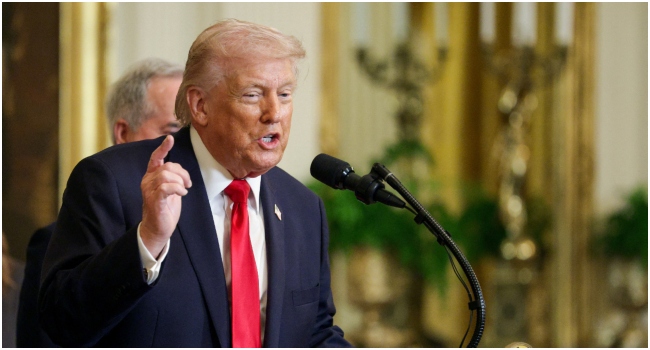
The administration of United States President Donald Trump has introduced a major change to the country’s immigration policy by limiting the stay of most international students and exchange visitors to a maximum of four years, unless they obtain an official extension from the Federal Government.
The new regulation, finalized by the U.S. Department of Homeland Security (DHS), marks the end of the long-standing “Duration of Status (D/S)” policy that had allowed international students to remain in the United States for the entire duration of their approved academic programmes, provided they maintained lawful visa status.
The policy is expected to affect hundreds of thousands of international students, including many Nigerians studying in American universities, while also intensifying debate over the balance between national security, immigration control and the United States’ global competitiveness in higher education.
What the New Rule Changes
Under the previous immigration framework, holders of F-1 student visas and J-1 exchange visitor visas were generally permitted to remain in the United States for as long as their academic or exchange programmes lasted.
The revised rule introduces a fixed period of authorized stay.
Most international students and exchange visitors will now receive permission to remain in the United States for no more than four years, after which they must either:
- Complete their studies;
- Depart the United States; or
- Obtain an approved extension from the Department of Homeland Security.
The regulation applies primarily to:
- F-1 academic student visa holders; and
- J-1 exchange visitors.
DHS Says Rule Strengthens National Security
The Department of Homeland Security defended the policy, arguing that it closes loopholes that have existed within the American immigration system for decades.
According to the department, the previous “Duration of Status” arrangement made it more difficult to monitor visa compliance and created opportunities for immigration fraud and visa overstays.
Homeland Security Secretary Markwayne Mullin said the new approach is intended to strengthen immigration enforcement.
“For nearly half a century, the outdated ‘duration of status’ system has compromised national security and created an environment ripe for immigration fraud,” Mullin said.
The administration maintains that requiring students to seek extensions where necessary will improve oversight and accountability.
Concerns Over Academic Timelines
Despite defending the new policy, the Department of Homeland Security acknowledged that some students may struggle to complete their academic programmes within the four-year timeframe.
Many undergraduate degrees in the United States take longer than four years because of:
- Academic workload;
- Double majors;
- Internship requirements;
- Research obligations;
- Medical or engineering programmes.
Graduate education presents even greater challenges.
Most doctoral (Ph.D.) programmes typically require five to seven years to complete, while certain professional programmes may also extend beyond four years.
Students who exceed the four-year limit would now be required to apply for an extension before completing their programmes.
Education Advocates Criticize the Policy
The policy has drawn strong criticism from higher education organizations that represent universities and international students.
NAFSA: Association of International Educators, one of the leading organizations promoting international education, warned that the policy could discourage talented students from choosing the United States as a study destination.
NAFSA Executive Director Fanta Aw described the decision as unnecessary.
“DHS’ decision to end Duration of Status is a misguided and unnecessary policy shift that injects uncertainty, bureaucracy, and fear into a system that has long worked effectively,” Aw said.
Education advocates argue that the additional administrative requirements could increase costs, delay graduation timelines and create unnecessary anxiety among international students.
Potential Impact on Nigerian Students
Nigeria remains one of Africa’s leading sources of international students in the United States.
Thousands of Nigerian students enroll annually in American universities, pursuing undergraduate, postgraduate and doctoral degrees across disciplines including engineering, medicine, business, law and information technology.
Immigration experts say the new policy may require many Nigerian students pursuing lengthy academic programmes to apply for visa extensions before completing their studies.
Universities may also need to strengthen advisory services to help affected students comply with the revised immigration requirements.
Universities Face Recruitment Challenges
The new immigration rule comes at a time when many American colleges and universities are already experiencing increased competition for international students.
Higher education institutions have expressed concerns that tighter immigration policies could encourage prospective students to consider alternative destinations such as:
- Canada;
- United Kingdom;
- Australia;
- Germany; and
- Ireland.
International students contribute billions of dollars annually to the U.S. economy through tuition payments, housing, transportation and other living expenses, making them an important component of the higher education sector.
Policy Reflects Broader Immigration Agenda
The student visa reforms are consistent with the Trump administration’s broader immigration agenda, which emphasizes:
- Enhanced border security;
- Stronger immigration enforcement;
- Reduced visa overstays;
- Increased screening of foreign nationals; and
- Greater accountability within immigration programmes.
Supporters argue that the measures strengthen national security and improve compliance with immigration laws.
Critics, however, contend that they may reduce America’s attractiveness as a global destination for higher education and scientific research.
What Happens Next?
With the rule now finalized, educational institutions, international students and immigration attorneys are expected to review the new requirements and assess their implications.
Students already enrolled in U.S. institutions may seek guidance from their universities’ international student offices regarding compliance, extension procedures and future immigration obligations.
The Department of Homeland Security is expected to issue additional implementation guidance as the policy takes effect.
The Trump administration’s decision to replace the decades-old “Duration of Status” policy with a four-year cap on most international student visas marks one of the most significant changes to U.S. student immigration rules in recent years.
While federal officials argue the measure strengthens national security and combats immigration fraud, universities and education advocates warn it could create uncertainty for students and reduce the United States’ competitiveness in attracting global talent.
For thousands of Nigerian students currently studying in the United States—or planning to do so—the policy underscores the need for careful immigration planning and closer attention to evolving visa requirements.








Leave a Reply