
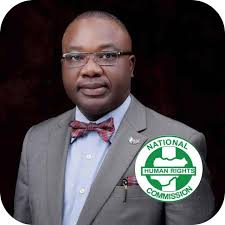
Recognition highlights NHRC’s victim-centred interventions, access-to-justice initiatives and efforts to restore dignity to vulnerable Nigerians
By A1NEWS International
ABUJA, Nigeria — August 22, 2026
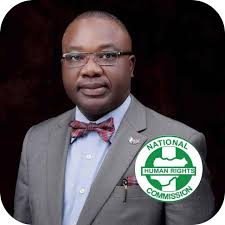
The Executive Secretary of the National Human Rights Commission (NHRC), Chief Tony Ojukwu, OFR, SAN, has been honoured with the 2026 UTA International Humanitarian Award for his leadership and sustained contribution to the promotion and protection of human rights in Nigeria.
The award was presented by the United Towns Agency for North-South Cooperation (UTA), Nigeria Chapter, in Abuja on August 20, 2026, as part of activities marking World Humanitarian Day 2026.
The recognition places renewed attention on the intersection between humanitarian intervention and human rights protection in Nigeria, particularly at a time when conflict, displacement, poverty, insecurity and social vulnerability continue to expose millions of citizens to rights violations.
Why Ojukwu Was Honoured
UTA recognised Ojukwu for what it described as contributions to advancing human dignity, access to justice and the protection of vulnerable and marginalised persons.
The interventions highlighted at the ceremony included economic empowerment programmes for victims of human rights violations, compensation and restorative assistance, transitional and restorative justice initiatives in the North-East, as well as measures aimed at improving access to justice for poor and marginalised Nigerians.
Beyond the monetary or material dimensions of these interventions lies a broader human-rights principle: victims of abuse and conflict require more than acknowledgement of their suffering. They require effective remedies, restoration, accountability and practical opportunities to rebuild their lives.
That approach has increasingly shaped the NHRC’s victim-centred response to human rights violations.
From Documenting Violations To Restoring Victims
The significance of the award extends beyond the honour conferred on the NHRC Executive Secretary.
Human rights institutions are often judged by their ability to investigate violations and document abuses. However, for victims, documentation alone does not necessarily translate into justice.
The more difficult questions concern whether victims receive compensation, whether perpetrators are held accountable, whether communities affected by conflict can recover and whether vulnerable citizens can regain access to justice and livelihoods.
The initiatives cited by UTA suggest an approach that seeks to bridge that gap by connecting human rights protection with remedies, restoration and social recovery.
This is particularly significant in conflict-affected communities where displacement and economic hardship can continue long after immediate violence has subsided.
North-East Crisis And Restorative Justice
Nigeria’s North-East has remained one of the country’s most challenging humanitarian environments, with communities affected by prolonged insurgency, displacement, destruction of livelihoods and allegations of human rights violations.
Transitional and restorative justice initiatives therefore carry implications beyond individual cases.
They can provide mechanisms through which victims and affected communities seek acknowledgement, redress and restoration while contributing to broader reconciliation.
For the NHRC, such interventions represent an effort to ensure that humanitarian responses do not treat affected Nigerians merely as recipients of relief, but as rights-holders entitled to dignity, justice and effective remedies.
Economic Empowerment As A Human Rights Intervention
Another important element recognised by UTA is economic empowerment for victims.
Economic vulnerability can deepen the effects of human rights violations. A victim who loses property, employment, livelihood or family support may remain trapped in poverty even after a violation has been formally recognised.
Providing avenues for economic recovery can therefore form part of a broader restorative framework.
The approach also reflects an understanding that human dignity is inseparable from the ability of individuals to participate meaningfully in society and rebuild their lives after suffering abuse, displacement or other forms of vulnerability.
A Humanitarian Award With Broader Significance
UTA’s recognition also comes against the backdrop of Nigeria’s wider humanitarian challenges.
Conflict, insecurity, displacement, poverty and unequal access to justice continue to test the capacity of government institutions and humanitarian organisations.
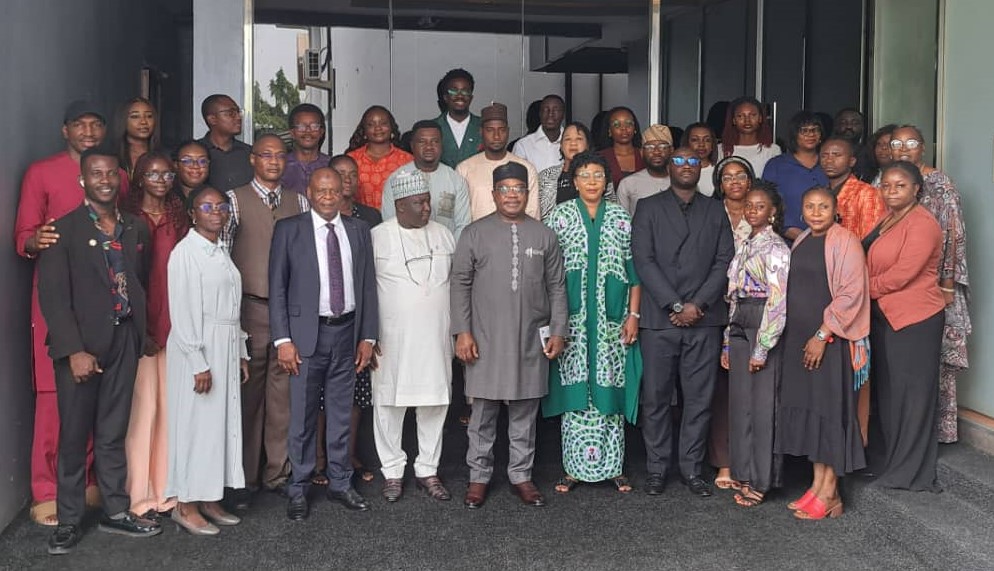
The award ceremony consequently brought together representatives of government, the diplomatic community, humanitarian organisations and other stakeholders involved in addressing humanitarian and human-rights challenges.
The Vice President of the Federal Republic of Nigeria, Senator Kashim Shettima, was represented at the event by the Director-General of the National Emergency Management Agency (NEMA), Hajiya Zubaida Abubakar Umar.
Other dignitaries included the Zamfara State Governor, represented by his Chief of Staff, Mouktar Mohammed Lugga; Comptroller-General of the Nigeria Customs Service, Adewale Adeniyi; Minister of Humanitarian Affairs and Poverty Alleviation, Bernard Doro; members of the diplomatic corps; UTA International Global Secretary-General, Dr. (Amb.) Eya Essif; and UTA-Nigeria Country President, Amb. Princess Abigail Amalaha.
Ojukwu: Award Is A Call To Do More
Reacting to the recognition, Ojukwu described the award not simply as a personal honour but as an incentive to deepen humanitarian service.
“As a humanitarian myself, this award has stimulated me to do more,” he said.
His response underscores a central issue confronting human rights institutions: recognition of past achievements carries little value unless it translates into stronger action for victims and vulnerable communities.
For the NHRC, the challenge is therefore to sustain the momentum through effective investigations, accessible complaint mechanisms, stronger enforcement of remedies, victim compensation, institutional accountability and programmes that enable affected persons to recover.
The Accountability Question
While awards provide recognition, the ultimate measure of human rights leadership remains the lived experience of victims.
The critical test is whether Nigerians whose rights have been violated can obtain justice without prohibitive financial, administrative or social barriers.
It also lies in whether government agencies comply with human rights standards, whether recommendations and decisions relating to victims are implemented, and whether vulnerable citizens can access meaningful remedies.
In that context, the UTA award provides an opportunity to examine the wider role of the NHRC in Nigeria’s human rights architecture—not merely through the number of complaints handled, but through the extent to which victims achieve justice, restoration and sustainable reintegration.
UTA’s Recognition
UTA is an international non-governmental organisation affiliated with the United Nations system and holding consultative status with the United Nations Economic and Social Council (ECOSOC).
Its recognition of the NHRC Executive Secretary places Ojukwu’s work within a broader international humanitarian context and draws attention to Nigeria’s continuing efforts to respond to complex humanitarian and human rights challenges.
For the Commission, the recognition may also strengthen the case for greater collaboration among government institutions, international organisations, civil society groups and humanitarian actors.
Beyond The Award
The 2026 UTA International Humanitarian Award is, on the surface, an honour for Chief Tony Ojukwu. But its wider significance lies in the issues it brings into focus.
For victims of human rights violations, humanitarianism cannot end with emergency relief. Sustainable intervention requires dignity, justice, accountability, compensation, restoration and the opportunity to rebuild.
As Nigeria confronts continuing humanitarian pressures, the effectiveness of institutions such as the NHRC will ultimately be measured by whether these principles move from policy statements and institutional programmes into tangible improvements in the lives of ordinary Nigerians.
The award may therefore be celebrated as recognition of past efforts—but its more important implication is the expectation that those efforts will be sustained, scrutinised and expanded.
Source: Fatimah Agwai Mohammed, Director, Corporate Affairs and External Linkages, National Human Rights Commission.








Leave a Reply