
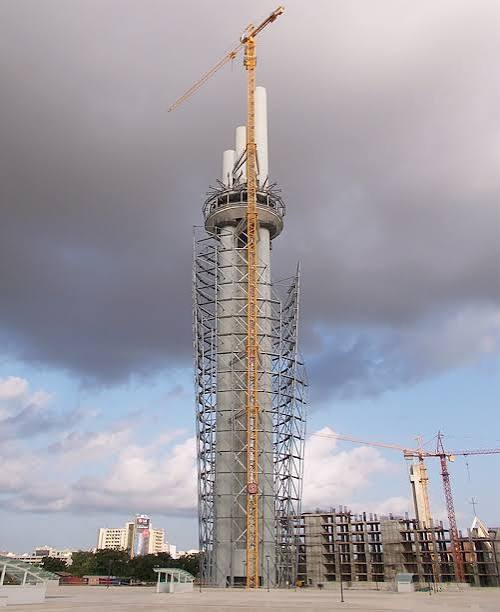
FCT Minister says iconic Abuja landmark may be reclassified as a national tourism project, while assuring residents that all ongoing road infrastructure projects across the Federal Capital Territory will be completed before the end of 2026.
By Baron Eloagu
ABUJA, Nigeria — July 31, 2026
After standing as one of Nigeria’s most visible symbols of abandoned public infrastructure for nearly two decades, the Abuja Millennium Tower has once again become the subject of national attention.
The Minister of the Federal Capital Territory (FCT), Barrister Nyesom Wike, has disclosed that the iconic project remains incomplete because its estimated completion cost—now exceeding ₦400 billion—is beyond the financial capacity of the FCT Administration’s statutory budget.
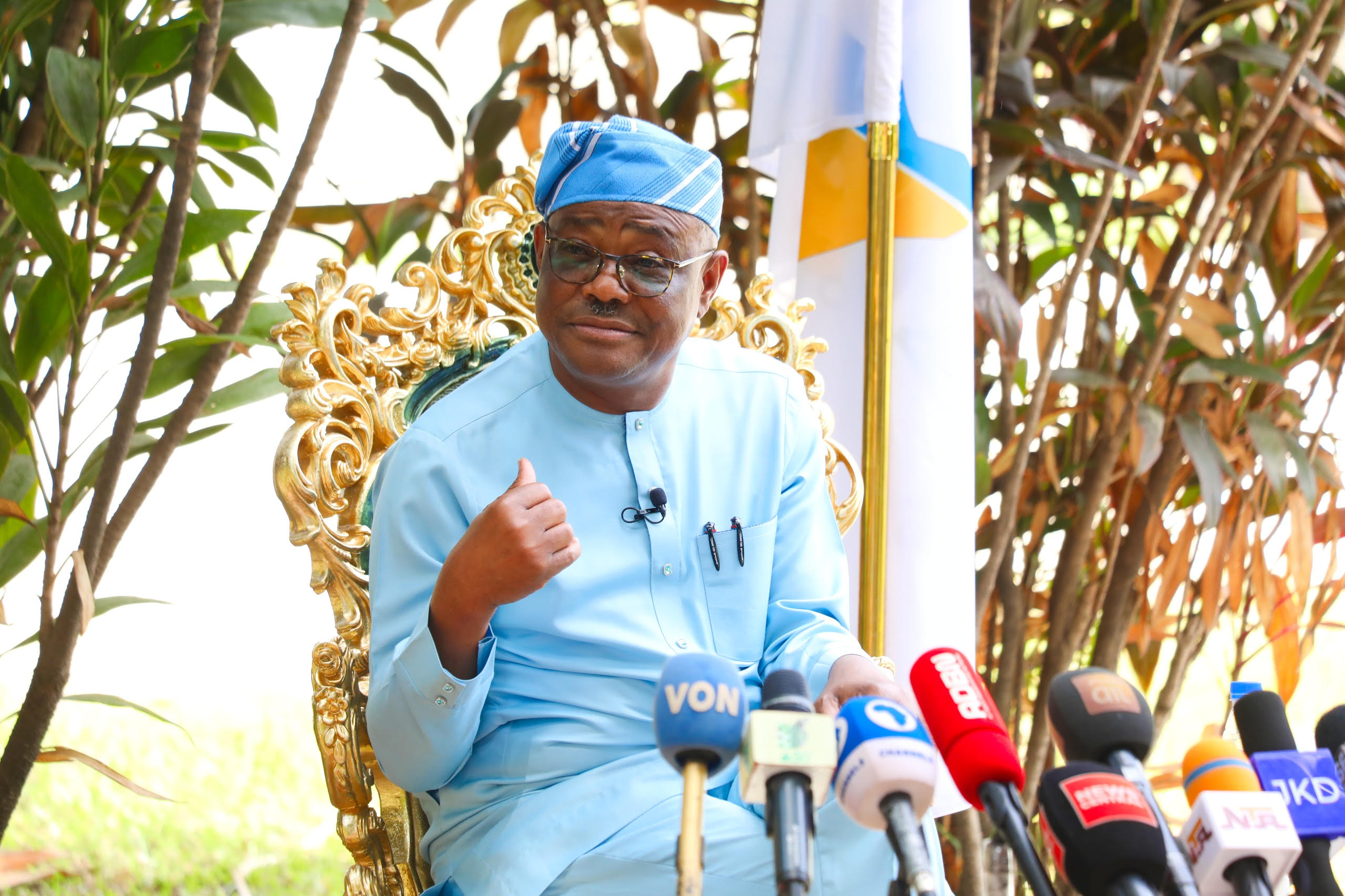
Speaking during an inspection of major infrastructure projects across Abuja on Thursday, Wike said discussions were underway with President Bola Ahmed Tinubu to classify the Millennium Tower as a strategic national project deserving direct Federal Government funding.
The disclosure provides the clearest official explanation yet for the prolonged delay surrounding a project originally conceived to celebrate Nigeria’s transition into a modern capital city but which has instead become a lasting monument to stalled public investment.
A Landmark Frozen in Time
Located in the heart of Abuja’s Central Business District, the Millennium Tower was conceived as a world-class architectural masterpiece intended to symbolize Nigeria’s unity, progress and emergence as Africa’s leading nation.
Construction began during the administration of former President Olusegun Obasanjo, with the project expected to serve as a major tourist attraction featuring observation decks, exhibition centres, museums, conference facilities and recreational spaces.
However, successive administrations struggled with funding constraints, changing priorities and escalating construction costs, leaving the tower largely abandoned despite billions of naira already invested over the years.
Urban planners say the unfinished structure has become one of Nigeria’s most prominent examples of delayed public infrastructure.
₦400 Billion Price Tag Raises Fresh Funding Questions
Addressing journalists after inspecting several ongoing infrastructure projects, Wike said completing the Millennium Tower would require financial resources that far exceed the annual allocation available to the FCT Administration.
According to the Minister, the contractor handling the project has indicated that completing the complex would cost not less than ₦400 billion.
He explained that committing such an amount from the FCT budget would inevitably halt numerous ongoing road, bridge and district development projects currently underway across the Federal Capital Territory.
“That is a national project,” Wike said.
“The capital involved is too huge for the FCT’s statutory budget. As I speak to you, the contractor is talking about not less than ₦400 billion. If we attempt to carry out such a project alone, every other project in Abuja will be abandoned.”
Tinubu Asked to Declare Millennium Tower a National Project
Rather than funding the project exclusively through the FCT Administration, Wike disclosed that discussions are ongoing with President Tinubu to redesignate the Millennium Tower as a Federal Government national tourism project.
According to him, such reclassification would allow the Federal Government to directly finance its completion outside the FCT’s regular budgetary allocations.
The proposal reflects growing recognition that the Tower’s significance extends beyond Abuja, with tourism experts describing it as a potential national landmark capable of attracting international visitors, conferences and investment.
Should the Federal Government approve the proposal, the project could join other nationally funded strategic infrastructure considered critical to Nigeria’s economic diversification agenda.
Road Infrastructure Remains Immediate Priority
While acknowledging the importance of completing the Millennium Tower, Wike insisted that the FCT Administration’s immediate priority remains delivering infrastructure projects that directly improve residents’ daily lives.
During Thursday’s inspection, the Minister toured several ongoing projects, including:
- The extension of Collector Road CO1 within the Institution and Research District.
- The road linking Nile University to Ring Road III.
- The extension connecting Baze University Junction.
- The Arterial Road N1 project stretching from Wuye District to Ring Road II.
According to the Minister, these roads are designed to improve mobility, reduce congestion and integrate major educational, judicial and research institutions into Abuja’s expanding transportation network.
Infrastructure Key to Abuja’s Global Ambition
Wike said the ongoing road projects demonstrate the Federal Government’s determination to transform Abuja into a truly modern capital comparable with leading cities around the world.
Expressing satisfaction with the quality and pace of construction work, he commended contractors for maintaining project timelines despite prevailing economic pressures affecting the construction industry.
He argued that modern transportation infrastructure remains essential for attracting investment, improving business productivity and supporting Abuja’s rapidly growing population.
Urban development analysts agree that road expansion remains one of the city’s most pressing needs as new districts continue to experience increased residential and commercial activity.
Government Targets December Completion
Providing updates on the Arterial Road N1 project being executed by Arab Contractors, Wike assured Abuja residents that construction remains on schedule.
According to him, both the Federal Capital Territory Administration and the contractors are working collaboratively to ensure the project’s completion and official commissioning before the end of 2026.
He reiterated that every major infrastructure project inspected during the tour remains on course for delivery within the administration’s announced timeline.
Contractors Trust Government’s Payment Commitments
The Minister attributed the steady pace of work largely to the confidence contractors have in the government’s commitment to honouring contractual obligations.
According to Wike, even where temporary delays in payments occur, contractors continue construction because they trust that the government will eventually fulfil its financial commitments.
“For me, it’s the confidence in us by the contractors,” he said.
“Even if we have not fully met our obligation at any point, they still go ahead knowing fully well that we will fulfill our part.”
Industry observers note that prompt government payments remain one of the most significant determinants of infrastructure delivery across Nigeria, where numerous public projects have historically suffered prolonged delays due to funding shortfalls.
Legacy Projects Receiving Renewed Attention
Wike also highlighted the administration’s efforts to complete several legacy projects inherited from previous governments.
According to him, some of the projects currently under construction were originally awarded as far back as 2010, underscoring the scale of unfinished infrastructure inherited by the present administration.
At the same time, he noted that the FCT Administration continues to initiate new projects aligned with President Tinubu’s Renewed Hope Agenda while simultaneously completing long-abandoned developments.
Experts Say Sustainable Funding Model Needed
Infrastructure economists argue that the Millennium Tower controversy illustrates broader challenges surrounding the financing of mega public projects in Nigeria.
Analysts suggest that future completion may require alternative funding mechanisms such as:
- Public-Private Partnerships (PPPs).
- Tourism investment concessions.
- Infrastructure bonds.
- Sovereign investment participation.
- International development financing.
They note that relying exclusively on annual government budgets for projects of such magnitude often leads to prolonged delays, cost escalations and asset deterioration.
Barrister Nyesom Wike’s explanation offers fresh insight into why one of Abuja’s most iconic structures has remained unfinished for years.
While the proposed reclassification of the Millennium Tower as a national tourism project could provide a pathway for its eventual completion, the Minister insists that the immediate priority remains delivering road infrastructure capable of improving transportation, stimulating economic activity and enhancing the quality of life for residents.
Whether the Federal Government ultimately approves dedicated funding for the Millennium Tower may determine if the long-abandoned structure finally transitions from a symbol of unrealised ambition into one of Nigeria’s premier tourism and cultural landmarks.






Leave a Reply