
FCT Minister accuses labour leadership of politicising industrial action, directs crackdown on unauthorised businesses along the Guzape–Asokoro axis, and challenges INEC and the media over political rhetoric and accountability for former Rivers State projects.
By Baron Eloagu |
ABUJA, Nigeria — October 9, 2026.
The Minister of the Federal Capital Territory (FCT), Ezenwo Nyesom Wike, has condemned the strike declared by the FCT chapter of the Nigeria Labour Congress (NLC), describing the industrial action as politically motivated and insisting that the administration has fulfilled its obligations to affected local government workers and teachers.
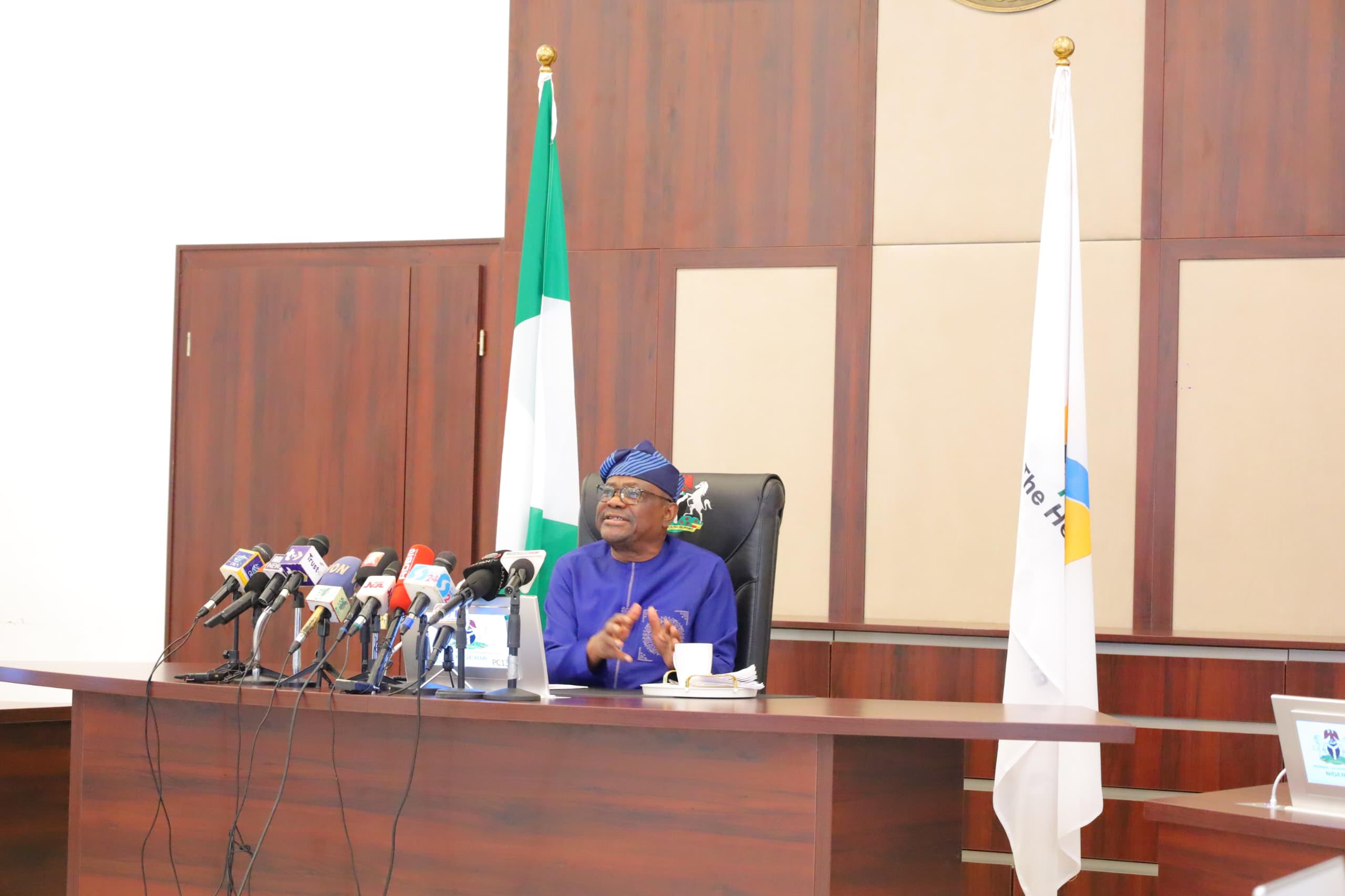
Wike made the remarks on Friday, October 9, 2026, during a press briefing in Abuja following a closed-door meeting with area council chairmen and security operatives.
The minister questioned the basis for the strike, alleged that the union leadership had failed to follow appropriate consultation procedures, and announced the immediate implementation of a “no work, no pay” policy across the area councils.
The briefing also covered the administration’s concerns about unauthorised commercial activities along the Guzape–Asokoro axis, the conduct of political campaigns ahead of future elections, and the need for greater scrutiny of projects and financial decisions associated with former Rivers State Governor Rotimi Amaechi.
Wike’s comments have placed labour relations, workers’ rights, public safety, political accountability and the boundaries between trade unionism and partisan politics at the centre of the debate.
1. Wike Dismisses FCT Labour Strike as Politically Motivated
The FCT minister maintained that there was no justification for the strike, arguing that the administration had no outstanding disputes with the relevant local government authorities or education institutions that warranted the industrial action.
According to Wike, the FCT Administration had fulfilled its obligations to local government employees and teachers, making the strike unnecessary.
He also questioned the procedures followed by the NLC leadership before declaring the industrial action, alleging that relevant consultations had not taken place.
“We want to state categorically and let it be known to the public that this so-called strike declaration is political, and we will not accept it,” the minister said.
He added that the administration had no unresolved issues with the area councils’ local education authorities or secondary schools that could justify shutting down educational activities.
Wike’s position is that the strike is not rooted in an unresolved industrial dispute but in political considerations. However, the allegations concerning the union’s motives and compliance with labour procedures remain the minister’s claims and require assessment against the union’s stated grievances and applicable labour regulations.
2. Minister Announces ‘No Work, No Pay’ Policy
In response to the strike declaration, Wike announced that the “no work, no pay” policy would take immediate effect across the FCT area councils.
The policy is intended to prevent payment for work not performed during the industrial action, according to the minister’s position.
However, the implementation of such a policy must be considered within the applicable legal framework governing employment, collective bargaining and industrial action. The legality of withholding salaries in particular circumstances depends on the relevant laws, employment arrangements and facts of the dispute.
The minister’s announcement therefore raises important questions about how the directive will be implemented, which categories of workers it will affect, and whether the affected employees or their unions will challenge the decision.
For residents, the immediate concern is the potential effect of the industrial dispute on primary and secondary education, local government services and other essential activities across the Federal Capital Territory.
A resolution that addresses the underlying grievances while safeguarding public services will be important to preventing a prolonged confrontation between the administration and organised labour.
3. Wike Questions NLC Chairman’s Political Affiliation
The minister specifically criticised the FCT NLC chairman, Stephen Knabayi, alleging that his political affiliations had influenced the decision to declare the strike.
Wike claimed that Knabayi had been a candidate of the African Democratic Congress (ADC) in the last area council elections.
According to the minister, the alleged political connection raised concerns about whether the strike was being used to create public dissatisfaction with the FCT Administration.
He argued that organised labour should not use industrial action to pursue partisan political objectives and challenged union leaders who wished to engage in party politics to relinquish their leadership positions within the labour movement.
“If you want to involve yourself in politics, you are free to, but then excuse yourself from the leadership of the union, so you don’t politicise it,” Wike said.
The minister further alleged that the strike could be used to portray the administration negatively by keeping pupils at home and disrupting teaching activities.
Nevertheless, political affiliation alone does not establish that a strike is politically motivated. Determining the basis of the industrial action requires examining the union’s demands, the circumstances surrounding its declaration, the applicable procedures and the positions of the affected workers.
The NLC’s account of the dispute and its response to the minister’s allegations would be necessary to establish a fuller picture of the disagreement.
4. Minister Cites Education Bodies’ Position on Strike
Wike also referred to the positions of education-related bodies, including senior secondary school teachers and the Universal Basic Education Board (UBEB), claiming that they had distanced themselves from the strike.
He argued that agreements were already being implemented and questioned why industrial action should proceed when, in his view, the relevant obligations had been met.
The minister’s argument suggests that he considers the strike inconsistent with the progress he says has been made in addressing workers’ concerns.
However, the specific agreements in question, their implementation status and the positions formally adopted by the relevant education bodies were not detailed in the material provided for this report.
Those documents and statements would help establish whether the dispute concerns unpaid entitlements, outstanding agreements, administrative procedures or other issues affecting workers.
The distinction is significant because the existence of an agreement does not, by itself, establish that every obligation under it has been fully discharged.
For parents and pupils, the central issue remains whether the disagreement will disrupt teaching and learning, and how quickly the parties can reach a workable resolution.
5. FCT Administration Orders Crackdown on Unauthorised Businesses
Beyond the labour dispute, Wike directed a coordinated enforcement operation against unauthorised commercial activities along the Guzape–Asokoro axis of Abuja.
The minister specifically identified unapproved open-air beer parlours and ordered their immediate dismantling.
He warned that such businesses could create security and urban-management challenges if allowed to operate without the required approvals.
The directive forms part of the administration’s stated effort to address unauthorised commercial activities and prevent potential security risks in the affected areas.
However, effective enforcement will require the relevant authorities to establish which businesses are operating without valid approvals and to apply the appropriate planning, environmental and licensing regulations.
The administration’s actions will also need to distinguish between genuinely unauthorised establishments and businesses operating under valid permits.
Transparent enforcement, clear communication of regulatory requirements and compliance with due process will be important to ensuring that the exercise achieves its stated objectives.
The FCT Administration has not, in the material provided, supplied a detailed list of the affected establishments, the specific regulations allegedly breached or the timetable for enforcement.
6. Wike Challenges INEC Over Political Campaign Rhetoric
The minister also turned his attention to the Independent National Electoral Commission (INEC), questioning what he described as an insufficient response to inflammatory political statements.
Wike expressed displeasure over remarks he attributed to Rotimi Amaechi, whom the minister identified as an ADC vice-presidential candidate, concerning President Bola Ahmed Tinubu and his supporters.
He argued that political parties and candidates should be held accountable when their campaign rhetoric departs from issue-based debate and becomes personally abusive or potentially inflammatory.
“Many Nigerians have called INEC to sanction political parties, and candidates, or some politicians who, in their campaigns, incite the public or raise matters that are not issue-based,” Wike said.
He questioned whether the electoral commission had taken steps to address the remarks he attributed to Amaechi.
The minister’s comments raise a broader question about the standards governing political communication and the responsibilities of electoral institutions during campaign periods.
However, determining whether a particular statement violates electoral regulations or other applicable laws requires examining the exact words used, the surrounding circumstances and the relevant legal provisions.
Political criticism, even when forceful, is not automatically unlawful. The relevant distinction is whether a statement crosses a legally established threshold, such as prohibited incitement, threats or other offences recognised by law.
INEC’s response, if any, and Amaechi’s account of the remarks would be necessary to establish the full circumstances of the controversy.
7. Minister Urges Media to Investigate Amaechi’s Rivers State Record
Wike challenged Nigerian journalists to investigate several projects and financial transactions associated with Amaechi’s tenure as governor of Rivers State.
The minister cited a reported $10 million expenditure on a state-wide fumigation exercise, a monorail project reportedly valued at ₦68 billion, a gas turbine transaction involving $308 million, and a hospital project whose status he questioned.
He argued that political leaders should be required to explain their records in public office rather than focus exclusively on personal attacks against opponents.
Wike specifically questioned the outcome of the fumigation contract, saying mosquito bites remained a problem for residents despite the reported expenditure.
“Ask him the $10 million USD you paid to a Cuban company to fumigate Rivers State so there will be no mosquito bite,” the minister said.
He also questioned the status of the monorail project and the reported gas turbine transaction.
“Ask him, the ₦68 billion monorail, where is the monorail? Ask him, where is the $308 million USD with which you sold our gas turbine?” he added.
The minister’s allegations raise issues that warrant documentary examination. However, the amounts, contractual arrangements, project outcomes and circumstances of the transactions have not been independently established by the information provided for this report.
A conclusive assessment would require examination of relevant state government records, budget documents, procurement files, contract awards, payment records, audit reports and project completion or transfer documents.
The status of the hospital project also requires clarification, including its original cost, construction history, ownership arrangements and present operational condition.
For journalists, the public-interest task is to establish what was approved, what was paid, what was delivered and whether the expenditure complied with applicable public procurement and financial management rules.
The questions raised by Wike should therefore be treated as allegations and lines of inquiry, not as established findings of financial wrongdoing.
8. Accountability Questions Require Documentary Evidence
The projects cited by the minister illustrate the importance of transparent records in assessing the performance of public officeholders.
A properly documented investigation into the allegations would need to establish:
The fumigation contract: The identity of the contracting company, the scope of work, the amount approved and paid, the locations covered, and any assessment of the project’s results.
The monorail project: The original project cost, procurement and financing arrangements, construction milestones, expenditure to date, and the reasons for any delay or discontinuation.
The gas turbine transaction: The identity of the asset, its valuation, the terms of the transaction, the amount received, the destination of the proceeds and the approvals obtained.
The hospital project: The original contract value, expenditure, construction and commissioning status, ownership arrangements, and current level of service delivery.
These records would help distinguish legitimate questions about public expenditure from political allegations that have yet to be substantiated.
The officials and institutions involved should have an opportunity to respond to specific documentary evidence before conclusions are drawn.
Public accountability is strengthened when allegations are tested against verifiable records and when the findings are presented transparently.
9. Wike Warns Against Personal Attacks in Political Campaigns
The minister warned that continued personal attacks against Tinubu and his supporters could trigger strong political resistance, particularly in Rivers State.
He said opposition politicians should concentrate on presenting policy alternatives and explaining what they would do differently from the current administration.
“If he continues along this line, it may be difficult for him to campaign in Rivers. And I want somebody to go and write it down,” Wike said.
He maintained that political campaigns should focus on governance, public policy, economic priorities and the performance of elected officials rather than insults directed at individuals.
The warning introduces another dimension to the dispute: the relationship between freedom of political expression, accountability for public officials and the need to prevent intimidation or disruption of lawful political activities.
While candidates and parties may criticise government policies and public officeholders, political competition must operate within the law and respect the rights of others to participate in the democratic process.
Any restriction on campaigning or political activity must be assessed against applicable constitutional and electoral protections.
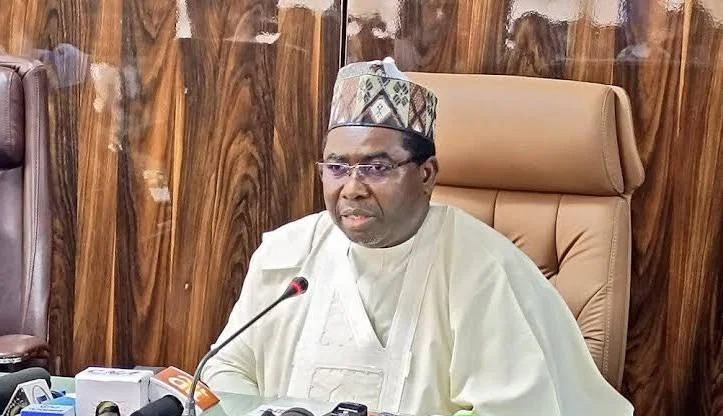
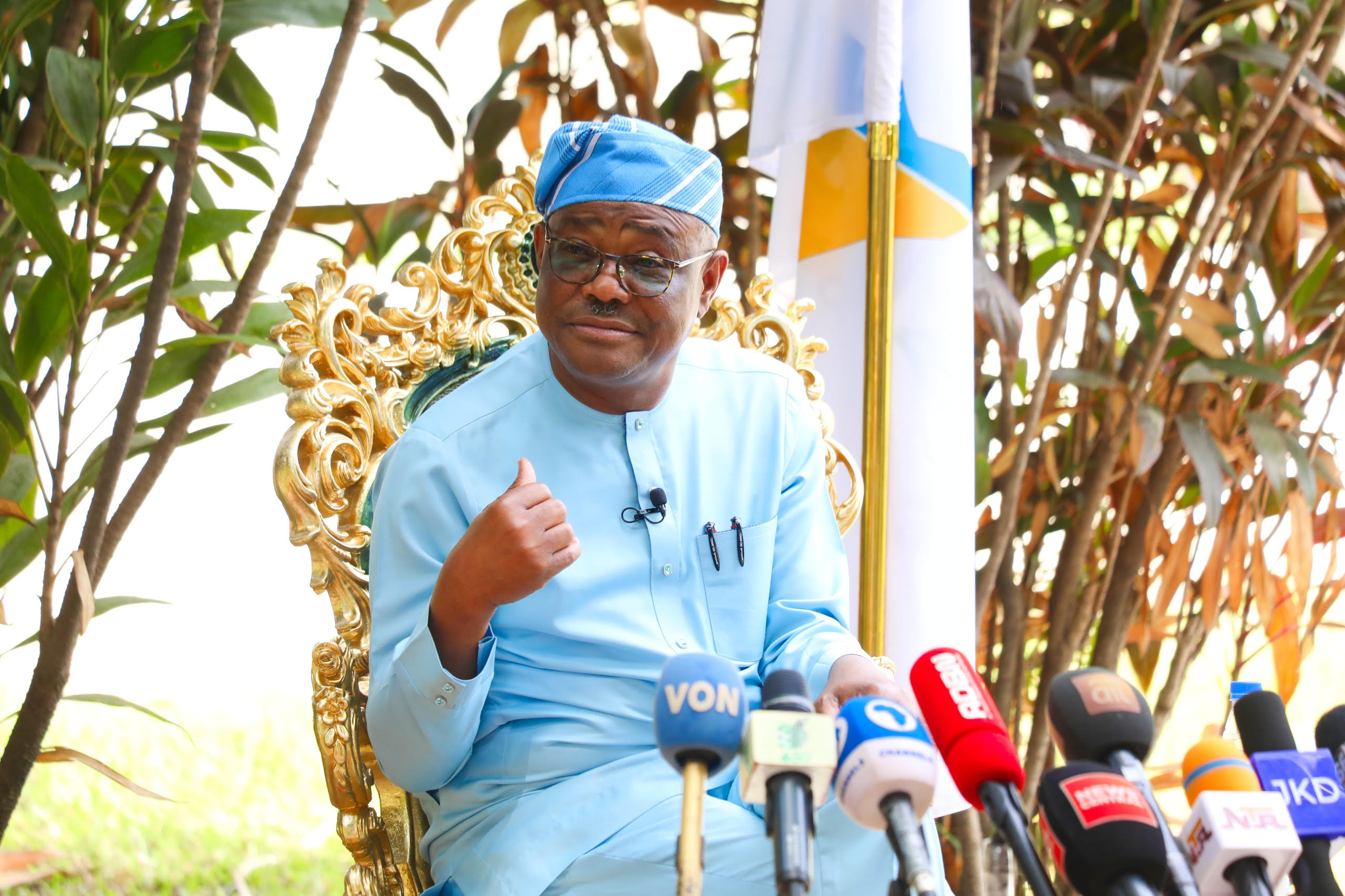
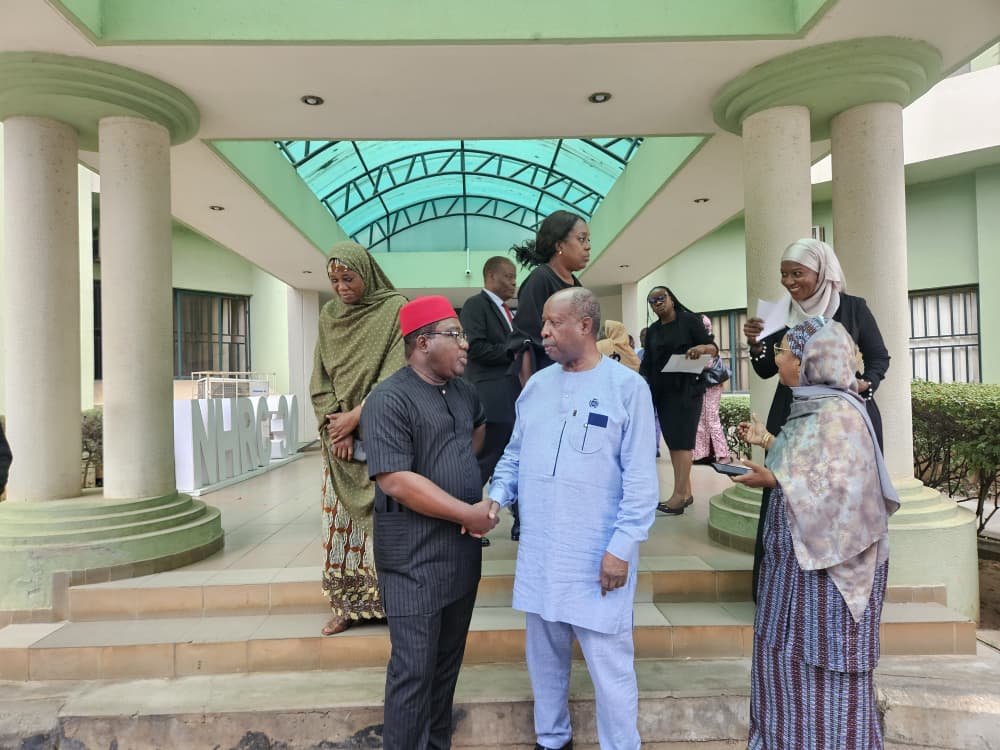
The minister’s remarks therefore underscore the need for political actors, electoral institutions and security agencies to distinguish between lawful political disagreement and conduct that violates the rights or safety of others.FCT Minister, Ezenwo Nyesom Wike, briefing journalists shortly after a meeting with security chiefs and Area Council chairmen on Friday, October 9, 2026

LABOUR DISPUTE AND POLITICAL ACCOUNTABILITY IN FOCUS
Wike’s October 9 briefing placed the FCT labour dispute within a wider discussion of political conduct, public administration, urban security and accountability for public expenditure.
The minister maintains that the NLC strike is politically motivated, says the FCT Administration has fulfilled its obligations to workers and has announced a “no work, no pay” policy in response to the industrial action.
He has also ordered action against unauthorised commercial establishments along the Guzape–Asokoro axis and called on INEC and the media to scrutinise political rhetoric and the records of public officeholders.
However, several central questions remain unresolved in the information available for this report: the precise grievances behind the strike, the union’s response to the minister’s allegations, the legal basis and implementation of the salary directive, and the documentary evidence supporting the financial and project-related claims concerning Amaechi’s tenure in Rivers State.
A comprehensive assessment will depend on verifiable records and responses from the relevant parties.
For residents of the FCT, the immediate priorities are the protection of workers’ lawful rights, continuity of education and public services, transparent enforcement of planning regulations, and a prompt resolution of the industrial dispute.
For the wider Nigerian public, the allegations concerning public projects and political conduct reinforce the importance of evidence-based journalism, institutional accountability and a political environment in which competing claims can be tested openly and fairly.




Leave a Reply